
How to Organize a Small Kitchen for Faster Cooking 🔪🍳
A restaurant-line zone layout for prep, cooking and cleanup that cuts the steps out of cooking in a small or galley kitchen, with a cheat sheet to save.

Sam Patel
2026年10月14日 · 阅读约 3 分钟
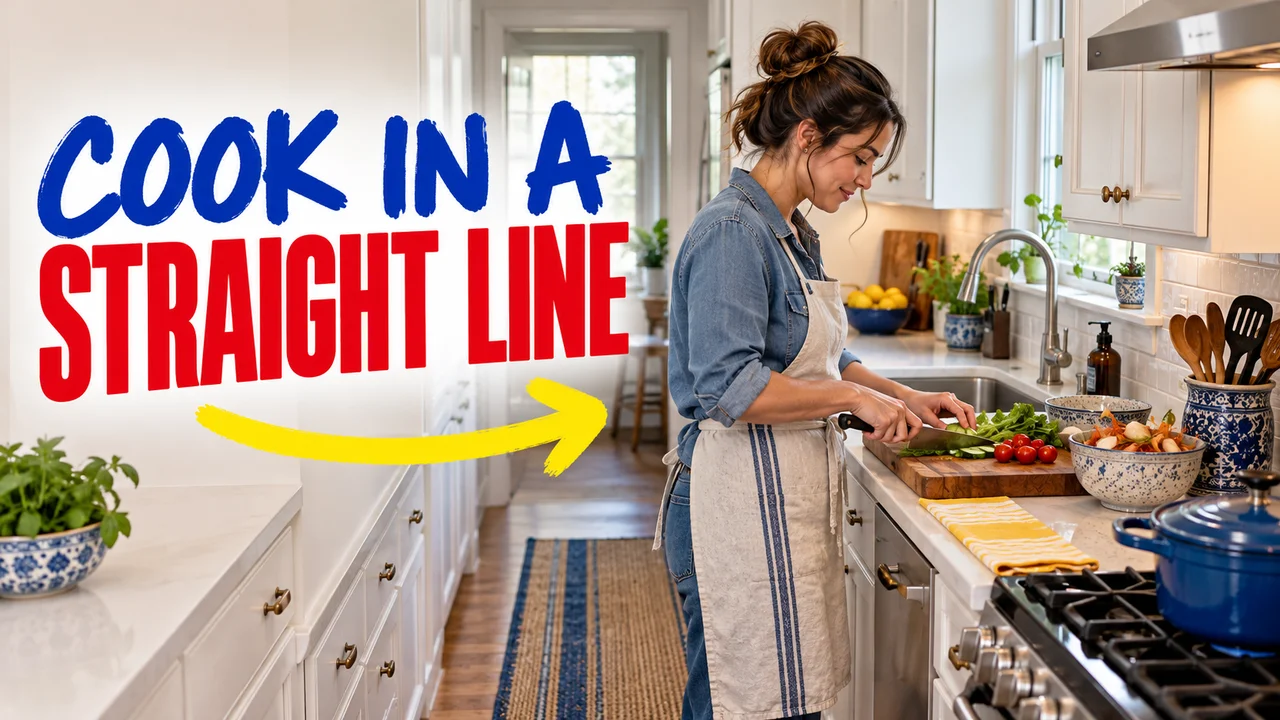
You turn from the stove for the spatula, and it's in a drawer behind you. The board sits by the fridge, the trash is three steps away, and the onions burn while you walk.
Here's a zone layout for prep, cooking and cleanup that makes a small kitchen faster to cook in.
Before: a kitchen built for walking
Here's what I started with in our Jersey City galley: knives in a drawer across from the stove, spices above the fridge, trash under the sink at the far end. Every dinner was laps. The worst part was carrying a dripping colander past the twins' homework.
After: a line station
Same galley. Food travels one way now, cold to hot. Board beside the sink. Tools beside the stove. Trash under the board. The mail still lands on the counter. But a stir-fry takes zero steps.
Rewind: the one rule
On a restaurant line, every cook works a station. A station is one spot where everything for one job sits within an arm's reach. Copy that at home.
- Fridge. Food comes out.
- Sink. Wash it.
- Board. Cut it.
- Stove. Cook it.
- Landing spot. Plate it.
Line them up in that order as closely as your layout allows. Backtracking is the enemy.
Zone 1: Prep, next to the sink
National Kitchen & Bath Association guidelines call for a stretch of continuous counter, at least 30 inches wide, right next to a sink. Clear it. That's your board's home.
- Knives, bench scraper, peeler.
- Mixing bowls and a colander.
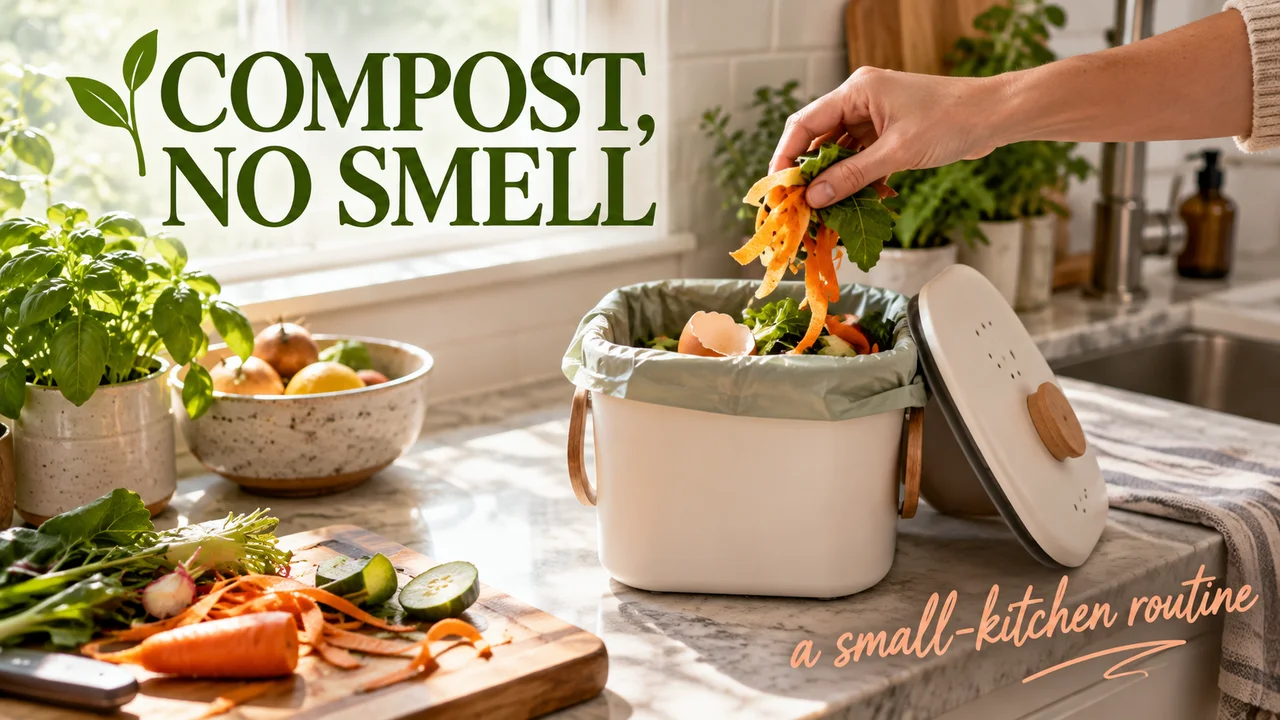
- Trash and compost directly below or beside it.
Zone 2: Cook, around the stove
The same guidelines ask for landing space on both sides of a cooktop, 12 inches on one side and 15 on the other. Keep it empty. Hot pans need a place to land.
- Spatulas, tongs and spoons in a crock by the burners.
- Oil, salt and pepper within reach of the hot pan.
- Pans in the cabinet below, not across the aisle.
Zone 3: Clean, sink to cabinet
- Soap, sponge and towels at the sink.
- Everyday plates and glasses in the cabinet nearest the sink or dishwasher.
The storage rule
Store each thing where you first use it. Colander by the sink. Pans by the stove.
Then go by height. Workplace safety guides put frequently used and heavy items between hip and shoulder. The waffle iron goes up top.
Hidden tips from the line
Hidden tip 1: wring out a thin towel and lay it flat under the cutting board. The board stops sliding. Culinary schools teach it. A damp paper towel works too.
Hidden tip 2: put a bowl on the board for scraps. Peels go in the bowl. One trash trip at the end. Done.
The bill
- Effort: one afternoon of moving things.
- What went wrong: I put the spice rack beside the stove first. McCormick says to keep spices away from stove heat and moisture. It moved to a cool drawer next to the board.
- Skip: labeling every shelf. Your hands learn the spots in a week.
Narrow galley? One cook at a time
NKBA guidelines suggest a work aisle of at least 42 inches for one cook and 48 inches for two. Many galleys run tighter. Pick one cook. The helper sets the table.
Side by side, the biggest change isn't the tidy counter. It's that dinner runs in a straight line. Start by clearing the counter by the sink.
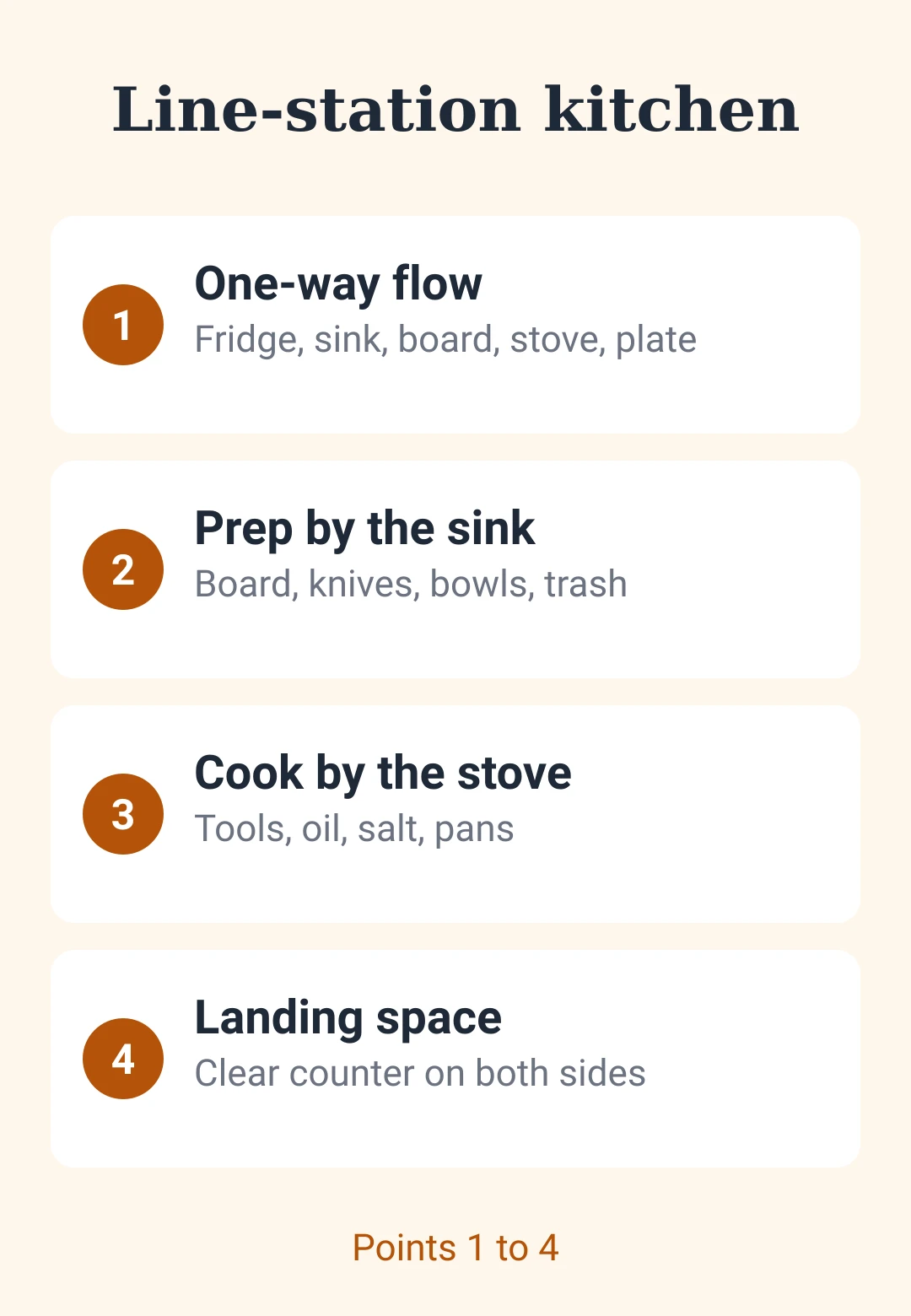
Cheat sheet: the line-station kitchen
| Zone | What lives there |
|---|---|
| Flow | Fridge, sink, board, stove, plate |
| Prep | Board, knives, bowls, trash, by the sink |
| Cook | Tools, oil, salt, pans, by the stove |
| Landing | Clear counter on both sides of the stove |
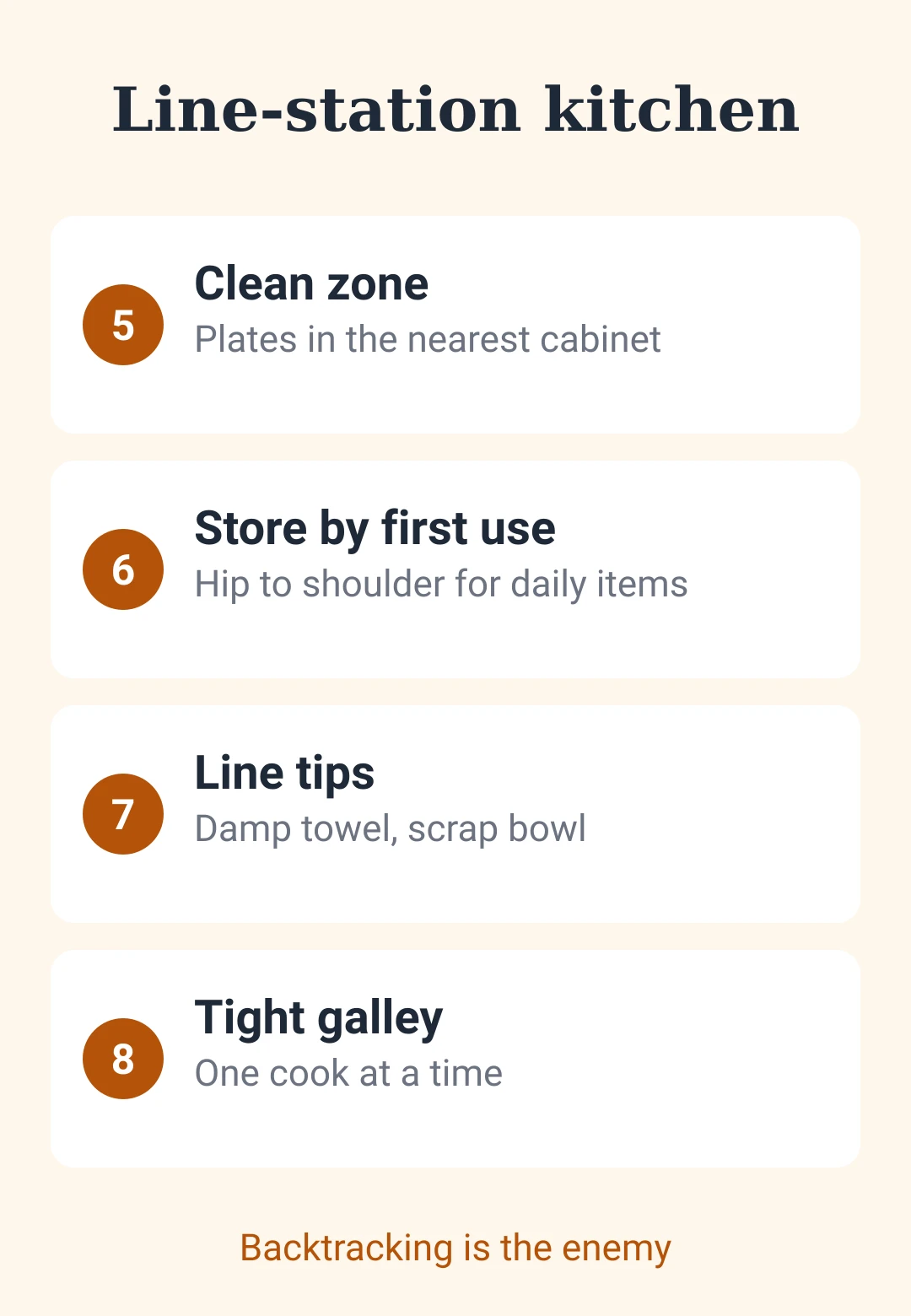
| Clean | Soap at sink, plates in nearest cabinet |
| Storage | Where first used, hip to shoulder height |
| Tips | Damp towel under board, scrap bowl on it |
| Aisle | Tight galley, one cook at a time |








后即可发表评论。
加载中…