
How to Tell When Your Pan Is Hot Enough 🍳
The water-drop test, the oil cues and the right heat for stainless, cast iron and nonstick, so food sears instead of sticking.

Sam Patel
2026년 10월 12일 · 2분 분량
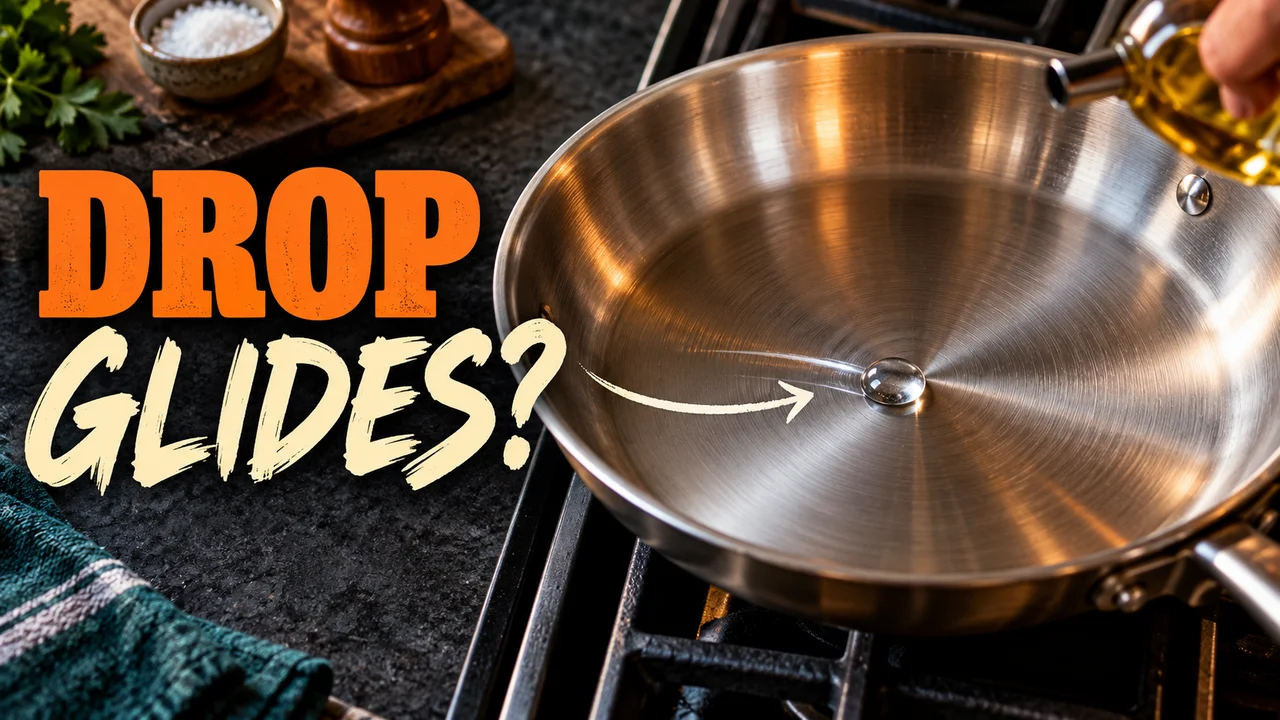
Nothing tests your patience like a chicken breast welded to the pan. You flip, it tears, and half of dinner stays behind as gray glue.
Here is how to read a pan's heat by pan type: the water-drop test, the oil cues and the waiting rule that stops sticking.
Why food sticks
First the recipe says "medium-high." Your stove has no idea what that means. Then you wait. How long? Nobody says. You guess, the food goes in, and it grips the metal like it pays rent there.
Rant over. Sticking is usually a heat and moisture problem, not a pan problem. Cold, wet food bonds to the surface. Hot, dry contact builds a browned crust, and that crust lets go.
The water-drop test for stainless steel
- Dry pan. Low to medium heat. Give it a couple of minutes.
- Flick in a few drops of water.
- Read the drops.
| The drops | What it means |
|---|---|
| Sit and bubble | Cold. Keep waiting. |
| Hiss and vanish fast | Still not ready |
| Pull into a bead and glide | Ready |
| Shatter into tiny beads | Too hot. Off the heat a minute. |
Hidden tip: a loud sizzle that disappears fast does not mean hot. It means not hot enough. Once the pan passes about 379°F, or 193°C, the bottom of the drop turns to steam and floats the rest. That steam cushion, the Leidenfrost effect, makes the drop last longer. Tip the water out or wipe it, then add oil.
Read the oil
- Shimmer: the oil gleams and ripples. That is roughly 275°F. Fine for vegetables and onions.
- First wisps of smoke: the cue for searing meat. Food goes in now.
- Heavy smoke: too far. Pull the pan off the heat.
Line cook rule, shouted at me for years. "Hot pan. Oil. Then food."
By pan type
| Pan | How to heat | Ready sign |
|---|---|---|
| Stainless | Dry, low to medium | Drop glides |
| Cast iron | Gradual, medium is plenty | Oil shimmers |
| Nonstick | Fat in first, never empty | Oil shimmers |
Cast iron heats slowly and holds heat. Lodge says medium is enough. Use a burner close to the pan's size for even heat.
Nonstick is the exception to the drop test. An empty nonstick pan heats up fast, and the coating should never go above 500°F. Keep the burner at medium-high or lower. Same for enameled cast iron. Heated empty, the enamel can crack.
Then leave it alone
- Pat it dry. Surface water has to boil off before browning starts.
- Give it room. A crowded pan cools down and steams. Cook in batches.
- Wait for the release. Seared food lets go on its own.
Hidden tip: if the food resists when you nudge it, the crust isn't done. Don't scrape. Give it a little longer and try again.
Now my chicken lets go clean, and I've had to find something new to complain about. Recipes that say "season to taste." Next.
Cheat sheet: is my pan hot enough?
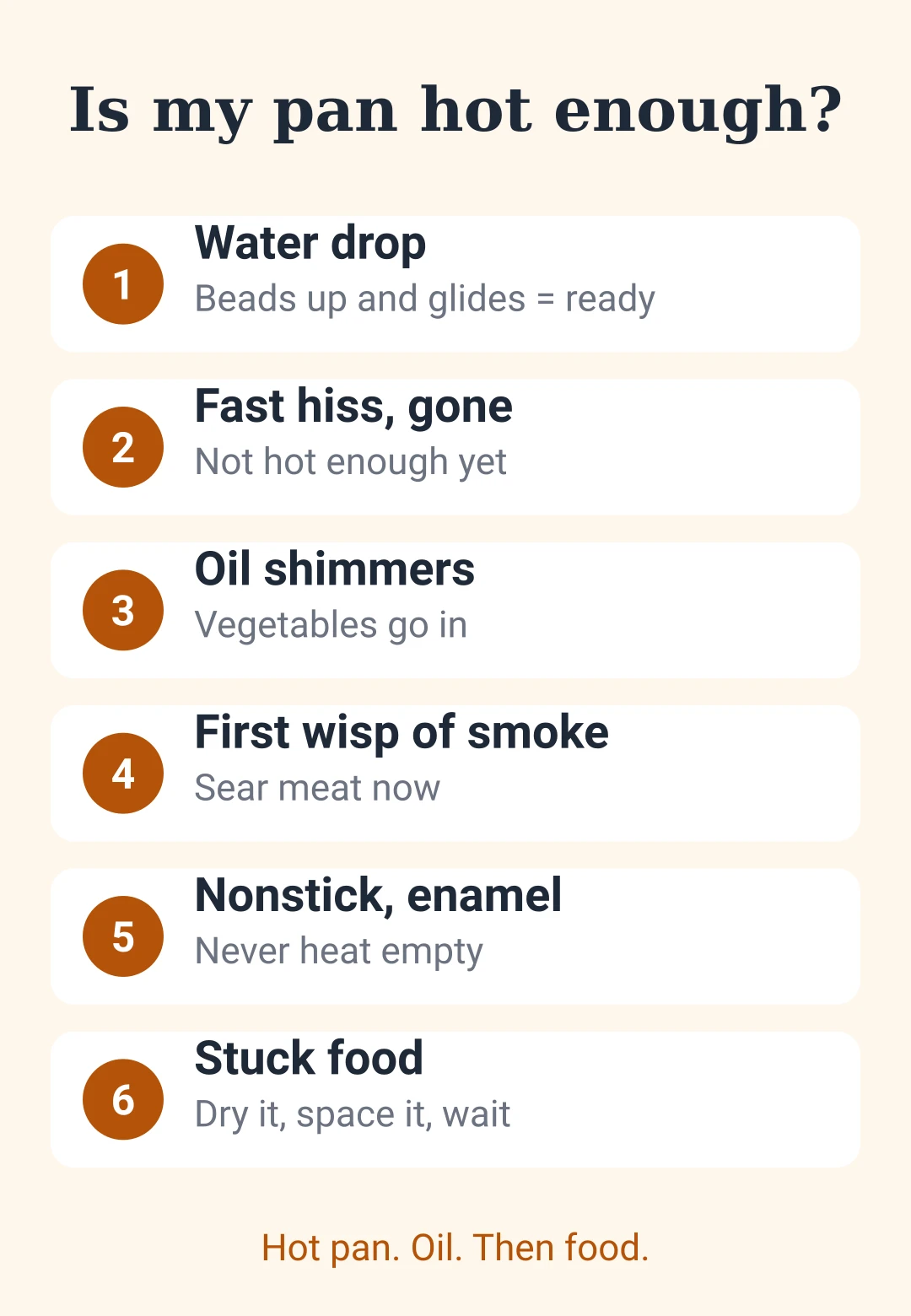
| Check | Ready sign |
|---|---|
| Water drop, stainless | Beads up and glides |
| Fast hiss and gone | Not ready yet |
| Oil for vegetables | Shimmers and ripples |
| Oil for searing | First wisps of smoke |
| Cast iron | Gradual heat, medium is plenty |
| Nonstick, enamel | Never empty, oil first |
| Food | Dry, spaced out |
| Stuck | Wait, it will release |






댓글을 남기려면 해 주세요.
불러오는 중…