
How to Clean Eyeglasses Without Scratching Them
Laura Jensen · 38 次观看 · 1周前 · 文章
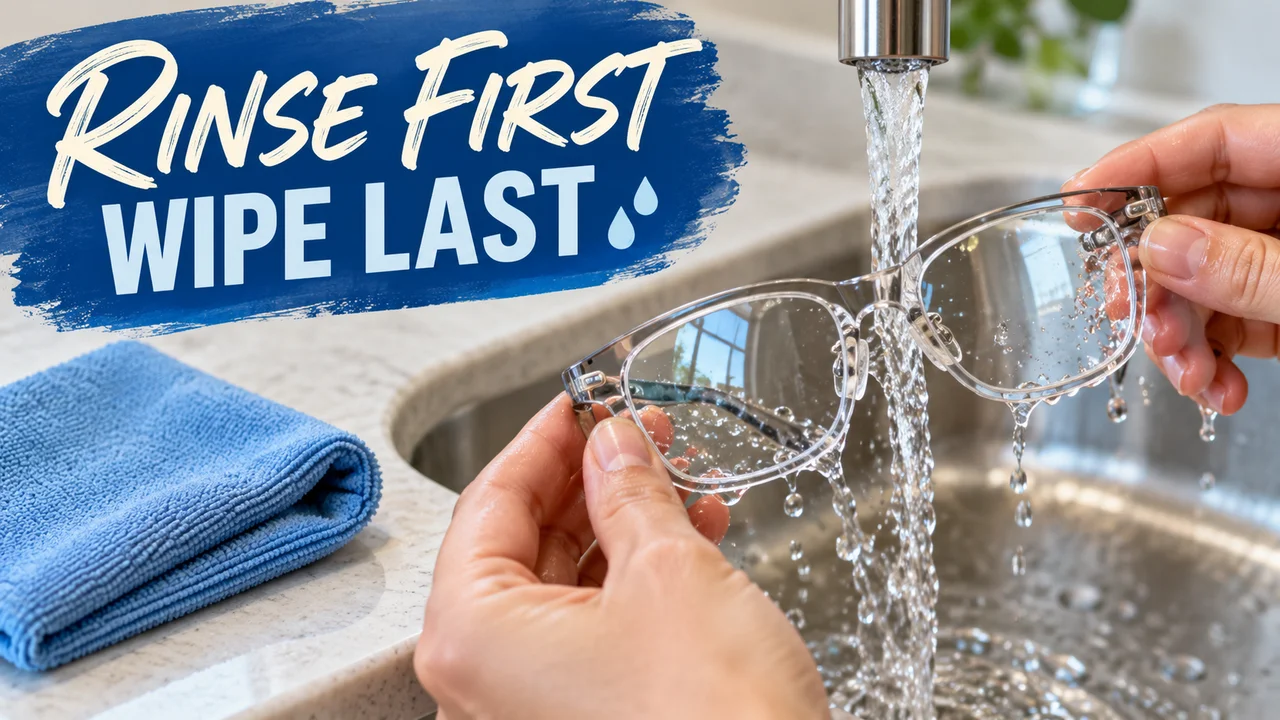
Why dry-wiping is the wrong first step, a five-step wash-and-dry routine, the habits that scratch or crack lens coatings, and a cheat sheet to save.
Your glasses are smudged, so you pull out the little cloth that came in the case and rub until the lenses look clear. Most people do this a dozen times a day without thinking about what is on the lens while they rub.
Here is what you get: the wash-and-dry routine eye care sources actually describe, the habits that scratch lenses, and a cheat sheet to keep.
The unpopular part: that cloth is for drying
I'll say it: wiping dry lenses with that cloth is the wrong first step. The cloth is fine. The order is the problem.
To be fair, a dry wipe is fast, and on a lens with no dust on it a fingerprint often comes off fine. The trouble is that lenses are rarely dust-free.
Why dry wiping causes the damage
- Dust is grit. Rinsing under the tap washes away dust and debris before anything rubs it across the lens, according to All About Vision.
- Dry cloths push grease around. ZEISS notes that dry cloths are not always ideal for greasy marks, and suggests getting the coarse particles off first.
- Scratches are permanent. ZEISS says scratches cannot be removed from plastic or glass lenses. Prevention is the only fix.
Every camera lens I clean before a shoot gets its dust blown off before a cloth touches the glass. Glasses deserve the same courtesy: loose grit first, rubbing last.
The wash-and-dry routine
- Rinse both sides under running lukewarm water.
- Rub one small drop of lotion-free dish soap between your fingertips and spread it over both sides of each lens.
- Clean the nose pads and the ends of the temples too. Skin oil builds up there.
- Rinse again until no suds are left.
- Shake gently, then dry with a clean microfiber cloth or a lint-free towel.
Habits that quietly ruin lenses
| Habit | Why it hurts |
|---|---|
| Shirt, tissue, paper towel | Can scratch or leave lint |
| Hot water | Can damage anti-reflective coatings |
| Window or household cleaner | Harsh on lens coatings |
| Saliva | Not a lens cleaner |
| Moisturizing dish soap | Can leave a film |
| A hot car dashboard | Heat can crack the coating |
That last one is called crazing: tiny cracks in the anti-reflective coating, because lens and coating expand at different rates.
Hidden tip 1: mist the cloth instead. Using a lens spray? ZEISS suggests putting it on the cloth, because liquid that keeps seeping into the screw or drill holes can do harm over time.
Hidden tip 2: wash the cloth itself. ZEISS says to wash microfiber cloths no warmer than 40°C (104°F) and without fabric softener, which leaves streaks. Skip a dish towel washed with softener or dryer sheets too.
Where I'll give ground
Away from a sink, a clean cloth with lens spray on it is a fine second best. I'm not against the cloth, just against rubbing grit into it.
Try it for a week: rinse first, cloth last, and keep the glasses in a hard case or lenses facing up. Then tell me your lenses looked better the old way.
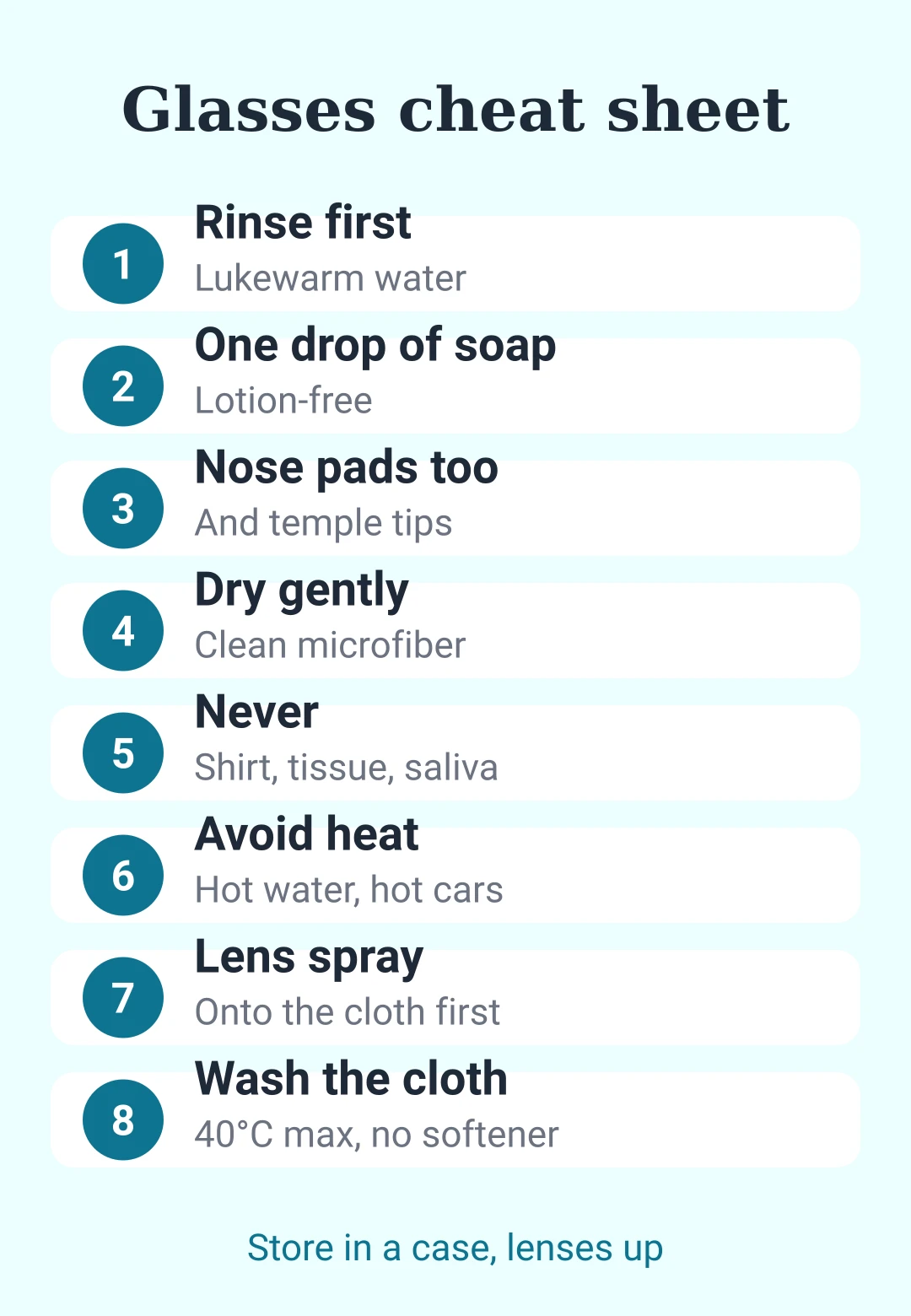
Cheat sheet: clean glasses, no scratches
| Step or rule | Do this |
|---|---|
| First | Rinse in lukewarm water |
| Soap | One drop, lotion-free |
| Don't forget | Nose pads and temple tips |
| Dry | Clean microfiber or lint-free towel |
| Never | Shirt, tissue, paper towel, saliva |
| Avoid | Hot water, household cleaners, hot cars |
| Lens spray | Onto the cloth first |
| Cloth care | Wash at 40°C max, no softener |
| Store | Hard case, or lenses facing up |
Unpopular, yes. Wrong? Try it and let me know.
- eyeglasses
- glasses cleaning
- lens care
- scratched lenses
- anti-reflective coating
- microfiber cloth
- how to
喜欢这篇帖子吗?
后即可发表评论。
加载中…