
How to Break In Work Boots Without Blisters 🥾
Ray Delgado · 26 visualizações · há 1 mês · Artigo
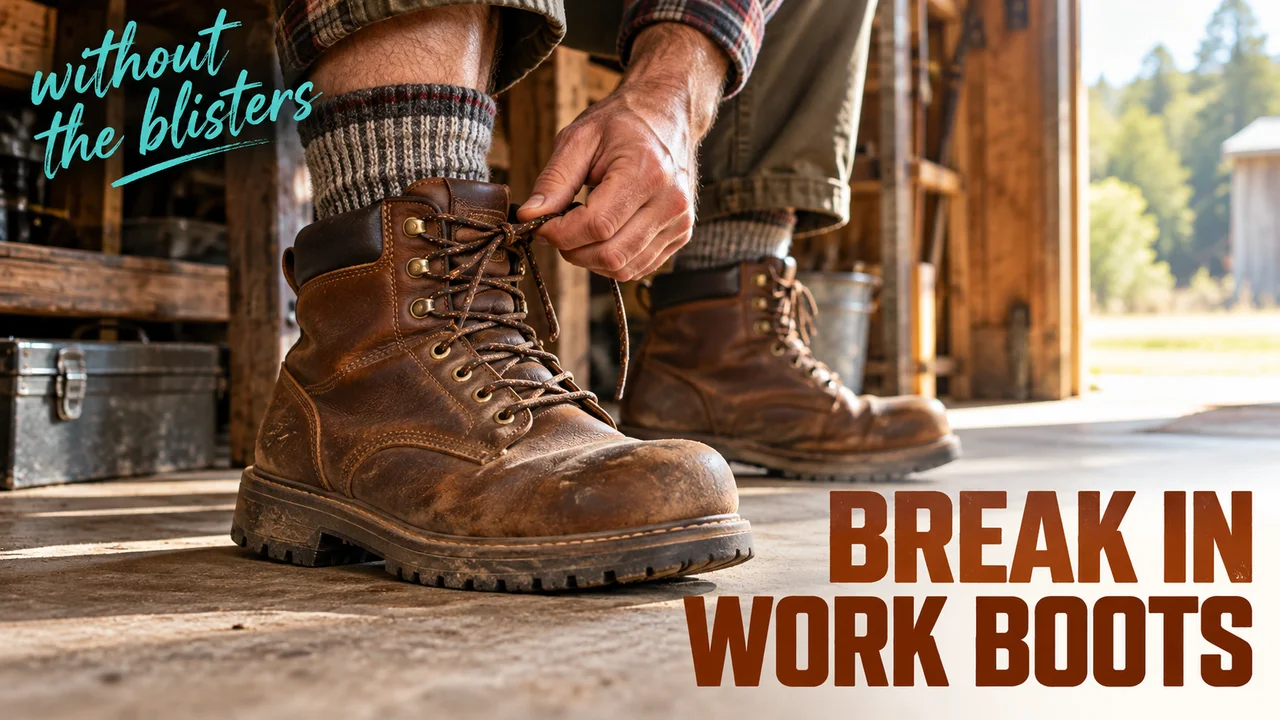
A slow, step-by-step break-in plan for work boots, the socks and lacing that stop heel rubbing, how to oil new leather, and a cheat sheet to save.
A new pair of work boots sits by the door, stiff as a fence board, and by the end of the first long day there's a raw spot on the back of your heel. Most advice says tough it out.
I'll say it: toughing it out is backwards. Here's a step-by-step break-in plan, plus the sock and conditioning tips that keep blisters away.
The fair case for toughing it out
The old way has history. White's Boots used to tell folks to soak new boots in warm water and wear 'em dry, and its president says that won't hurt the boots. White's has since gone away from it, and so have I.
Why slow beats hard
Blisters come from rubbing. Dermatologists at the AAD say blisters form where skin rubs, and sweaty cotton and shoes too tight or too loose make it worse.
Leather needs hours. White's puts a full break-in at roughly eighty to one hundred hours of wear. You can't cram that into one shift.
Heat hurts. Red Wing warns never to dry boots near a heater, radiator or direct sun, since fast drying leaves leather stiff and cracked.
Thirty years in fire boots taught me the same.
Short days first. Feet stay whole.
The break-in plan
- Start indoors. A few hours at a time around the house, then build up. White's suggests two to three hours daily for the first couple of weeks.
- Rest 'em. After a few days of wear, rest the boots a whole day and let 'em dry at room temperature.
- Stop at the first red spot. A hot spot is a warning, not a dare.
Socks do half the work
- Skip cotton. It holds sweat, and wet skin rubs.
- Wear nylon, moisture-wicking or padded socks.
- Still rubbing? The AAD says try two pairs.
- Put moleskin on blister-prone spots before they blister.
Hidden tip: lock the heel
A podiatrist-reviewed guide names heel slip as the main cause of heel blisters.
The fix is heel lock lacing.
Lace to the second-to-last eyelets. Run each lace into the top eyelet on its own side to make a small loop, cross each lace through the opposite loop, pull snug and tie.
Hidden tip: oil the front, not the ankle
White's oils the vamp, the front leather, two to three times the first week, and leaves the ankle quarters dry at first so they keep their support. After that, Red Wing says once or twice a year is plenty, when the leather feels dry.
More is not better.
Where I'll give ground
No break-in fixes the wrong size. If the heel still slides with a heel lock and good socks, it's the fit, not your patience.
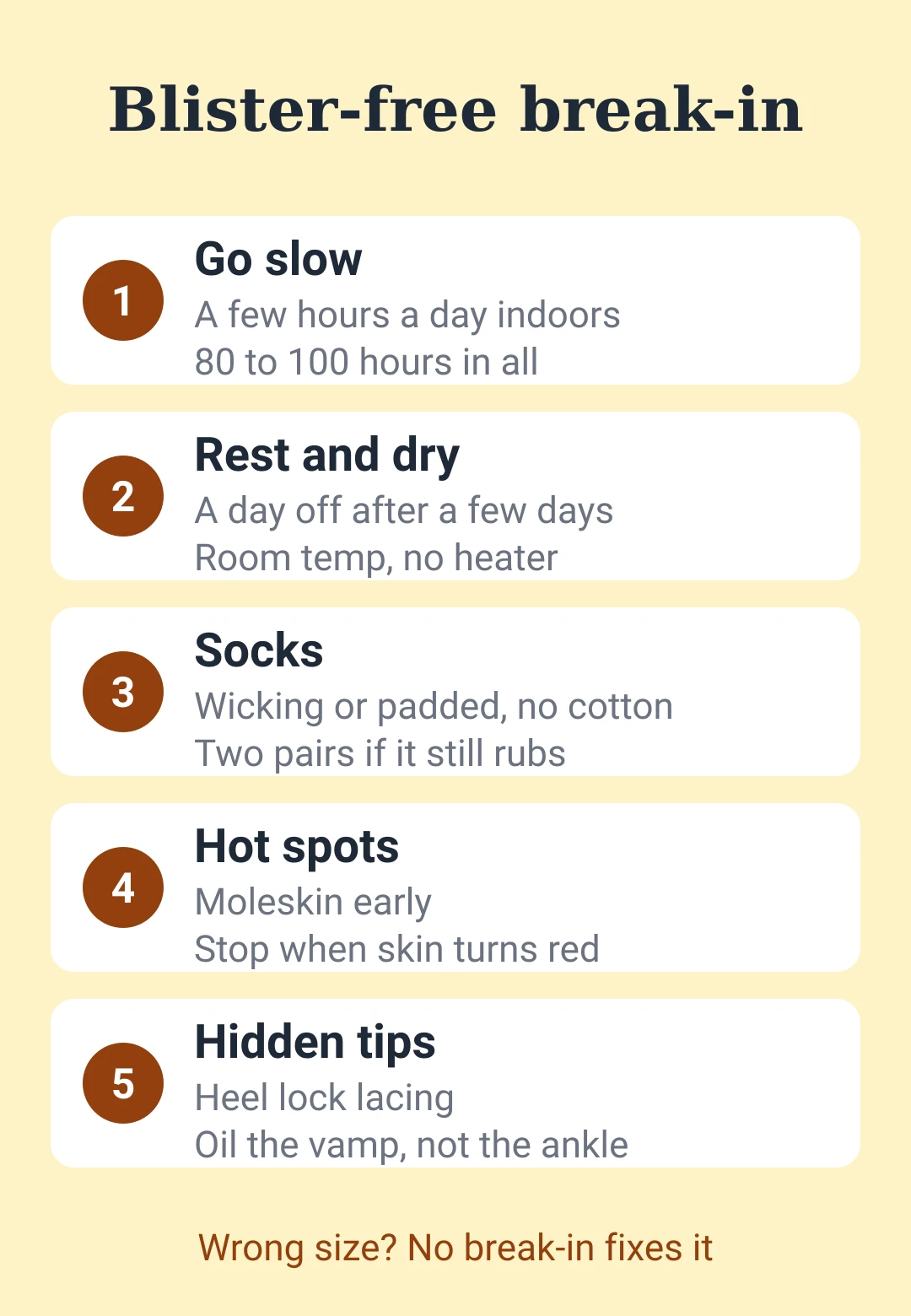
Save this: blister-free break-in
| Step | What to do |
|---|---|
| Wear time | A few hours indoors, then build up |
| Full break-in | About 80 to 100 hours |
| Rest | A day off after a few days, room temp, no heater |
| Socks | Wicking or padded, no cotton, two pairs if needed |
| Hot spots | Moleskin early, stop when skin turns red |
| Heel slip | Heel lock lacing |
| Oil | Vamp only at first, then once or twice a year |
Unpopular, yes. Wrong? Try it with the boots by your door and let me know.
- work boots
- break in boots
- blisters
- boot care
- leather boots
- socks
- heel lock lacing
- foot care
Curtiu este post?
para deixar um comentário.
Carregando…