
How to Store Sneakers So They Don't Yellow or Crumble 👟
Marcus Bell · 40 visualizações · há 2 meses · Artigo
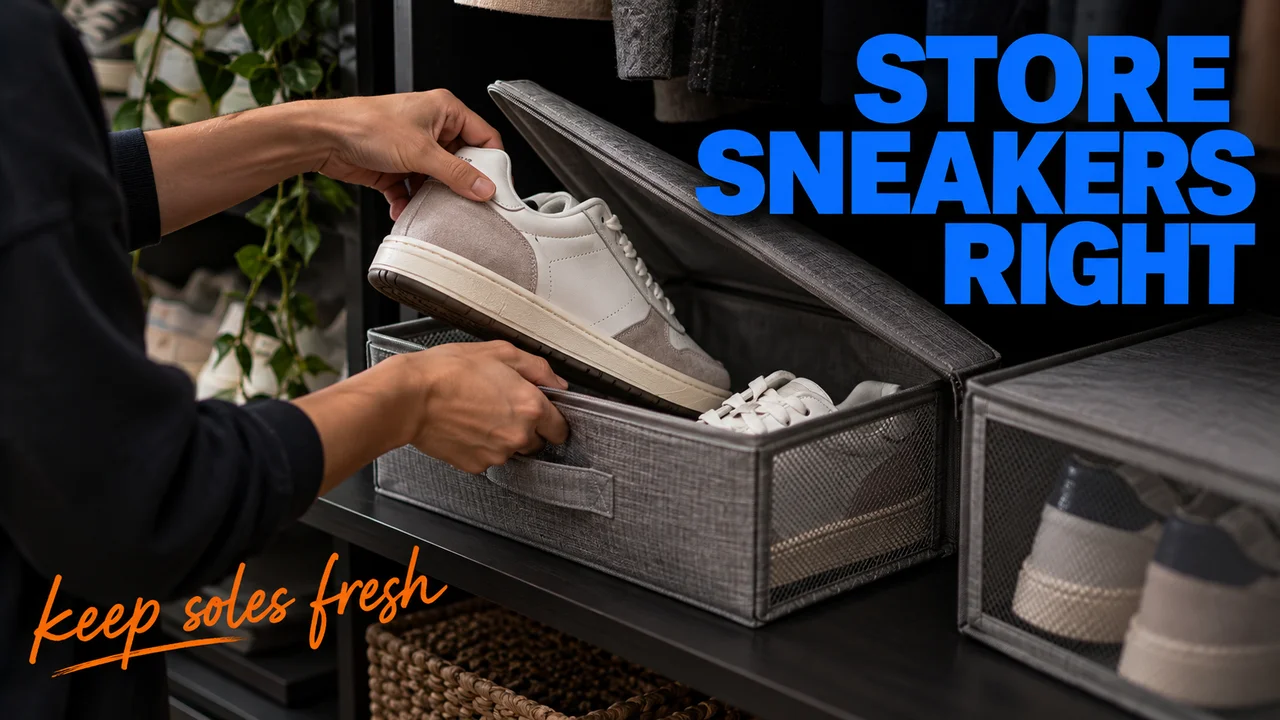
5 common sneaker storage myths put on trial, with the heat, light, air and box rules that keep soles from yellowing and crumbling, plus a cheat sheet to save.
You pull a pair out after a few years and the sole is yellow, or worse, it flakes the first time you flex it. Storage myths pile up because the damage is slow and nobody can tell which habit caused it.
Here are 5 storage beliefs on trial, plus the heat, light, air and box rules that actually keep soles alive.
Myth 1: "Deadstock in the box lasts forever"
Verdict: false. Many midsoles are polyurethane foam, and moisture in the air slowly splits its polymer chains, which is called hydrolysis, and it keeps going on the shelf whether you wear the pair or not.
Why people believe it: an unworn pair looks frozen in time. One work-shoe maker reports crumbled soles on pairs kept in their cardboard box for 7 to 14 years.
The box is a dust cover, not a time machine.
Myth 2: "Seal 'em airtight in plastic and nothing gets in"
Verdict: mostly false at home. A sealed bag also seals in whatever moisture is already there. Museum plastics guides say storage should let air move freely and must not be airtight.
The grain of truth: museums do use sealed, low-oxygen storage, with special absorbers inside.
A zip bag on a closet shelf? Not that.
Myth 3: "Dark is all that matters, so the garage is fine"
Verdict: half true. Dark is right! Location is the problem, because basements, sheds and garages tend to hold more moisture, and warmth plus humidity speed hydrolysis up. Attics swing hot and cold.
Aim for a cool, dry, dark room. Museums keep plastics around 20°C or 68°F at 30 to 50% relative humidity.
Your bedroom closet beats any garage.
Hidden tip: put every pair away bone dry. Damp shoes shut in a tight space break down faster. After a rainy wear, stuff 'em with paper and let 'em air out away from the radiator.
Myth 4: "Yellow soles just mean dirty soles"
Verdict: mostly false. Yellowing is usually oxidation. Oxygen and light, UV above all, react with the sole material and leave a yellow cast that scrubbing can't remove.
Grime does make it look worse. Clean 'em, but keep 'em out of sunlight too.
A pair on a sunny windowsill is aging in real time.
Myth 5: "Wear 'em now and then and the soles last longer"
Verdict: probably true, but not proven. Shoe makers say regular use delays hydrolysis. Independent tests are thin, so call it a strong hint.
My first high-tops still live in their box, and yeah, they get a short walk every so often.
Hidden tip: those silica gel packets don't work forever. Once full, they stop pulling moisture. Indicating beads change color when they're done, so swap or recharge them by the packet's directions.
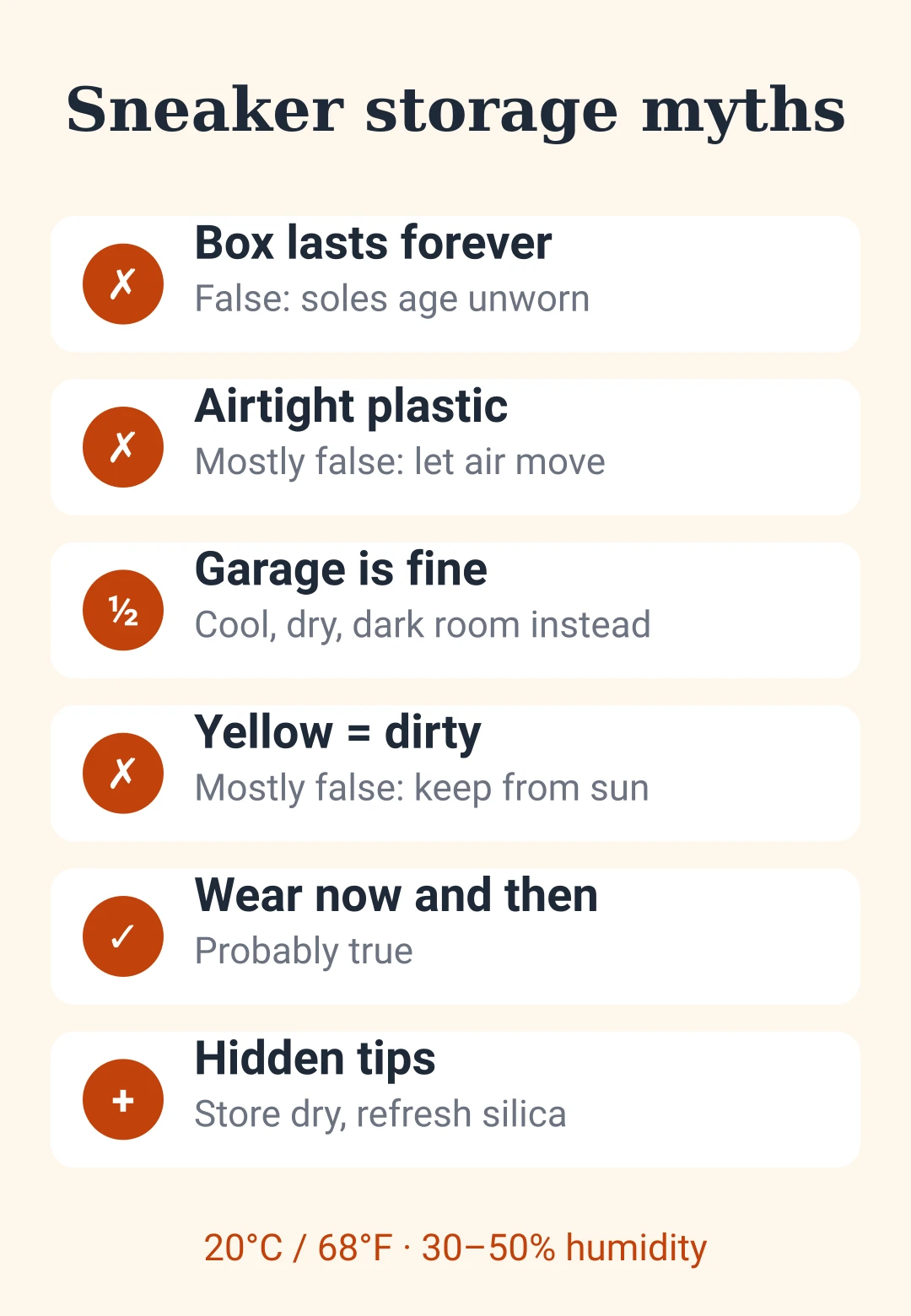
Scorecard: the rules to keep
| Myth | Verdict | Do this |
|---|---|---|
| Box lasts forever | False | Check pairs often |
| Airtight plastic | Mostly false | Let air move |
| Garage is fine | Half true | Cool, dry, dark room |
| Yellow = dirty | Mostly false | Keep out of sunlight |
| Wear now and then | Probably true | Short wear every so often |
| Hidden tips | Bonus | Store dry, refresh silica |
If you remember one thing: cool, dry, dark and a little air beats every box, bag and trick. The myths aren't stupid, just half the story. Now you have the other half.
- sneaker storage
- sneaker care
- sole crumbling
- yellow soles
- hydrolysis
- shoe care
- silica gel
- myths
Curtiu este post?
para deixar um comentário.
Carregando…