
How to Clean and Care for Cutting Boards 🔪
How to clean and sanitize wood and plastic cutting boards, oil the wood ones and spot a worn-out board, with a cheat sheet to save.

Sam Patel
9 de julho de 2026 · 2 min de leitura
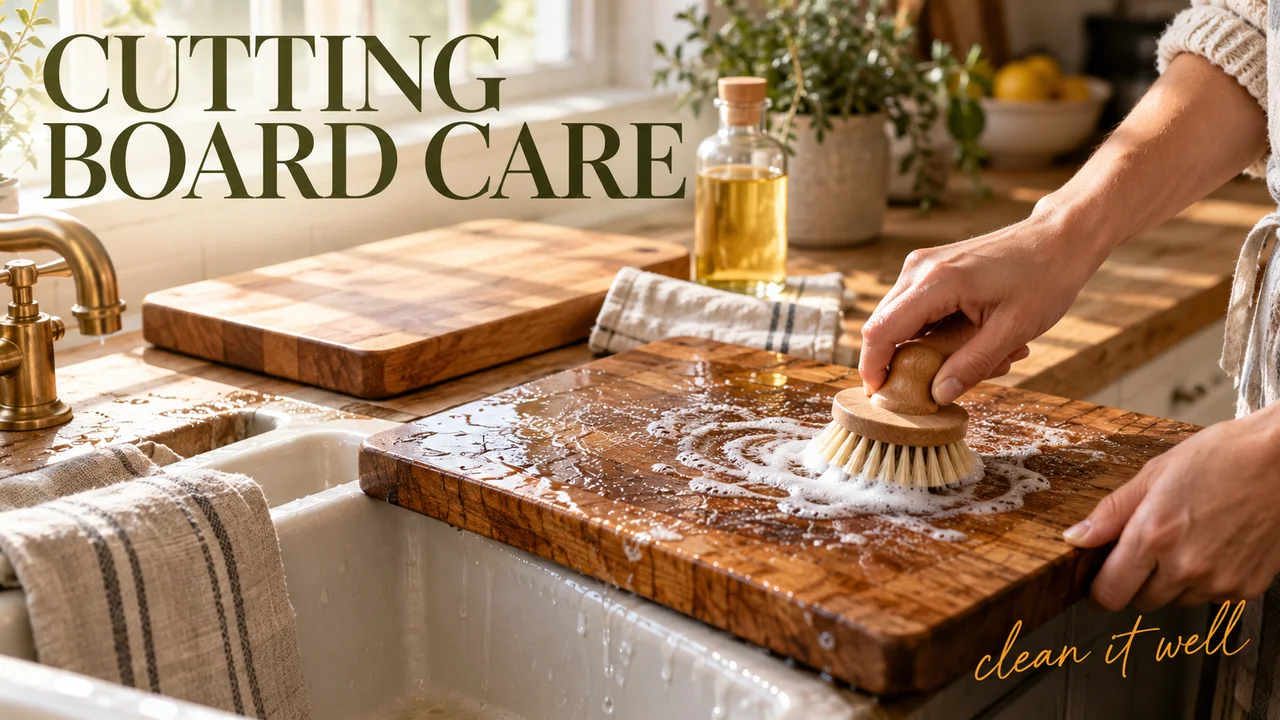
You cut raw chicken, give the board a quick rinse, and reach for the salad greens. Or your wood board still smells like last night's onions and looks pale and dry.
Here is how to clean and sanitize wood and plastic boards, oil the wood ones, and tell when a board is worn out.
The short version: both materials are safe
USDA food-safety guidance says you can pick wood or a nonporous board like plastic. Neither wins on its own. Care decides it.
- Wash every board in hot, soapy water after every use.
- Rinse with clear water. Dry it fully.
- Give raw meat, poultry and fish their own board.
- Use a second one for produce, bread and ready-to-eat food.
Colored boards keep them straight. Call it mise, everything set up before you cook.
Wood vs. plastic at a glance
| Step | Wood | Plastic |
|---|---|---|
| Wash | By hand, hot soapy water | Hot soapy water or dishwasher |
| Soak | Never | Not a problem |
| Sanitize | Dilute bleach, rinse | Dilute bleach or dishwasher |
| Oil | Food-grade mineral oil | Not needed |
| Worn | Sand lightly, re-oil | Replace |
How to sanitize after raw meat
- Wash first. Sanitizing comes after cleaning, not instead of it.
- Mix 1 tablespoon of unscented liquid chlorine bleach into 1 gallon of water.
- Flood the board. Let it stand several minutes.
- Rinse with clear water. Air dry or pat dry.
Concentrated bleach? Wisconsin Extension says 2 teaspoons per gallon. Many plastic boards can take the dishwasher instead.
Wood boards: keep water short
- Hand wash only. Board makers say wood is not dishwasher safe.
- Never soak it. Wood takes on water and can warp or split.
- Towel it off, then stand it on edge to air dry.
- Oil a clean, fully dry board on all sides. Leave it overnight.
- Use food-grade mineral oil. Skip cooking oil. Makers warn it damages boards.
Board looks dry and lighter in color? Oil it. Daily use means about once a month.
Hidden tip: salt and lemon kill the onion smell
Sprinkle coarse salt over the wood. Rub it in with half a lemon. Let it sit 5 to 10 minutes, up to 15 for stubborn spots. Rinse, dry, oil. The salt pulls out stains and odors.
Hidden tip: a damp towel stops the slide
Wring out a thin towel until it is just damp. Lay it flat under the board. The board stays put while you work the rock, the rocking chop with the knife tip kept down. Culinary schools teach it. I set one down before every knife class.
When a board is done
- Cracks, chips or deep grooves mean replace it. Bacteria hide there.
- A scarred wood board gets a second life. Sand with fine, 200-grit paper, always with the grain. Then oil it.
- A plastic board with deep, fuzzy knife grooves goes.
Save this: cutting board cheat sheet
| Task | Rule |
|---|---|
| Every use | Hot soapy water, rinse, dry |
| Raw meat | Own board. Sanitize after. |
| Sanitize | 1 Tbsp bleach per gallon, several minutes, rinse |
| Wood | No soaking, no dishwasher, dry on edge |
| Oil | Mineral oil when pale and dry, about monthly |
| Smells | Coarse salt and half a lemon |
| Slipping | Damp thin towel underneath |
| Worn out | Sand wood. Replace deep-grooved plastic. |
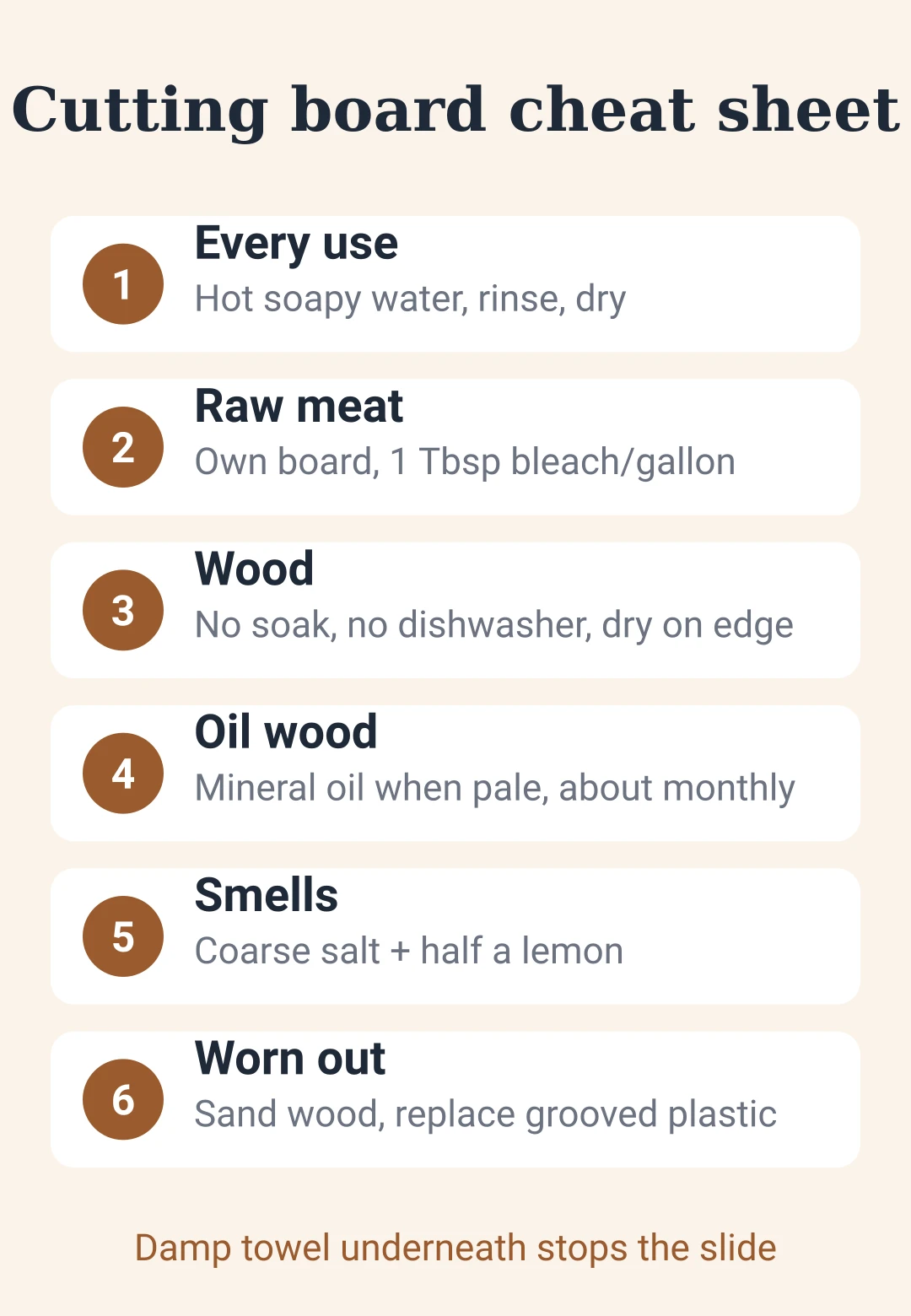
Bottom line: wash every time, sanitize after raw meat, and oil wood the moment it looks pale. Done.









para deixar um comentário.
Carregando…