
♻️ How to Set Up a Compost Caddy in a Small Kitchen Without Smells
Zoe Adams · 31 views · 4 months ago · Article

Three quick questions sort out what goes in your food waste caddy, where it lives, which liner to use and how often to empty it, with a cheat sheet to save.
The peelings bowl by the sink whiffs by day two, and the fruit flies find it first. Three questions fix that in a tiny kitchen.
You'll get what goes in, where it lives, which liner to use and how often to empty it.
Question one: where does it end up?
- If it goes to a council food waste collection: nearly all food goes in. Cooked or raw, meat, fish, small bones, solid dairy, tea bags, coffee grounds, eggshells. No packaging, liquids or oil. English councils must now collect it at least weekly.
- If it goes to a compost bin at home: raw fruit and veg peelings, tea bags, coffee grounds and eggshells only. Cooked food, meat, fish and dairy bring pests and smells. Balance peelings with roughly equal browns, like torn egg boxes.
- If you have both: raw peelings to the heap, everything else to the council caddy.
Question two: where can it live?
- On the worktop: a small caddy with a lid that shuts properly, away from sunny windows; warmth speeds up the smell.
- Under the sink: frees the counter, as long as the lid opens without a faff.
- No room at all: a lidded tub in the freezer for scraps, tipped out on collection day.
Question three: how fast do you fill it?
- Within a day or two: empty it once food nears the lid; overfilled liners split.
- Slowly: empty it every two to three days anyway, full or not.
At the café we fill one by lunch; at home, Sam and I take three days, so ours goes out on a schedule.
Liners: check your council first
Your council's own list always wins, and liner rules vary most. Some councils want compostable liners only, some want clear bags so the crew can see inside, and some say no liner is needed at all. Either way, newspaper or kitchen roll in the base soaks up juice, and a weekly warm soapy rinse, left to dry, keeps the caddy fresh.
Hidden tips
- Freeze the stinkers: fish skins, prawn shells and raw meat scraps wait in the freezer until collection day.
- Bicarb in the bottom: a light sprinkle under the liner tames odours. Also let hot food cool and squeeze tea bags first; steam and drips draw flies.
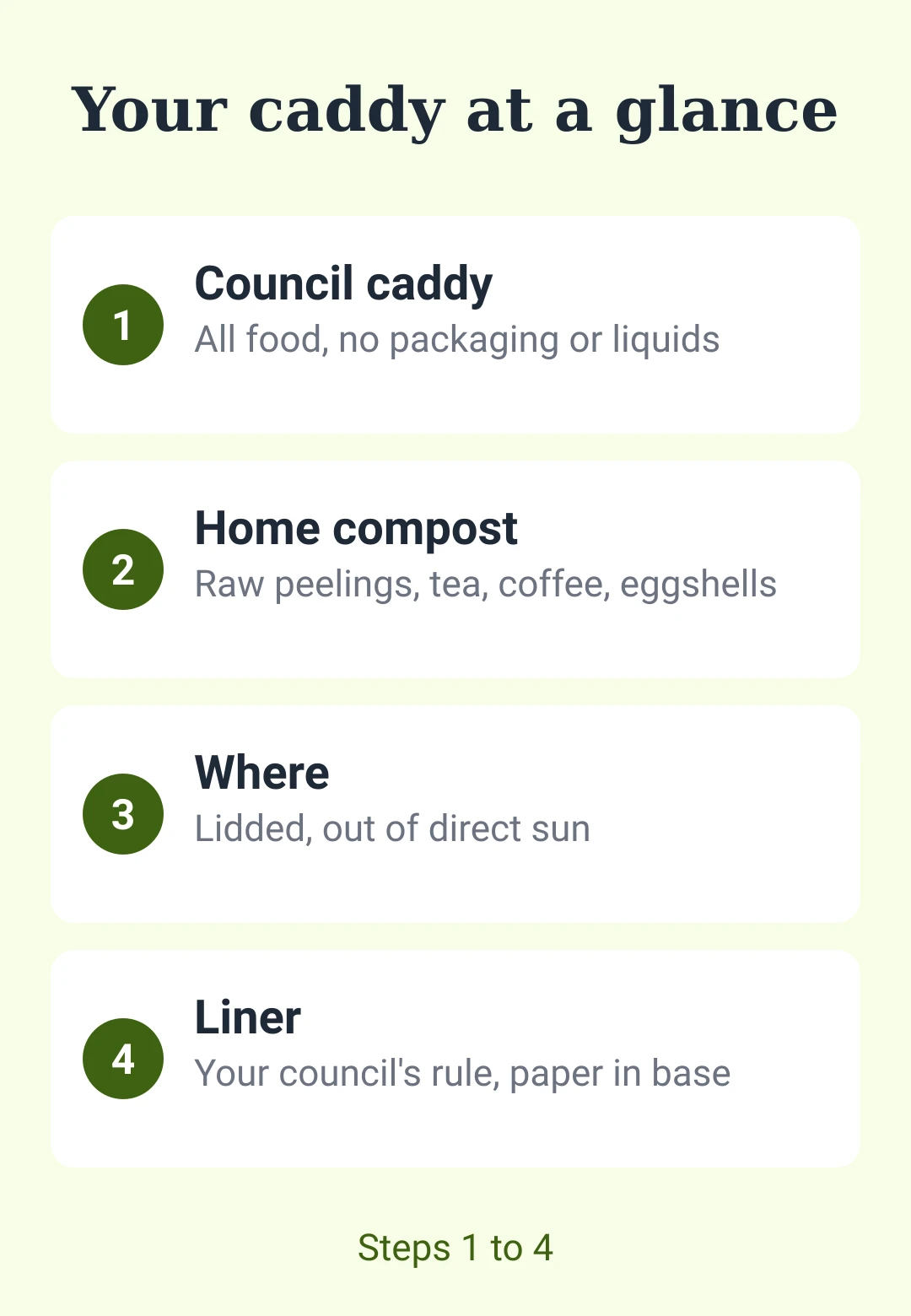
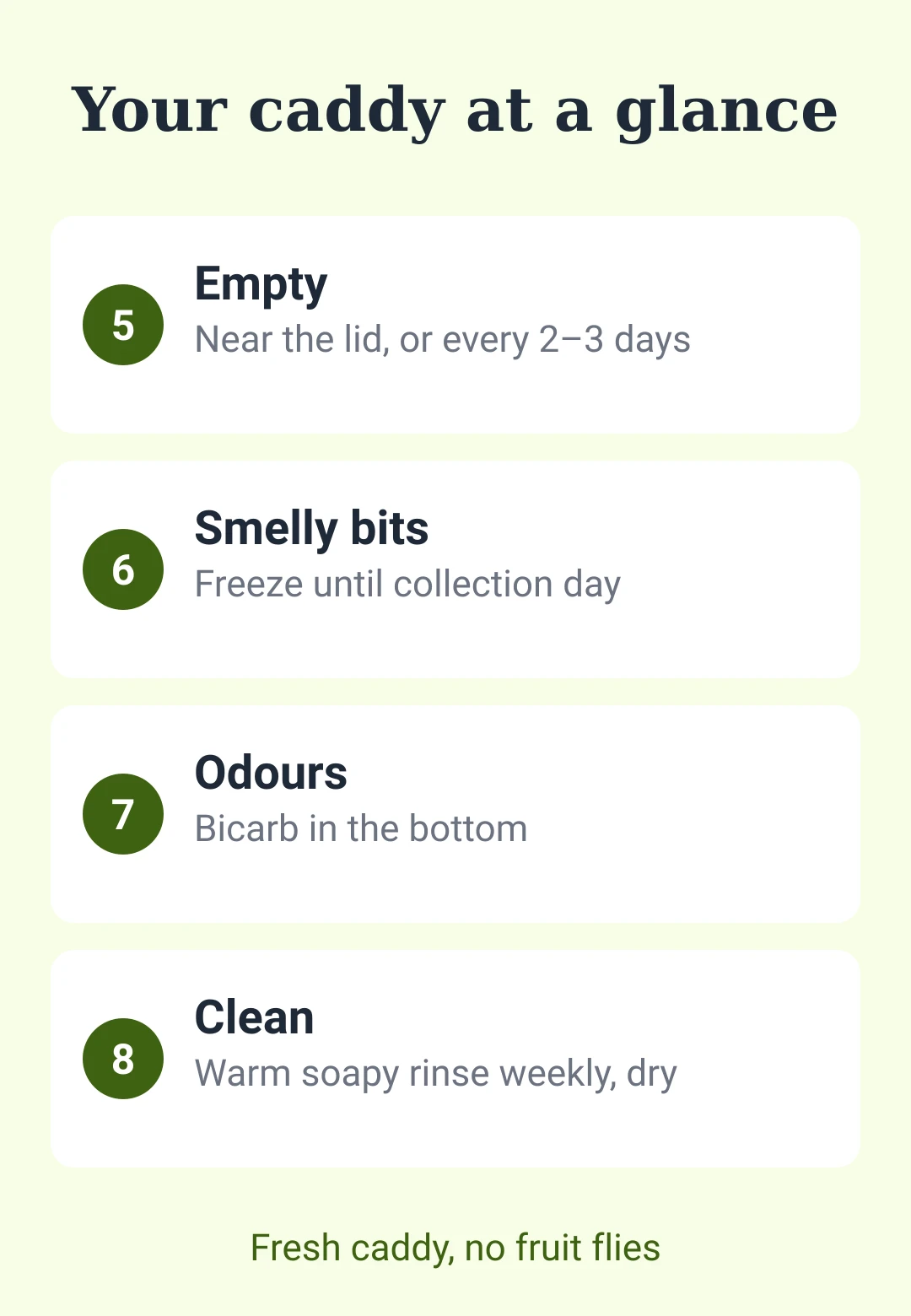
Save this: your caddy at a glance
| What | How |
|---|---|
| Council caddy | All food, no packaging or liquids |
| Home compost | Raw peelings, tea, coffee, eggshells |
| Where | Lidded, out of direct sun |
| Liner | Your council's rule; paper in the base |
| Empty | Near the lid, or every 2–3 days |
| Smelly bits | Freeze until collection day |
| Odours | Bicarb under the liner |
| Clean | Warm soapy rinse weekly, then dry |
Three questions, one caddy that fits your kitchen. Peel good about it. Sorry.
- compost caddy
- food waste
- small kitchen
- kitchen smells
- home composting
- fruit flies
- low waste
- kitchen tips
Enjoyed this post?
to leave a comment.
Loading…