
🌱 How to Compost at Home: A Simple Beginner's Guide
Margaret Evans · 39 vues · il y a 2 mois · Article
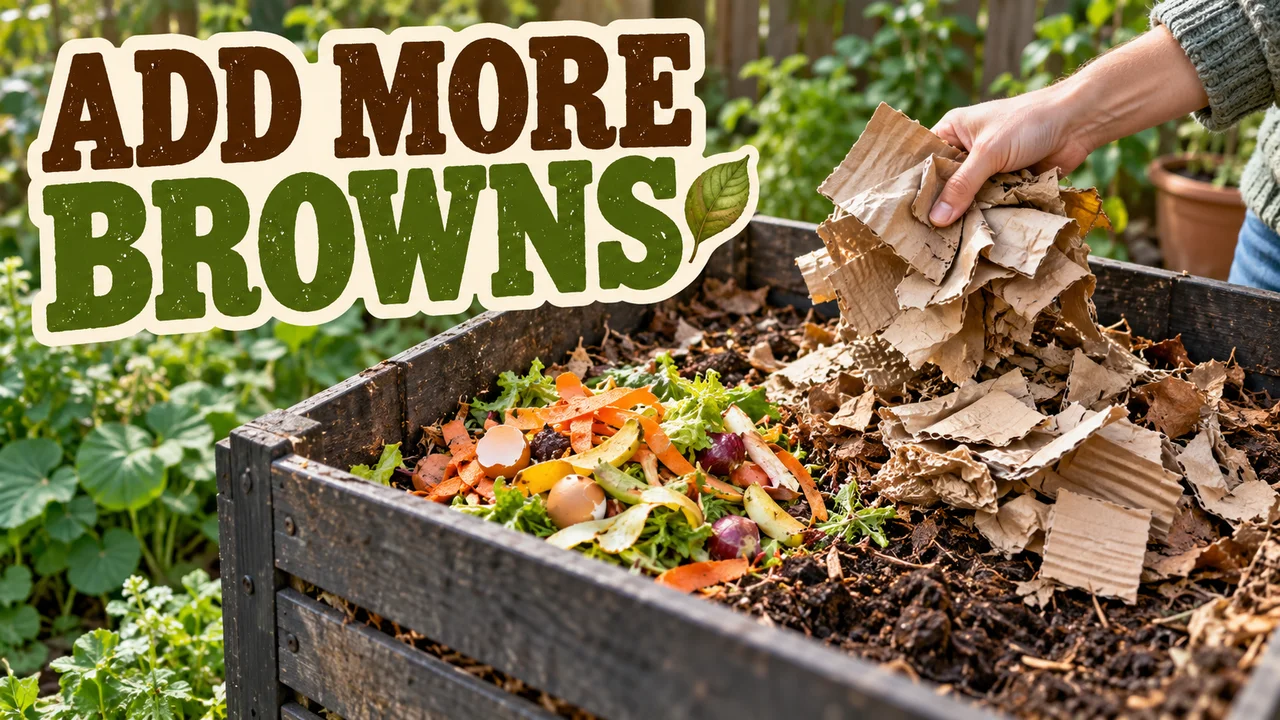
What to put in, what to leave out, and how to get crumbly, usable compost faster, with a cheat sheet to save.
You lift the lid on the compost bin and get a wet, sour smell and a sludge of peelings that never seems to turn into anything. I know this will annoy some of you, but that bin isn't short of kitchen scraps; it's starving for cardboard.
Here is what to put in, what to leave out, and how to get crumbly, usable compost without the slime.
My unpopular opinion: browns matter more than greens
Most of us compost to get rid of food waste, so the bin fills with peelings and grass: "greens", soft, wet and quick to rot. The RHS suggests greens make up only about 25 to 50 per cent of the bin, with the rest "browns" such as cardboard, paper, dry stems and chopped prunings.
To be fair, the usual worry has a point. A heap of mostly dry leaves and woody bits will sit there for years, and that one needs more greens. Most beginners I talk to over the fence have the opposite problem.
Why too many greens go wrong
- Air gets squeezed out. Wet material packs down, and a heap without air turns sour and smelly.
- Grass on its own turns to slime. Mix clippings with browns, or leave them beside the bin until you have enough.
The fix is the same every time: when it smells or looks slimy, add browns and keep the rain off. If it's dry and nothing is happening, add greens or water.
What goes in, what stays out
| Put in | Leave out |
|---|---|
| Raw fruit and veg peelings | Meat, fish and dairy |
| Coffee grounds, tea leaves | Cooked food |
| Grass cuttings, young weeds | Dog poo and cat litter |
| Cardboard, egg boxes, paper | Perennial weeds, seeding weeds |
| Dry stems, chopped prunings | Diseased plants, coal ash |
Meat, dairy and cooked food draw pests in an ordinary bin; sealed hot composters are the exception.
Hidden tip: scrunch your cardboard and paper rather than laying it flat. Crumpled egg boxes and toilet roll tubes leave air pockets; flat sheets make another soggy layer.
Hidden tip: plenty of tea bags are sealed with plastic or plant-based PLA, and Which? says neither breaks down properly in a home heap. Snip the bag open, tip the leaves in and bin the bag.
How to get compost faster
- Stand the bin on bare soil, so worms can get in and water can drain away.
- Chop things small. Shredded card and stems rot quicker.
- Do the squeeze test. A handful should feel like a wrung-out sponge: damp, but with no water dripping out.
- Turn it now and then. Forking it over adds air and speeds things up.
Even so, expect anything from six months to two years. My grandsons fork ours over; Bryn the terrier helps, mainly by digging it back out.
How to tell it's ready
Finished compost is dark brown and crumbly, like soil, and smells of damp woodland. Leftover lumps go back into the next batch.
Unpopular, yes. Wrong? Next time the bin smells, add browns before anything else and see what happens.
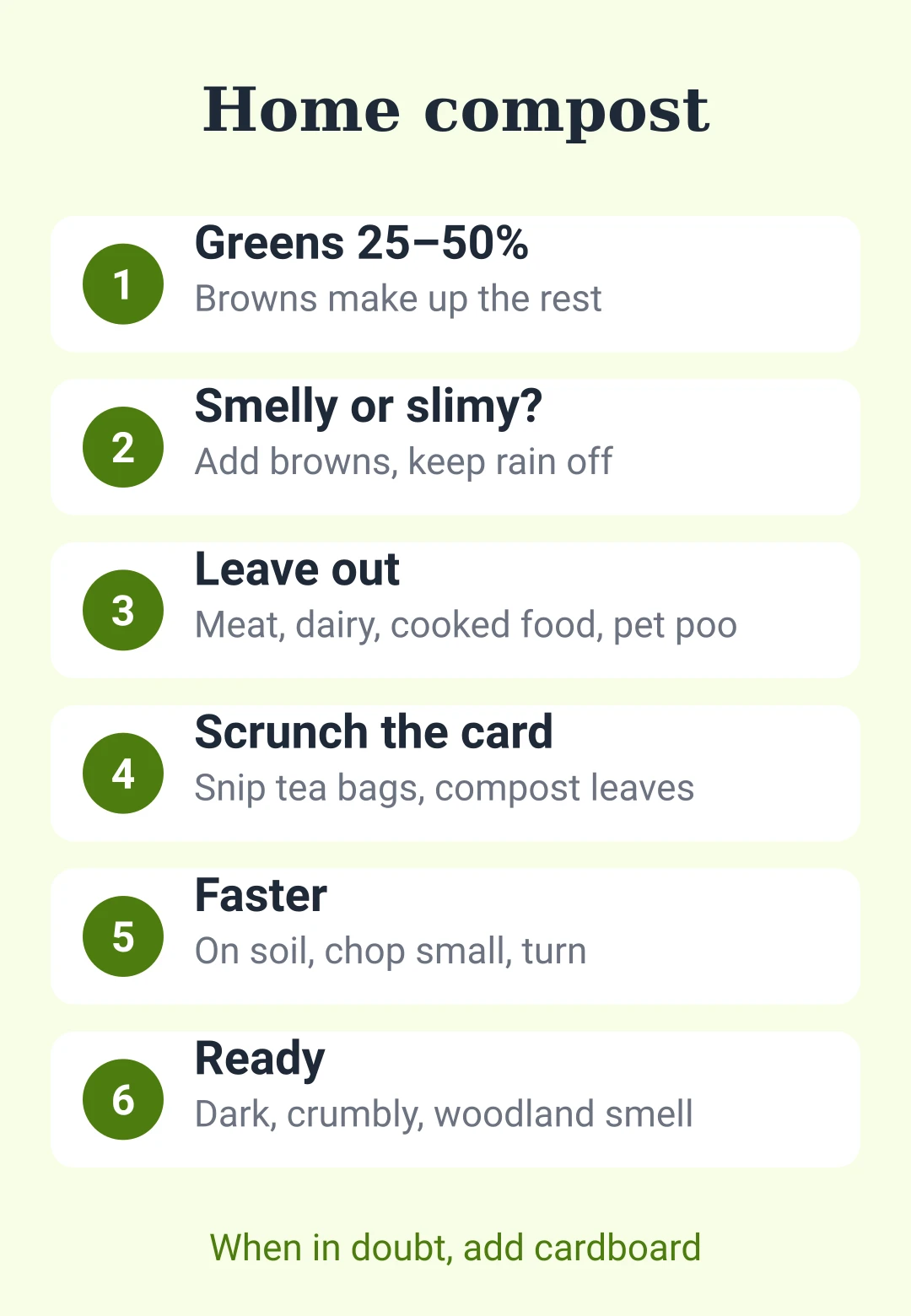
Cheat sheet: home compost
| Point | Rule |
|---|---|
| Mix | Greens 25–50%, browns the rest |
| Smelly or slimy | Add browns, keep rain off |
| Dry, not rotting | Add greens or water |
| Leave out | Meat, dairy, cooked food, pet poo |
| Cardboard | Scrunch it, don't flatten it |
| Tea bags | Snip open, compost the leaves |
| Faster | On soil, chop small, turn |
| Ready | Dark, crumbly, smells of woodland |
- composting
- home compost
- compost bin
- greens and browns
- garden basics
- kitchen scraps
- soil
- gardening tips
Vous avez aimé cette publication ?
pour laisser un commentaire.
Chargement…