
Cleaning with Vinegar: Where It Works and Where It Causes Damage 🌿
Zoe Adams · 조회수 34회 · 4개월 전 · 아티클
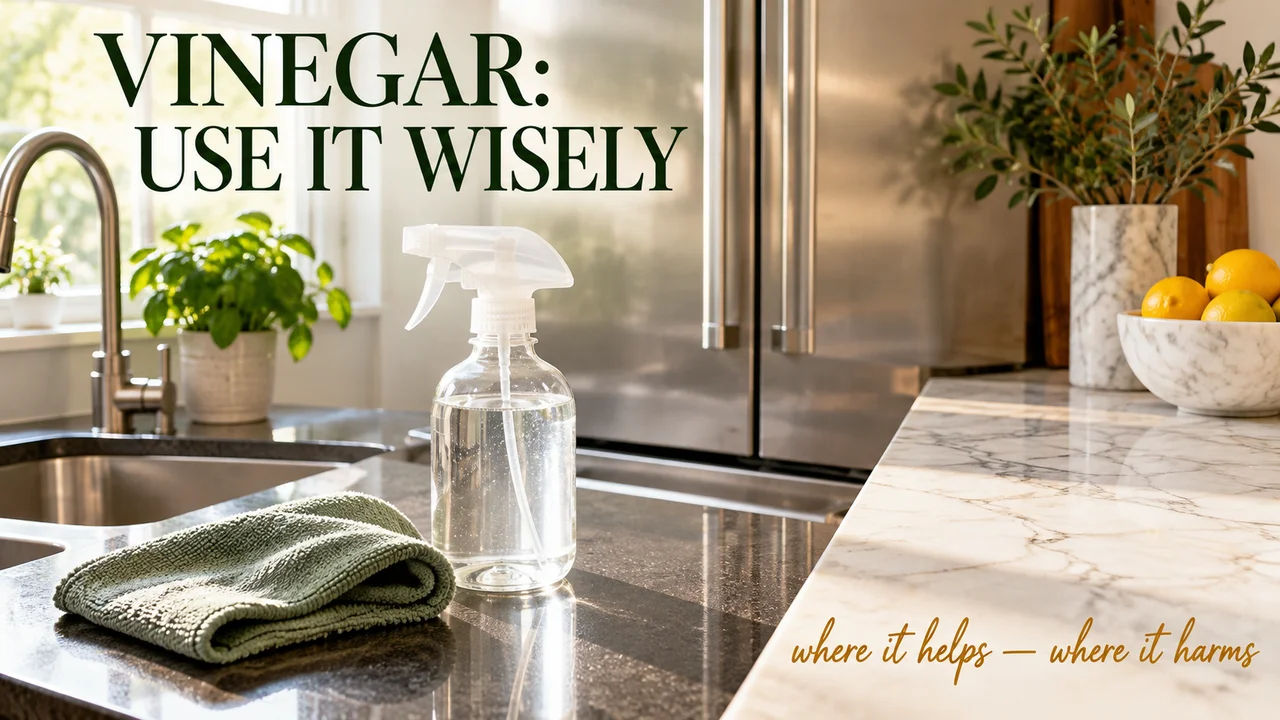
Where vinegar cleans brilliantly (glass, kettles, limescale) and the surfaces it damages, from marble and wood floors to screens, irons and appliance seals.
You've probably been told vinegar cleans everything; my mum still says it about her whole flat in Hove. Then one day a worktop goes dull in a ring-shaped patch, and nobody can explain why.
Here's a plain list of where vinegar cleans brilliantly and where it quietly does damage, plus two checks most people never think to do.
My unpopular opinion: vinegar is not all-purpose
I'll say it, and I clean a whole café with the stuff: vinegar is a specialist, not a cure-all. To be fair, the hype exists for a reason. It's gentle and properly good at one job.
That job is dissolving mineral deposits. Consumer Reports explains that the acid lowers the pH of calcium and magnesium deposits so they dissolve in water. The catch? Plenty of surfaces in your home are also made of, or sealed with, things acid eats.
Where vinegar shines
- Windows and glass: streak-free with a vinegar-and-water spray.
- Kettles: Which? calls it a great way to flush out limescale.
- Coffee makers: a standard descaler.
- Taps, shower heads, hard-water marks: limescale is exactly what the acid targets.
- Plastic and glass appliance parts: safe, says Consumer Reports.
Where vinegar causes damage
| Surface | What happens | Use instead |
|---|---|---|
| Marble, limestone, travertine | Etches dull marks | pH-neutral stone cleaner |
| Granite | Breaks down the sealer | pH-neutral stone cleaner |
| Wood floors, furniture | Eats the finish, even diluted | pH-neutral wood cleaner |
| Screens | Strips anti-glare coating | Water, tiny drop of dish soap |
| Steam irons | Wears the inner coating | Your manual's method |
| Dishwashers, washing machines | Corrodes seals and rubber | The maker's cleaner, per manual |
| Knives | Damages finish, dulls the edge | Soapy water, dry straight away |
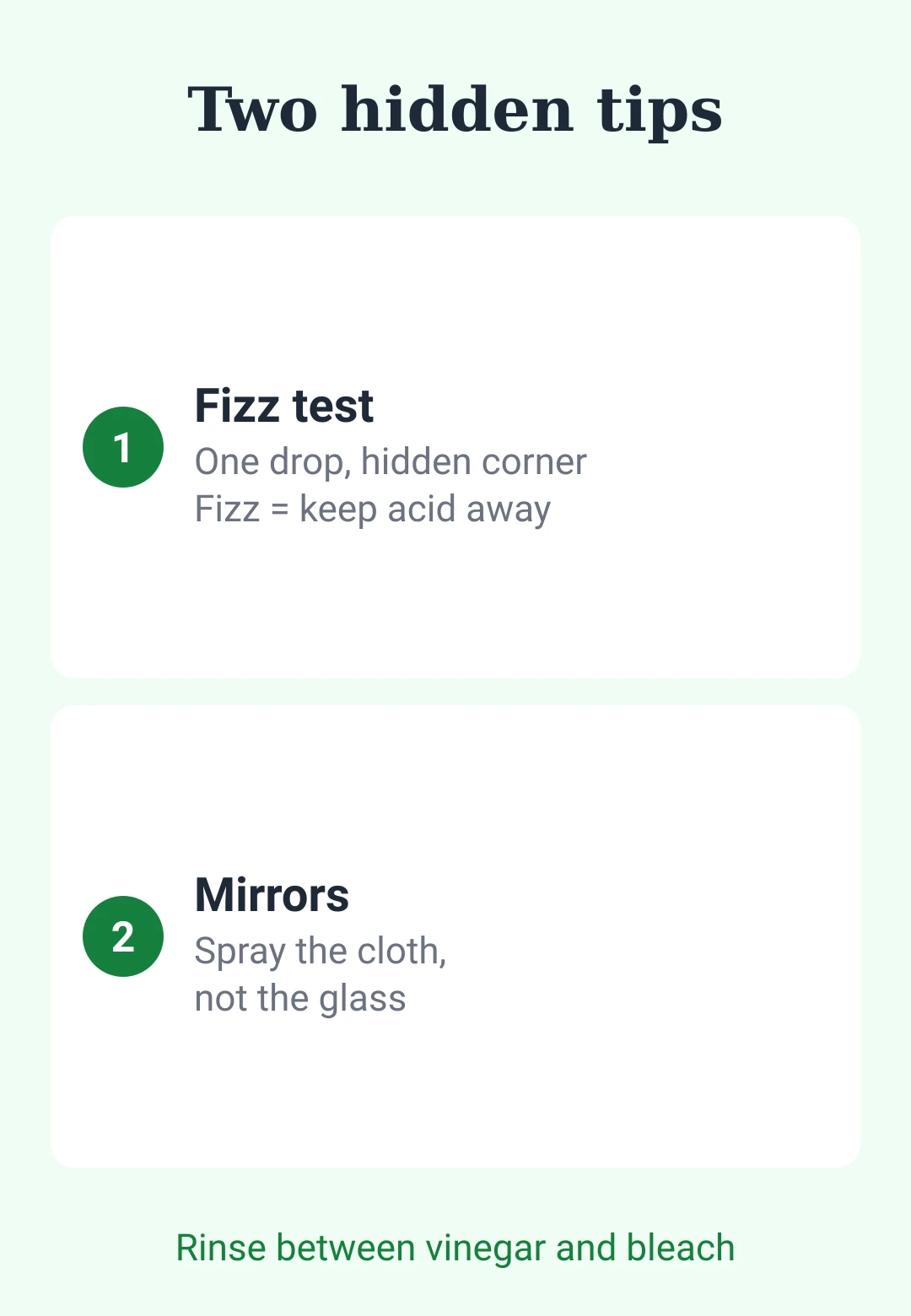
Hidden tip 1: find out what your worktop really is. Consumer Reports suggests one drop of white vinegar on a hidden corner. Fizzing means calcium-based stone like marble: keep acid well away. No fizz suggests granite-type stone, though a polished or sealed surface can hide the result.
Hidden tip 2: spray the cloth, not the mirror. Which? warns that acid can seep behind a mirror's thin coating and corrode the silver backing. A damp cloth keeps liquid out of the edges.
The one rule with no exceptions
Never mix vinegar with bleach, or use them back to back on one surface. The CDC notes that bleach plus an acid releases chlorine gas, which irritates eyes, nose and throat. Rinse with water between the two.
Where I'll give ground
Some washing machine makers do recommend vinegar, so check your manual before you trust me or anyone else. And Which? prefers citric acid on shower heads, since it's stronger and doesn't smell.
Cheat sheet: vinegar yes or no
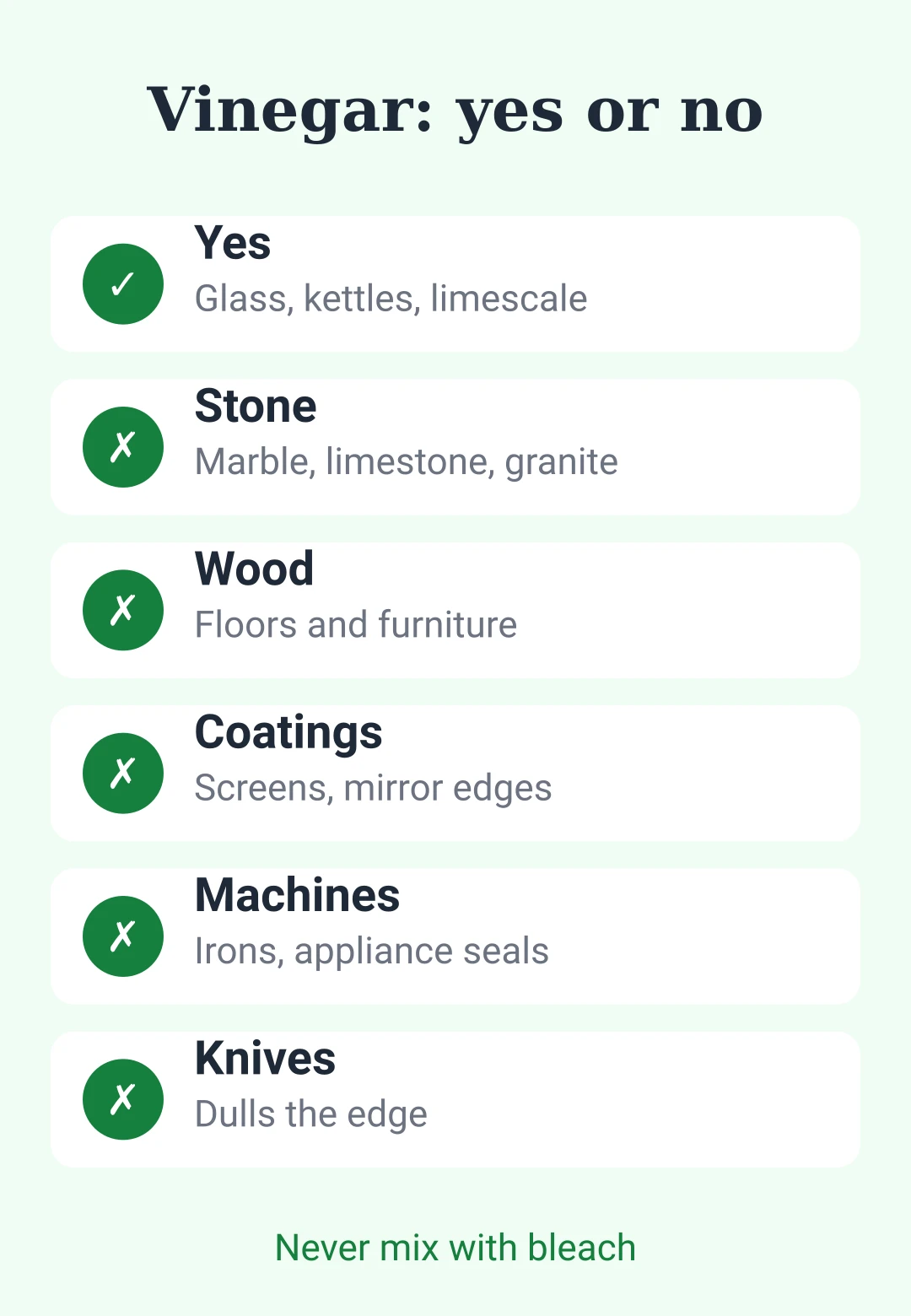
| Yes | No |
|---|---|
| Glass and windows | Marble, limestone, travertine |
| Kettles, coffee makers | Granite (kills the sealer) |
| Taps, shower heads | Wood floors and furniture |
| Hard-water marks | Screens; mirrors only via a cloth |
| Plastic appliance parts | Irons, knives, appliance seals |
| Rule | Never with bleach |
Unpopular, yes. Wrong? Do the fizz test on your worktop and let me know. That's me done being acidic. Sorry.
- vinegar cleaning
- natural cleaning
- limescale
- marble care
- stone worktops
- cleaning mistakes
- household tips
- low-waste
이 게시물, 마음에 드셨나요?
댓글을 남기려면 해 주세요.
불러오는 중…