
What 'Natural' and 'Chemical-Free' Labels Really Mean 🧪🔬
Mei Lin · 조회수 30회 · 2개월 전 · 아티클
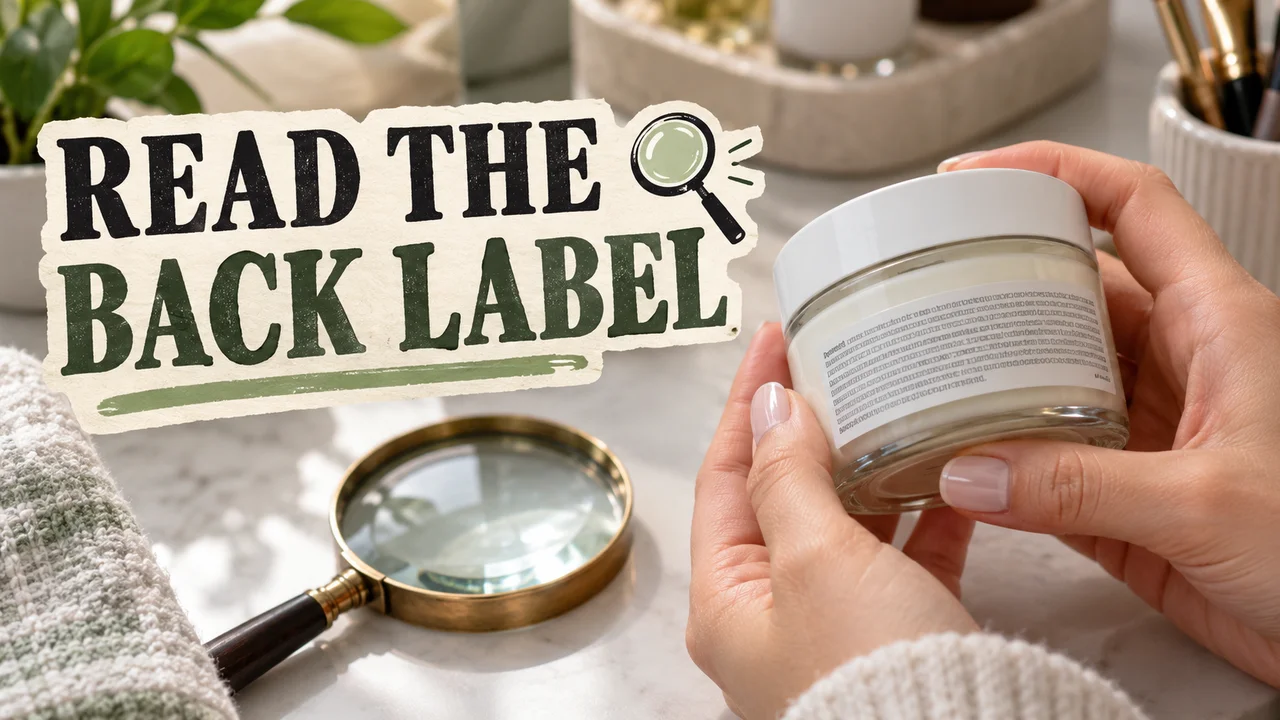
A cosmetic chemist takes a beauty label apart claim by claim: which words have legal meaning, which mean nothing, and how to read the ingredient list instead, with a cheat sheet to save.
You turn a jar of face cream around in the shop: the front says "natural" and "chemical-free" in soft green letters, the back is a wall of words you can't pronounce. The two sides seem to disagree.
Let's take that label apart, claim by claim: what each word legally means, and what to read instead.
On the bench: one ordinary label
Every label has two layers. The front is marketing; the back is the ingredient list, which the law requires. The useful part lives on the back.
"Chemical-free": the claim that can't be true
Myth of the week. Water is a chemical; so is shea butter, so is vitamin E. Anything made of matter is made of chemicals.
The seller usually means "no synthetic ingredients." Yet Health Canada treats natural and synthetic ingredients as equally suitable for cosmetics. Origin doesn't decide how a molecule behaves on skin.
"Natural": a word with no definition
The US FDA has never defined "natural" for cosmetic labels. Health Canada doesn't regulate marketing terms; the Competition Bureau acts only on false or misleading ones. So "natural" means whatever the brand decides.
Nor is it a safety promise. The FDA applies the same safety rules to every cosmetic, whatever the source, and says natural sourcing guarantees nothing.
"95% natural origin": read the fine print
These figures often come from ISO 16128. Under it, an ingredient counts as "natural origin" once it is more than 50% natural raw material. It's a calculation method, not a law, and no certifier checks the numbers.
"Organic": the claim with real rules
In the US, the USDA regulates "organic" for agricultural ingredients. Health Canada notes that organic-labelled products are usually more than 95% organic ingredients. A certification logo means more than the bare word.
The small print that sounds medical
- "Hypoallergenic": not a legal or scientific term. No cosmetic is non-allergenic.
- "Dermatologist tested": checked for irritation, not for whether it works.
- "Unscented": may contain a masking agent. "Parfum" or "fragrance" on the list means something scented is inside.
- "Preservative-free": none added. Health Canada calls preservatives essential, so something else must stop spoilage.
The part nobody checks: the back panel
In Canada and the US, ingredients above 1% go from most to least by weight. Anything at 1% or less, plus colours, can follow in any order.
Hidden tip: find the 1% line. The EU limits the preservative phenoxyethanol to 1%. So on a formula built to that rule, whatever comes after it is present at no more than 1%. A hero extract listed behind it is a trace.
Hidden tip: plant scents get listed too. Limonene and linalool are fragrance allergens found in citrus and lavender oils. A product scented only with essential oils can still list them, and Canada is phasing in a rule to name them above set levels.
At our lab, I'd rather see a short, boring list than a long one dusted with twenty trendy extracts.
Save this: label claims at a glance
| Claim | What it really means |
|---|---|
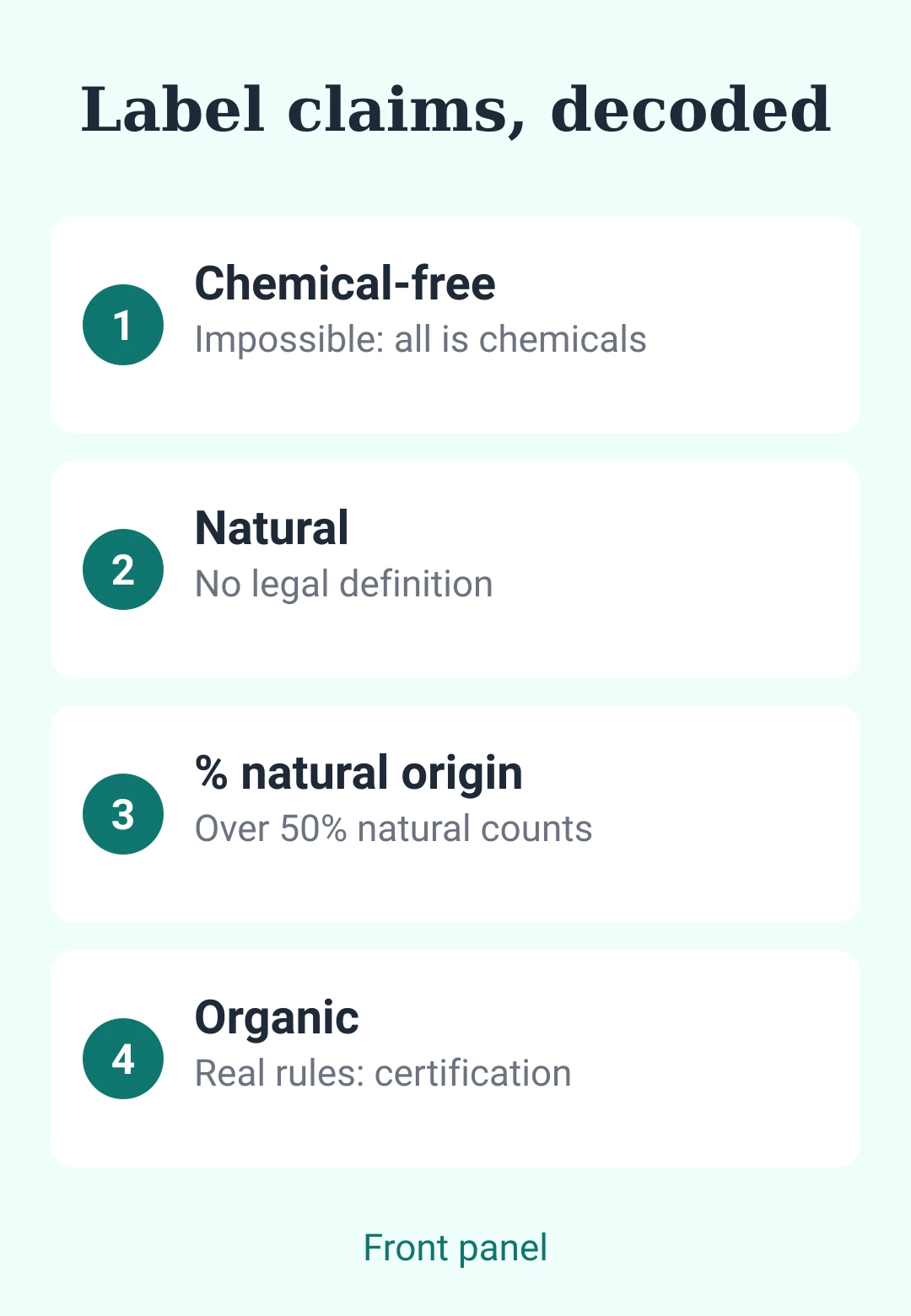
| Chemical-free | Impossible; everything is chemicals |
| Natural | No legal definition; not a safety promise |
| % natural origin | ISO 16128 maths; over 50% natural counts |
| Organic | Real rules; look for a certification logo |
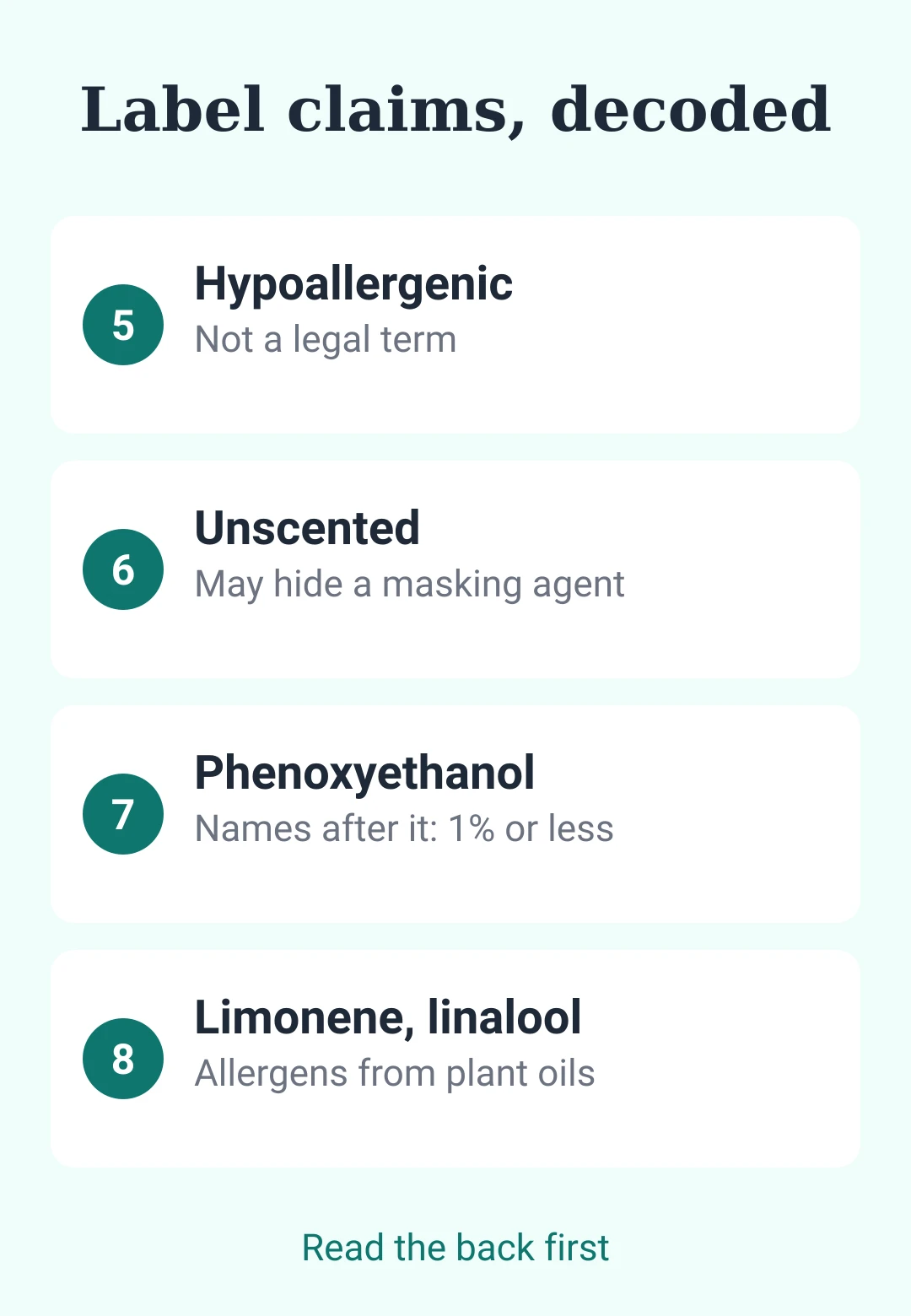
| Hypoallergenic | Not a legal term; reactions still possible |
| Unscented | May contain a masking agent |
| Ingredient list | Most to least, down to the 1% line |
| Phenoxyethanol | Names after it: 1% or less |
| Limonene, linalool | Fragrance allergens, even from plant oils |
Every label is a stack of choices. Read the back first, and the front starts to make sense.
- beauty labels
- natural cosmetics
- ingredient list
- skincare myths
- organic skincare
- fragrance free
- hypoallergenic
- cosmetic chemistry
이 게시물, 마음에 드셨나요?
댓글을 남기려면 해 주세요.
불러오는 중…