
How to Organize Toys: A Rotation System That Cuts Clutter 🧸
Megan Price · 123回視聴 · 3 か月前 · 記事
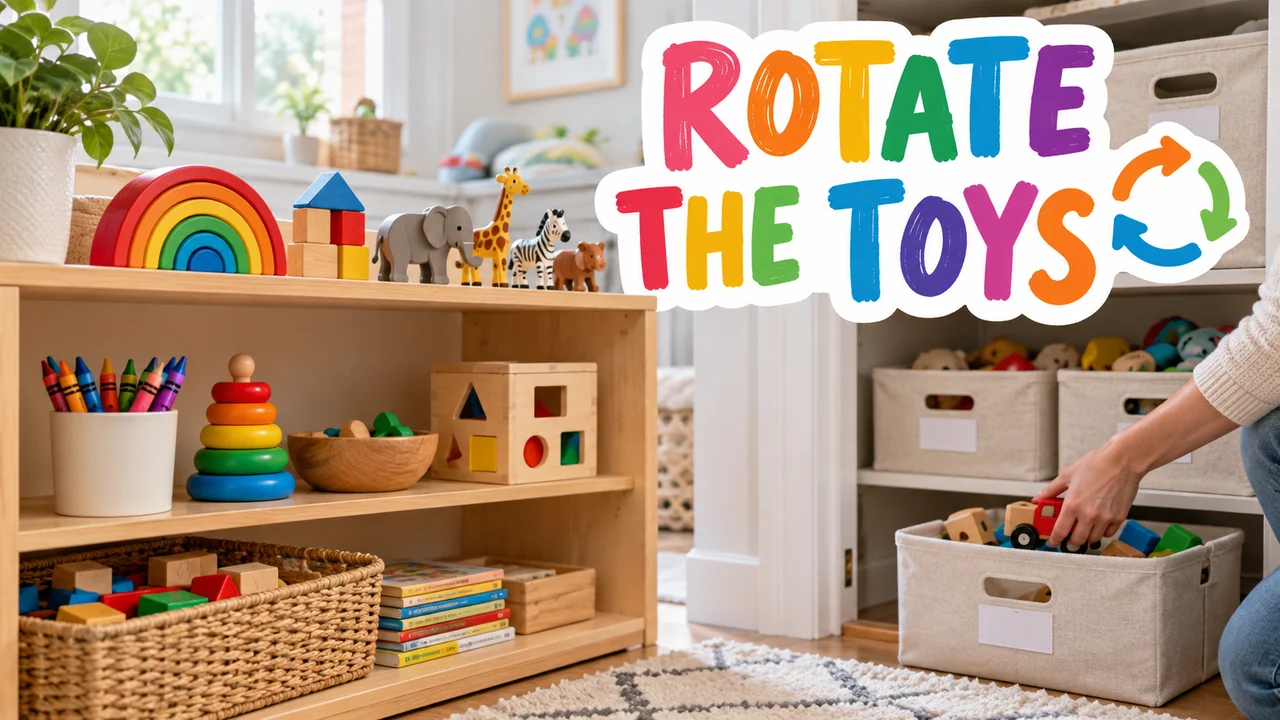
Toy rotation, open-ended, low shelf, loose parts: each toy-organizing word in plain English, with a five-step rotation plan and a cheat sheet to save.
You tidy the playroom, and twenty minutes later every bin is on the floor and your kid says there's nothing to play with. The fixes come in jargon: toy rotation, open-ended, low shelf, loose parts.
Below, every term gets a plain meaning, plus a rotation plan for the toys you already own.
The words, in plain English
Toy rotation: some toys out, the rest in a closet. Swap now and then. In a University of Toledo study, 36 toddlers aged 18 to 30 months played about twice as long with each toy when the room held 4 toys instead of 16, and found more ways to use them.
Open-ended toy: no single right way to play. Blocks, play dough, animal figures. My test: three different ways to use it? Shelf.
Closed-ended toy: one job, one finish line, like a puzzle. Put out a few at a time.
Low open shelf: toys at kid height, in plain view. Montessori classrooms are built around these. Seen and reachable means played with, and put back.
Loose parts: architect Simon Nicholson's 1971 idea that the more movable bits a space has, the more inventive kids get in it. Lids, tubes and scarves count.
A simple rotation plan
- Pull every toy into one pile.
- Sort into groups: build, pretend, move, puzzles, art.
- Put a few from each group on the low shelf. The rest go into labeled closet bins.
- Swap a group once it gets ignored, every week or two, give or take.
- Keep true favorites out. A lovey never rotates.
In my kindergarten room, an ignored block corner wakes up the day toy animals land beside it.
Matters or noise
Rotation, open-ended and reachable are the terms that shape play, because together they decide what is out, what it can become and whether small hands can reach it. Words that change nothing alone: "educational" on a box. Kids decide.
False friends
Decluttering and rotating sound like cousins. They're not: decluttered toys leave the house, rotated toys rest in a closet and come back feeling new.
The word that oversells
"Toy box" sounds organized. In a deep chest, though, everything sinks, and kids dump it all to find one car.
Hidden tips
- Check the lid: the U.S. Consumer Product Safety Commission says a toy chest lid support should hold the lid open in any position, air holes shouldn't be blocked by a wall or floor, and automatic latches should be disabled.
- Sort by age as you rotate: in U.S. toy rules, a "small part" fits inside a test cylinder about 1¼ inches wide, roughly the throat of a child under 3. Big kids' tiny-piece sets live up high.
Translate it yourself
"Rotate often, open-ended, low shelf." Plain English: fewer toys out, lots of uses each, at kid height.
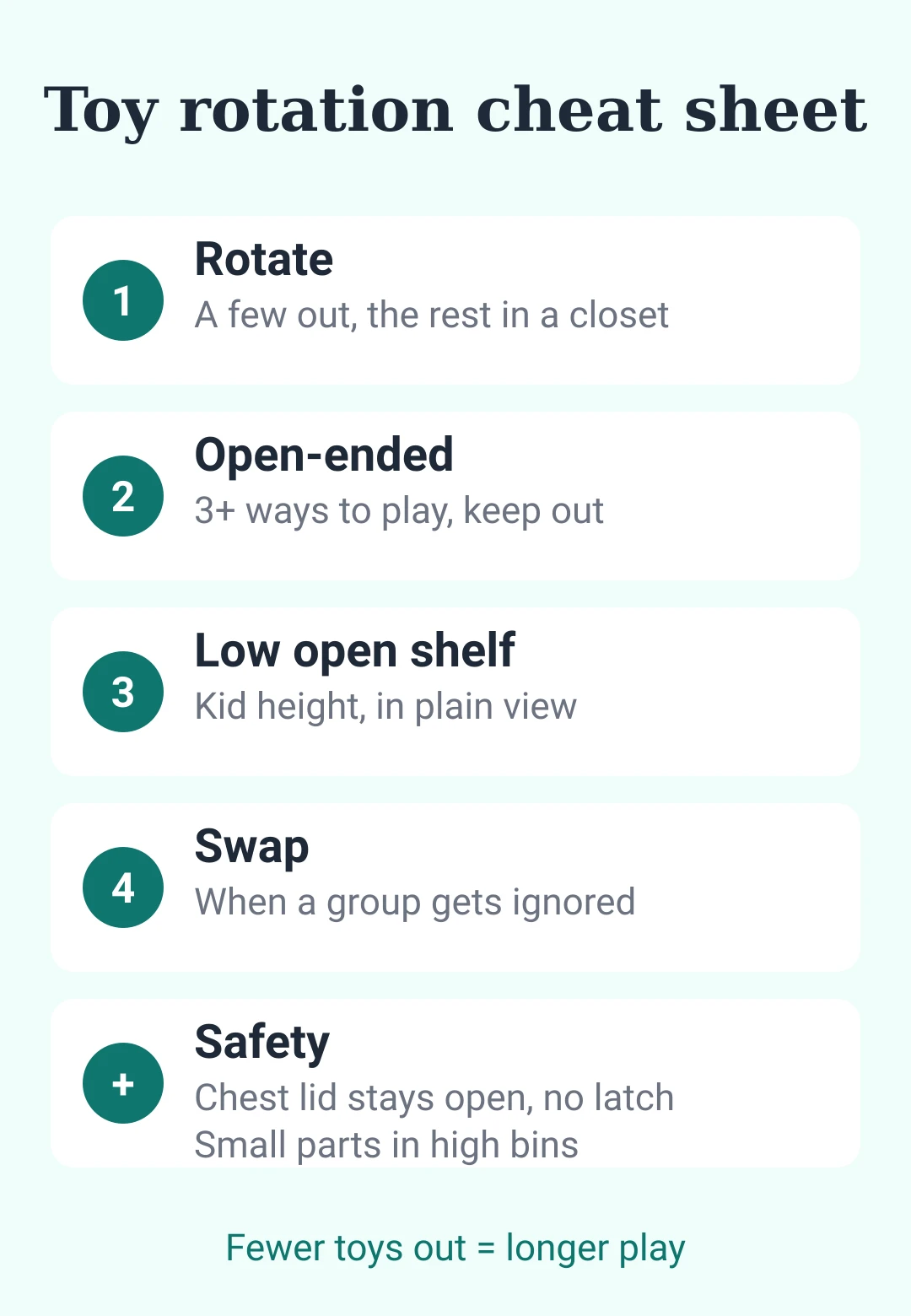
Save this: toy rotation cheat sheet
| Word | What to do |
|---|---|
| Rotation | A few out, the rest in a closet |
| Open-ended | 3+ ways to play, keep out |
| Closed-ended | A few at a time |
| Low open shelf | Kid height, in plain view |
| Loose parts | Lids, tubes, scarves count |
| Swap | When a group gets ignored |
| Toy chest | Lid stays open, air holes, no latch |
| Small parts | High bins, away from under-3s |
Learn five words, ignore one, and the playroom gets quieter.
- toy rotation
- toy organization
- toy clutter
- open-ended toys
- playroom
- kids play
- toy storage
- toddlers
この投稿はいかがでしたか?
コメントするにはしてください。
読み込み中…