
Simple Skincare Routine for Sensitive Skin: 3 Steps
A three-step routine for easily irritated skin, the ingredients to avoid, the label words that matter, a proper patch test and a summary to save.

Eleanor Hughes
2026年10月4日 · 2分で読めます
"Hypoallergenic, unscented, soothing." If your face has stung after a product that promised all three, the label was not lying, exactly; it simply was not telling you much.
Here is a three-step routine, a short avoid-list, the label words worth reading and a proper patch test.
The three-step routine
- Cleanse gently, twice a day. A mild cleanser, not soap, applied with fingertips, rinsed with warm water and patted dry.
- Moisturise. The American Academy of Dermatology (AAD) suggests a cream rather than a lotion or gel, and no toner or astringent.
- Sunscreen in the morning. If ordinary sunscreens sting, try a mineral one: zinc oxide, titanium dioxide, or both.
Evenings are steps one and two. Nothing more.
The avoid-list
For easily irritated, rosacea-prone skin, the AAD names alcohol, camphor, fragrance, glycolic acid, lactic acid, menthol, sodium lauryl sulfate and urea. Check the ingredient list, not the front of the pack.
Label words, translated
- Fragrance-free: no fragrance added. The one to look for.
- Unscented: no noticeable smell, which is a different promise. The US Food and Drug Administration (FDA) notes a maker may add fragrance to mask other smells.
- Parfum: on UK and EU labels, one word for a whole fragrance blend.
- Linalool, limonene, geraniol: fragrance allergens, which UK and EU rules require to be named above 0.001 per cent in leave-on products.
- Hypoallergenic: sounds like a test result. It is not; the FDA says no federal standard defines it.
Hidden tip: find the 1 per cent line
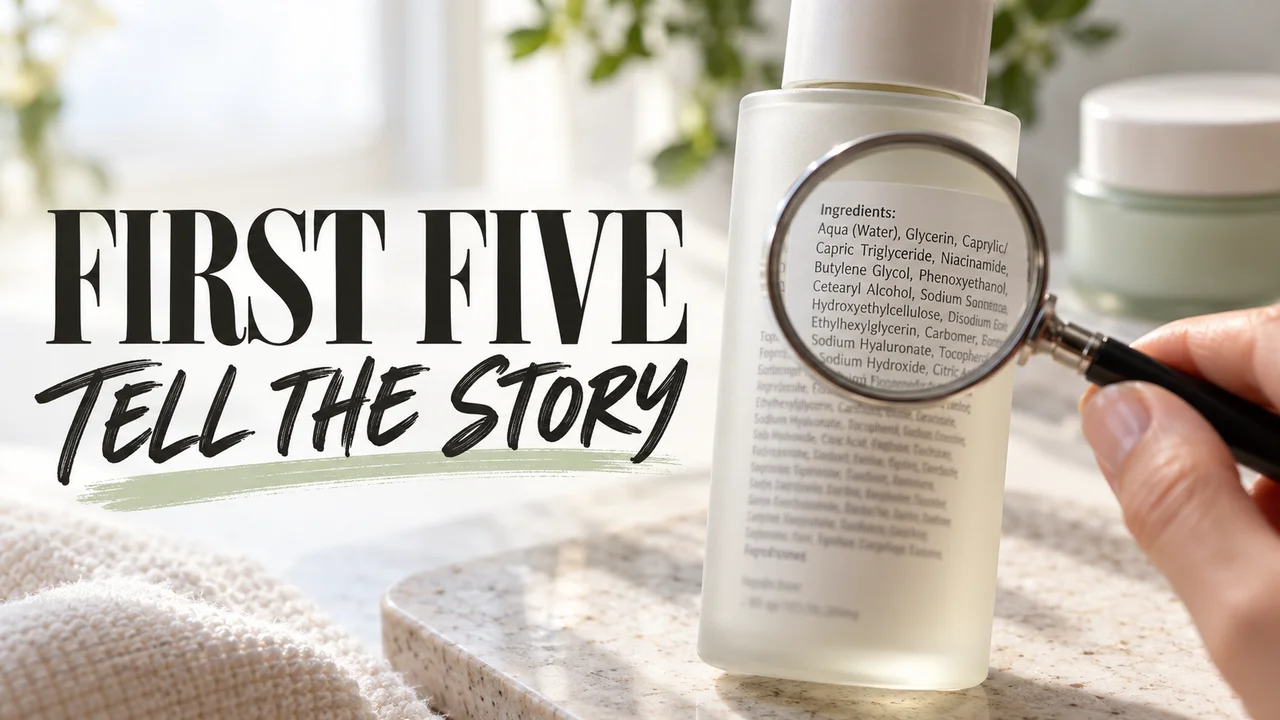
UK and EU ingredient lists run in descending order of weight, but anything under 1 per cent may sit in any order at the end. The preservative phenoxyethanol is legally capped at 1 per cent. Whatever comes after it is 1 per cent or less.
So if the soothing extract on the front sits behind it, there is very little of it.
Hidden tip: a patch test takes a week
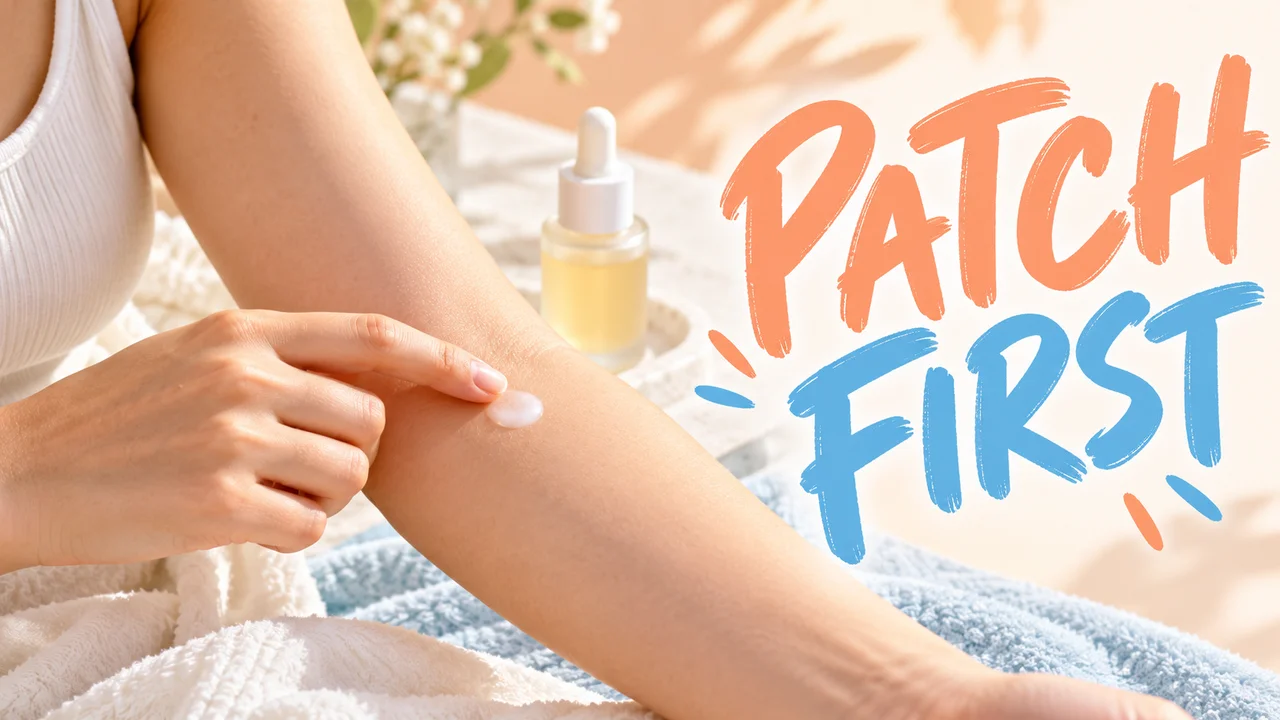
Half an hour proves little. The AAD's method: your usual amount on a small patch of the inner arm or elbow crease, twice daily, for seven to ten days. Wash-off products stay on five minutes. Redness, itching or swelling? Wash it off and stop.
Introduce new products singly, too; otherwise none of us can tell what helped or what harmed. My years beside a hospital dermatology clinic taught me that.
Practice label
"Aqua, Glycerin, Cetearyl Alcohol, Phenoxyethanol, Chamomilla Recutita Flower Extract, Parfum, Linalool."
In plain English: mostly water and glycerin, a little chamomile, a fragrance blend and a named fragrance allergen. However calm the box looks, it is not fragrance-free.
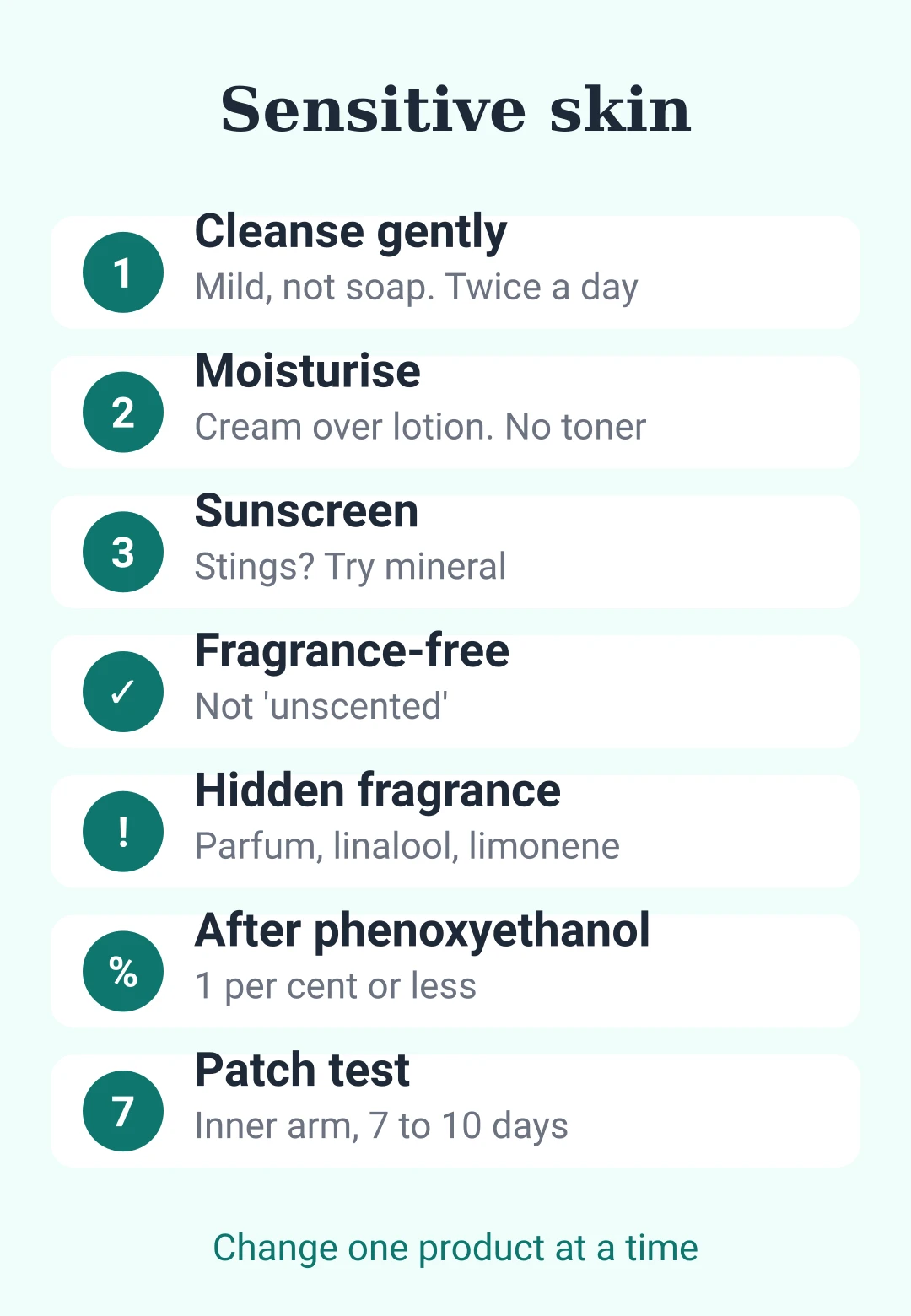
Save this: sensitive skin at a glance
| Point | What to do |
|---|---|
| Routine | Cleanse, moisturise, sunscreen |
| Cleanser | Mild, not soap; warm water |
| Moisturiser | Cream; skip toner |
| Sunscreen | Stings? Try mineral |
| Avoid | Fragrance, alcohol, menthol, camphor, glycolic and lactic acid, SLS, urea |
| Label | Fragrance-free, not unscented |
| Hidden fragrance | Parfum, linalool, limonene, geraniol |
| After phenoxyethanol | 1 per cent or less |
| Patch test | Inner arm, twice daily, 7 to 10 days |
| New products | One at a time |
Read this way, a label stops being a riddle and becomes a set of facts.






コメントするにはしてください。
読み込み中…