
How to Brush Your Dog's Teeth 🐶🪥
Lucy Harper · 29 vues · il y a 1 mois · Article
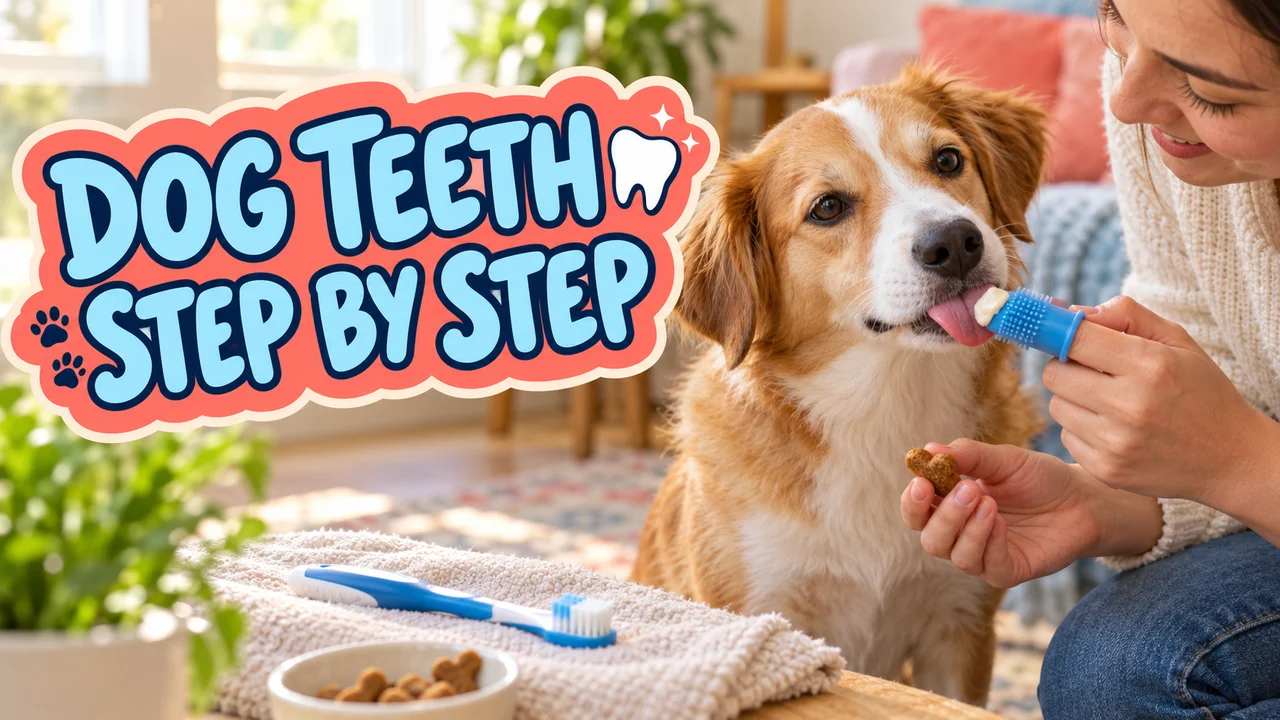
A step-by-step way to get your dog used to tooth brushing, a front-to-back route for the brush, and how often to do it, with a cheat sheet to save.
Your dog leans in for a cuddle, and the breath sends you backward. You know brushing would help, but the last attempt ended with a toothbrush under the couch.
Here is a slow, step-by-step way to get a dog to accept brushing, a short tour of where to brush, and how often it really needs doing.
First, a week or two of small steps
Colorado State's vet hospital suggests building up to the brush over one to two weeks. A Tufts veterinary dentist notes some dogs need up to two weeks per step, so follow your dog's pace.
- Handle the face. Same spot each day. Rub the muzzle, lift a lip, then treat. Under a minute.
- Taste the paste. Let your dog lick dog toothpaste off your finger.
- Finger on the gums. Run a pasted finger along the upper gums, then reward.
- Add the brush. Soft bristles or a finger brush. A few teeth, then stop on a good note.
My border collie mix, Pepper, decided the toothpaste was a snack and the brush was optional. She licked it clean every time!
The tour, front to back
Lift the lip and hold the bristles at about a 45-degree angle toward the gums. Use light, back-and-forth strokes.
Stop one: the front teeth (incisors). A few quick strokes along the gum line.
Stop two: the long fangs (canines). Gentle strokes, gum toward tip.
Stop three: the upper back teeth, cheek side. This is the stop that matters most. The Veterinary Oral Health Council (VOHC) says plaque and tartar build up fastest on the cheek surfaces of the upper teeth.
Stop four: the lower back teeth. Outside surfaces, back to front.
The tricky corner: the inside surfaces. Many dogs object at first. VOHC says to add them when practical. Outsides come first.
Hidden tips
- Short on time? Do stop three only. The MSPCA notes that dental disease usually hits the upper back teeth first and worst.
- Watch the bristles. If they flatten or splay out, you're pressing too hard. Ease off.
- Never human toothpaste. Some contain xylitol, which is toxic to dogs. Dog toothpaste is made to be swallowed, so there's no rinsing.
How often
Daily is the goal. VCA explains that plaque forms within hours of a meal and starts hardening with minerals in saliva within about 24 hours. VCA puts three times a week as the minimum. VOHC adds that any brushing done regularly beats none.
Brushing doesn't replace checkups, and some dogs still need a professional cleaning.
Signs it's time for the vet
- Bad breath that doesn't go away
- Broken or loose teeth
- Bleeding from the mouth or swelling around it
- Odd chewing, drooling or dropping food
At the clinic we often hear "it's just doggy breath." Honestly, sometimes it's a sore mouth.
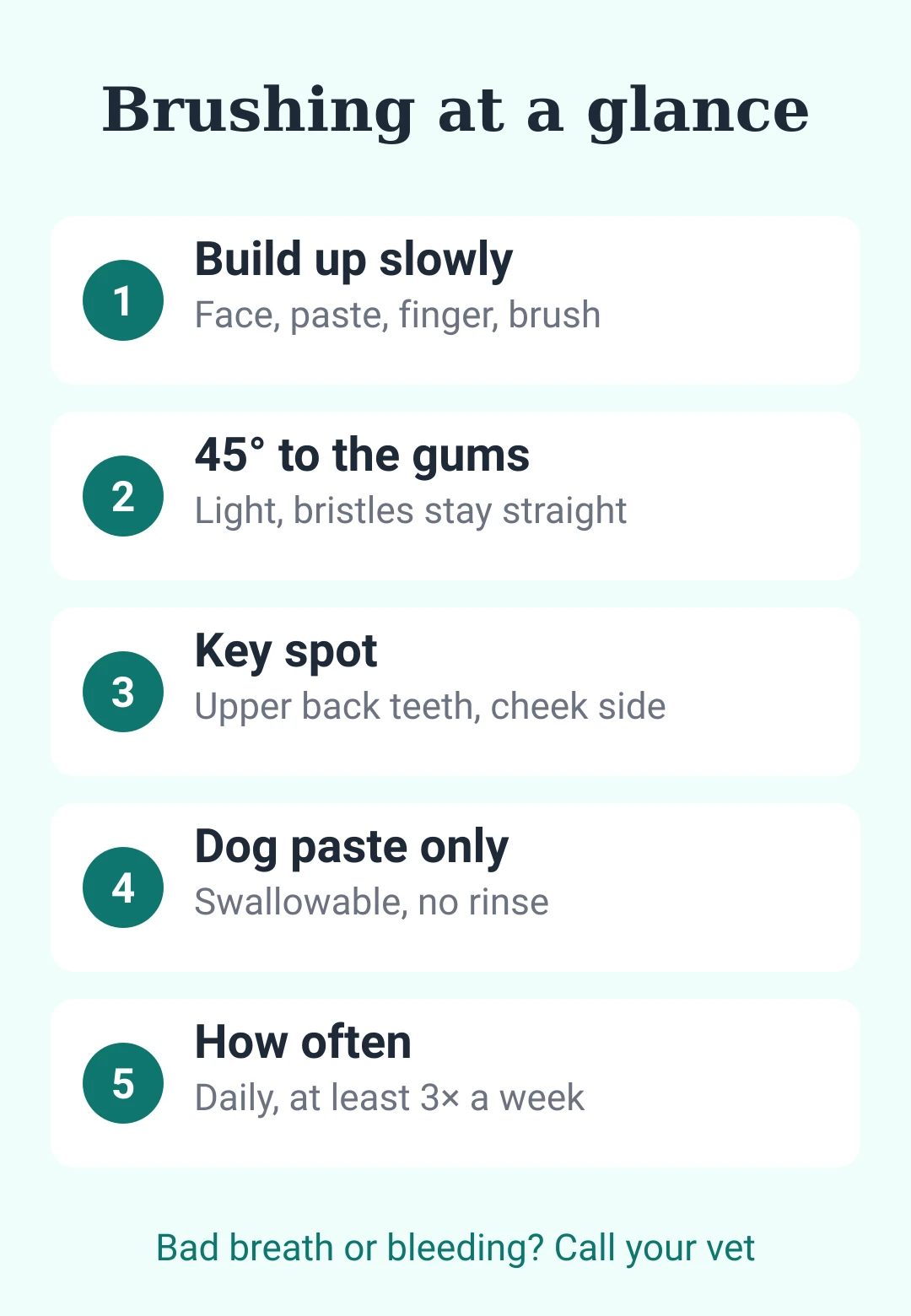
Save this: the brushing cheat sheet
| Topic | Remember |
|---|---|
| Build up | Face, paste, finger, brush |
| Pace | 1–2 weeks, longer is fine |
| Angle | About 45° toward the gums |
| Pressure | Light, bristles stay straight |
| Key spot | Upper back teeth, cheek side |
| Toothpaste | Dog paste only, no rinse |
| How often | Daily, at least 3× a week |
| Call the vet | Bad breath, bleeding, loose teeth |
Keep the same route every time. Your dog learns the order, and so do you.
- dog teeth brushing
- dog dental care
- dog toothpaste
- plaque and tartar
- dog grooming
- dog health
- bad breath in dogs
- pet care basics
Vous avez aimé cette publication ?
pour laisser un commentaire.
Chargement…