
Baby-Proofing Checklist: Room-by-Room Before Crawling 👶
Anna Kowalski · 33 vues · il y a 3 mois · Article
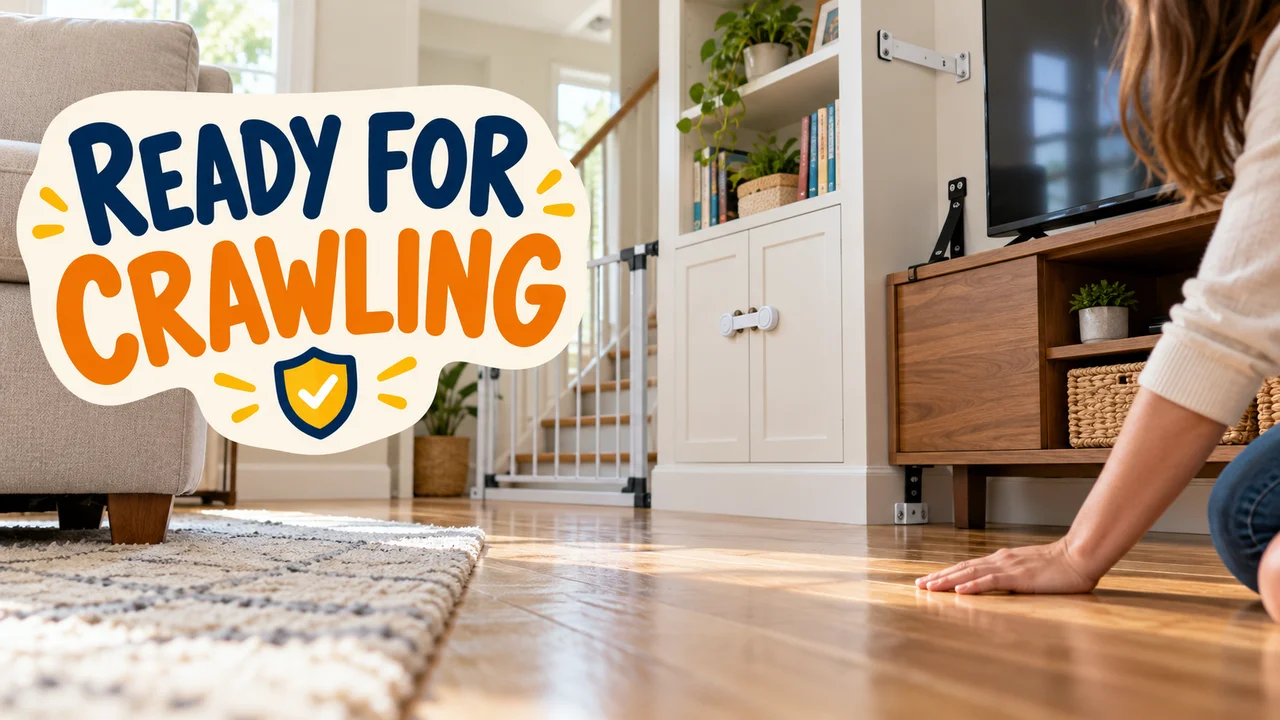
A room-by-room baby-proofing checklist in the order to fix things, with the key safety numbers and a cheat sheet to save.
One day your baby rocks on hands and knees, and the next, every low shelf, dangling cord and cupboard door in the house looks different. Crawling arrives fast, and the safest homes are the ones fixed a few weeks before it starts.
Here is a room-by-room checklist, in the order we would fix things, with the numbers that matter.
What parents ask about now
In our playgroup, parents used to ask which gadget to get. Now they ask which room to fix first. Good. A few well-placed fixes beat a drawer full of clips.
Start on your hands and knees
Paediatric safety guides suggest crawling through each room at your baby's height. You will spot what you never see standing: a charger behind the couch, a coin under the radiator.
Hidden tip: an empty toilet paper tube makes a quick home check for small parts. It is slightly wider than the official small-parts test cylinder, so anything that slips inside is too small for a child under three.
Room by room: what to fix first
Living room
- Anchor tall furniture. Strap dressers, bookshelves and TVs to the wall.
- Move furniture away from windows. Babies climb to reach them.
- Window stops at 10 cm (4 in). Use stops that adults can remove quickly. A screen will not hold a baby.
- Remotes and button batteries. Battery covers should screw shut. Swallowed, one can cause serious internal burns within two hours, so head straight to emergency.
Stairs
- Top of stairs: a wall-mounted gate. Pressure gates can topple when a baby leans on them.
- Bottom of stairs: a pressure gate is fine. Install both before crawling.
Kitchen and bathroom
- High, locked, out of sight. Cleaners, medicines and laundry detergent pods, kept in their original labelled containers.
- Child-resistant caps are not childproof. Many children can open them.
- Hot tap water at 49 °C (120 °F) or less. Hotter water can burn a child's skin in seconds.
Hidden tip: test your taps with a meat or candy thermometer. Run the hot tap on its hottest setting for two minutes, fill a cup, wait 30 seconds and read it. If it reads above 49 °C, the water needs to come down, and because many water heaters are kept hotter to control bacteria, a mixing valve at the tap or heater is often the better fix.
Bedroom and nursery
- Blind cords. Health Canada says just over 22 cm of cord can strangle a child. Swap older corded blinds for cordless ones, starting with bedrooms, or tie cords high.
- Crib mattress down. Lower it to its lowest position once your baby can sit up.
- Change on the floor, or keep one hand on your baby the whole time, even with straps.
Fixes that stay, habits to drop
Anchors, wall-mounted gates and locked storage stay. They handle the biggest risks, falls and poisoning, and keep working long after the novelty fades.
I would drop trusting screens, top-of-stairs pressure gates and "safety" caps as if they were locks. They look protective. They are not.
At this stage, the goal is a clear, safe floor, not an empty house: that is where crawling turns into confidence.
Cheat sheet: save this
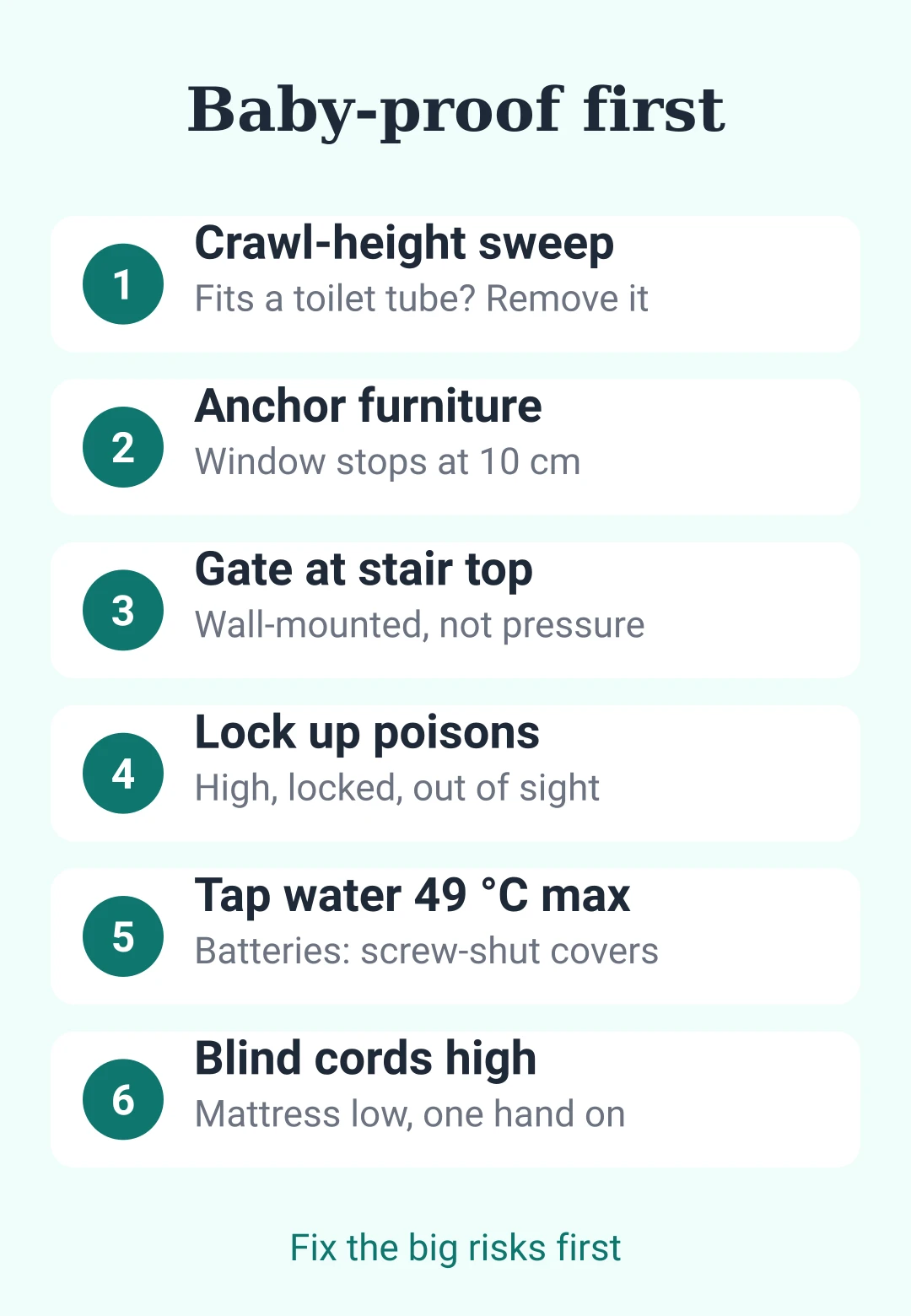
| Room | Fix first | Rule of thumb |
|---|---|---|
| Every room | Crawl-height sweep | Fits a toilet tube? Remove it |
| Living room | Anchor furniture | Window stops at 10 cm |
| Living room | Button batteries | Screw-shut covers |
| Stairs | Gate at the top | Wall-mounted, not pressure |
| Kitchen, bath | Lock up poisons | High, locked, out of sight |
| Bathroom | Tap water | 49 °C or less |
| Bedroom | Blind cords | Cordless, or tied high |
| Nursery | Crib, change table | Mattress low, one hand on |
Follow what solves a real risk, and the rest can wait.
- baby-proofing
- childproofing
- baby safety
- crawling
- stair gates
- home safety
- nursery
- parenting
Vous avez aimé cette publication ?
pour laisser un commentaire.
Chargement…