
How to Wash and Store a Quilt Without Damaging It 🛏️
A color test, a gentle washing routine, flat drying and breathable storage habits that keep quilts and comforters fresh, with a cheat sheet to save.

Beth Lawson
5 juillet 2026 · 3 min de lecture

A quilt comes out of the closet smelling stale, and you hesitate at the washer because one wrong cycle could ruin it. Ana from Dayton wrote to me with exactly that worry.
Below: whether a quilt can go in the machine, a gentle wash, flat drying, and storage that keeps it fresh.
Ana's letter
"My grandmother made me a cotton quilt, hand-quilted, maybe thirty years old. I keep it zipped in a plastic bag on the top shelf of the hall closet so the dog can't get to it. Every time I take it out, it smells musty. I've tried airing it on the porch rail and a fabric spray. Can I just put it in my washer, or will it fall apart?" — Ana, Dayton, one beagle
The clue in your letter
Ana, the answer is in "zipped in a plastic bag." A University of Nebraska–Lincoln quilt guide warns that plastic bags block air, and trapped moisture can lead to mildew. That bag is the likeliest source of the smell.
Short version: change the storage first. Wash only if the smell stays.
Two checks before any wash
- Heirloom? Very old, fragile or valuable quilts, and silk or wool ones, belong with a textile conservator. Valuable quilts should never be machine washed, even on delicate.
- Colors run? Drip water on a hidden spot of each fabric, then blot with a white cloth. Any color on the cloth means no wet cleaning.
Mend loose threads and open seams while it's dry.
Washing gently
- Most modern quilts can be machine washed if the label allows: cold water, gentle cycle, mild detergent.
- For a cherished one, a bathtub is gentler. The Nebraska guide uses water no warmer than 90–100°F and mild dish liquid, not laundry detergent.
- Press it with your fingers. Never scrub, squeeze or wring.
Hidden tip: never lift a wet quilt by one end. Its weight can tear stitches and fabric. Slide a sheet or window screen underneath and lift it like a sling, ideally with a helper.
Drying it flat
- Lay it flat on a clean sheet in a room with good air flow.
- Press out water with towels. A fan a few feet away helps.
- Keep it out of direct sun and off the clothesline.
- Valuable quilts skip the dryer. Everyday ones follow the label.
Storing it so it stays fresh
In your shoes, Ana, I'd swap the plastic bag for a clean cotton pillowcase or sheet. It keeps out dust and beagle, and it breathes.
- Store it flat if you can. Otherwise, fold as little as possible and pad folds with acid-free tissue or washed muslin.
- Refold along new lines now and then.
- Avoid attics, basements and bright rooms. Light damage is permanent.
- Nothing heavy on top.
Hidden tip: a cedar chest isn't the safe spot people think. The International Quilt Museum notes that any wood gives off acidic oils that yellow fabric, and cedar does little against moths. Line chests and shelves with tissue or muslin. For bins, the museum accepts new plastic marked recycling code 2 or 5, lined the same way.
My own hand-pieced quilt lives flat on our guest bed under a cotton sheet. Melvil, our cat, takes this as an invitation.
For everyone else
If a stored quilt or comforter smells musty, check what it lives in before you reach for detergent. Between washes, air it in the shade, or vacuum on low suction through tulle over the nozzle.
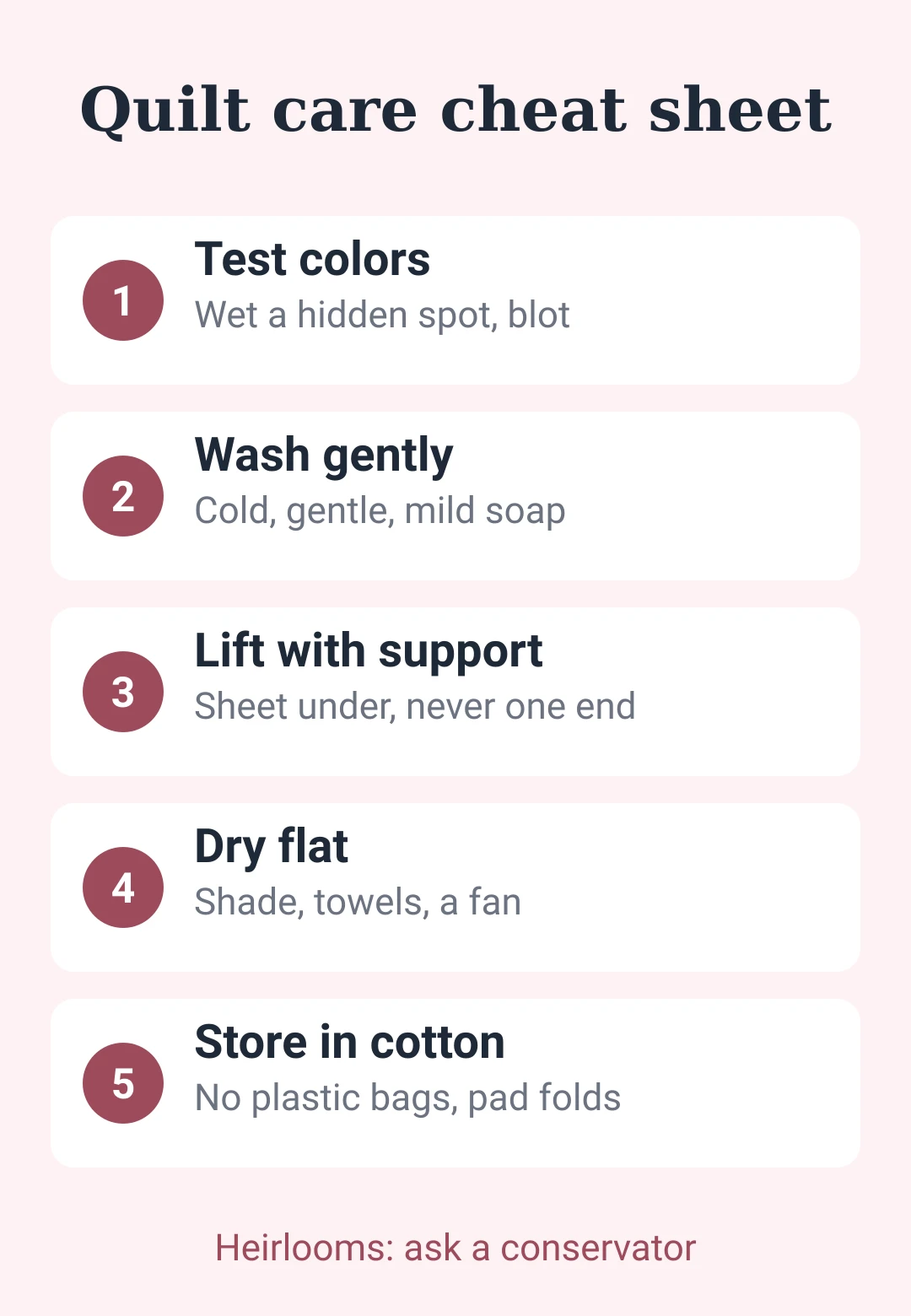
Save this: quilt care cheat sheet
| Task | How |
|---|---|
| Heirloom? | Ask a conservator |
| Color test | Wet a hidden spot, blot |
| Wash | Cold, gentle, mild soap |
| Lift | Sheet underneath |
| Dry | Flat, shade, fan |
| Cover | Cotton, not plastic bags |
| Folds | Few, padded, refold |
| Place | Dark, no attic or basement |
So, Ana: let it breathe in cotton first. Let me know if the smell lingers.












pour laisser un commentaire.
Chargement…