
How to Store Books and Protect Them From Damage
Julia Moss · 34 vistas · hace 4 meses · Artículo
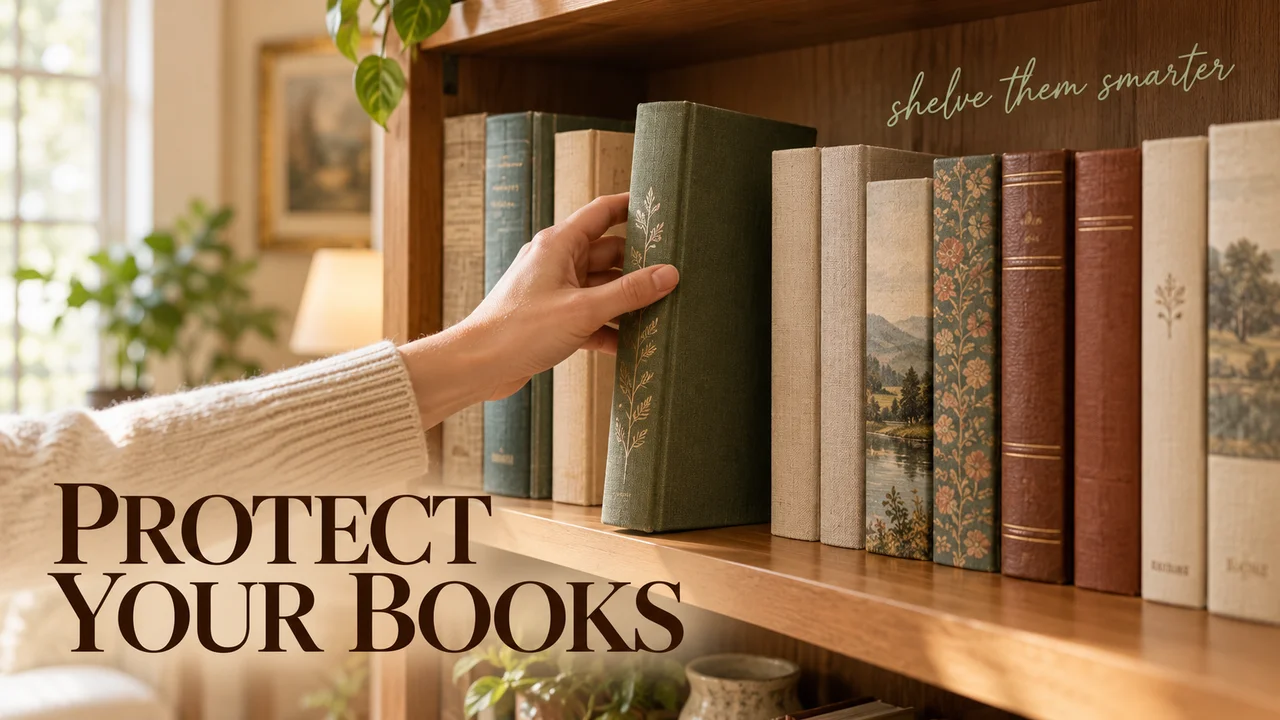
A field guide to the five common kinds of book damage at home, foxing, mold, cockle, slump and sun fade, with the shelving habits that stop each one and a pocket card to save.
The spines by the window have gone pale, the last paperback on a half-empty shelf leans like a tired commuter, and one old novel smells faintly of a damp cellar. Books at home have five common enemies, and each leaves its own field marks.
Here is how to spot humidity damage, sagging and fading, and the shelving habits that stop each one.
The safe zone
National Park Service guidance for old books puts the safe zone at a steady 40 to 55% humidity and 65 to 70°F; above 65% humidity, mold and foxing move in.
The five species
Foxing
Field marks: flat, rusty brown freckles in clusters. Cause: damp air reacting with metal traces in paper. Stop it: steady humidity. Fox spots are hard to remove.
Mold
Field marks: fuzzy patches, a musty smell. Cause: damp, still air. Stop it: pull shelves away from outside walls so air moves behind them. Isolate a moldy book in a dry room.
Cockle
Field marks: wavy pages, a book that won't close flat. Cause: paper swelling and shrinking as humidity rises and falls. Stop it: no wide swings.
Slump
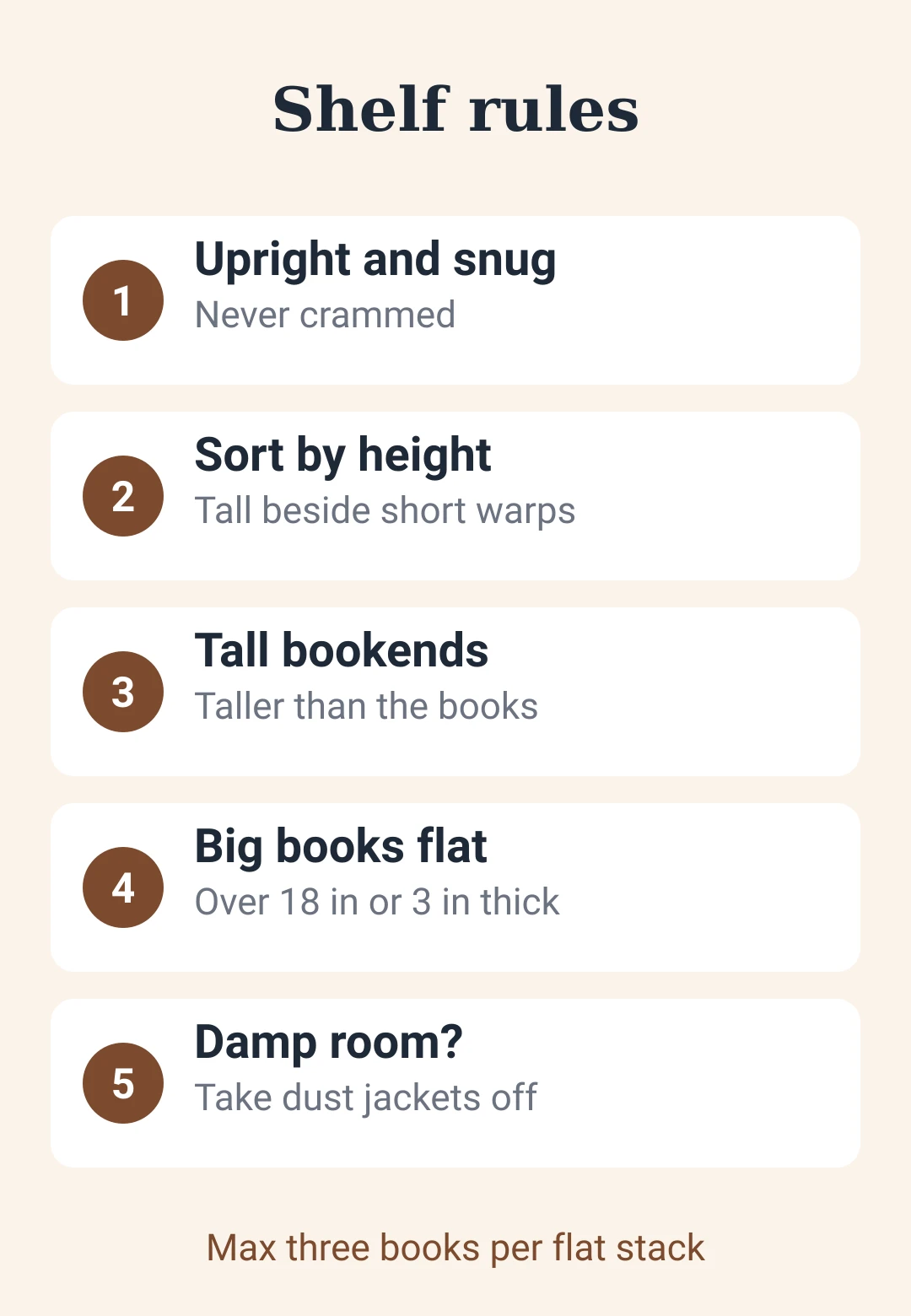
Field marks: a leaning, skewed spine. Cause: half-empty rows and short bookends. Stop it: shelve upright and snug, with bookends taller than the books. Lay anything over 18 inches tall or 3 inches thick flat, three to a stack at most.
Hidden tip: sort by height. A tall book shelved among short ones tends to warp over time.
Sun fade
Field marks: spines paler than covers. Cause: light fades color, and UV weakens paper and cloth. Stop it: no direct sun on the shelf.
Foxing or mold?
Tilt the page under a lamp. Foxing is a flat stain inside the paper; mold sits on top, raised, fuzzy and musty.
Hidden tip: in a humid room, take dust jackets off. Mold can grow unseen between jacket and cover.
Rare sighting: red rot
Old leather that turns orange-red and powdery has red rot. Don't oil it; wrap the book in acid-free paper and ask a conservator. My farmhouse holds one such volume, handled like a sleeping cat.
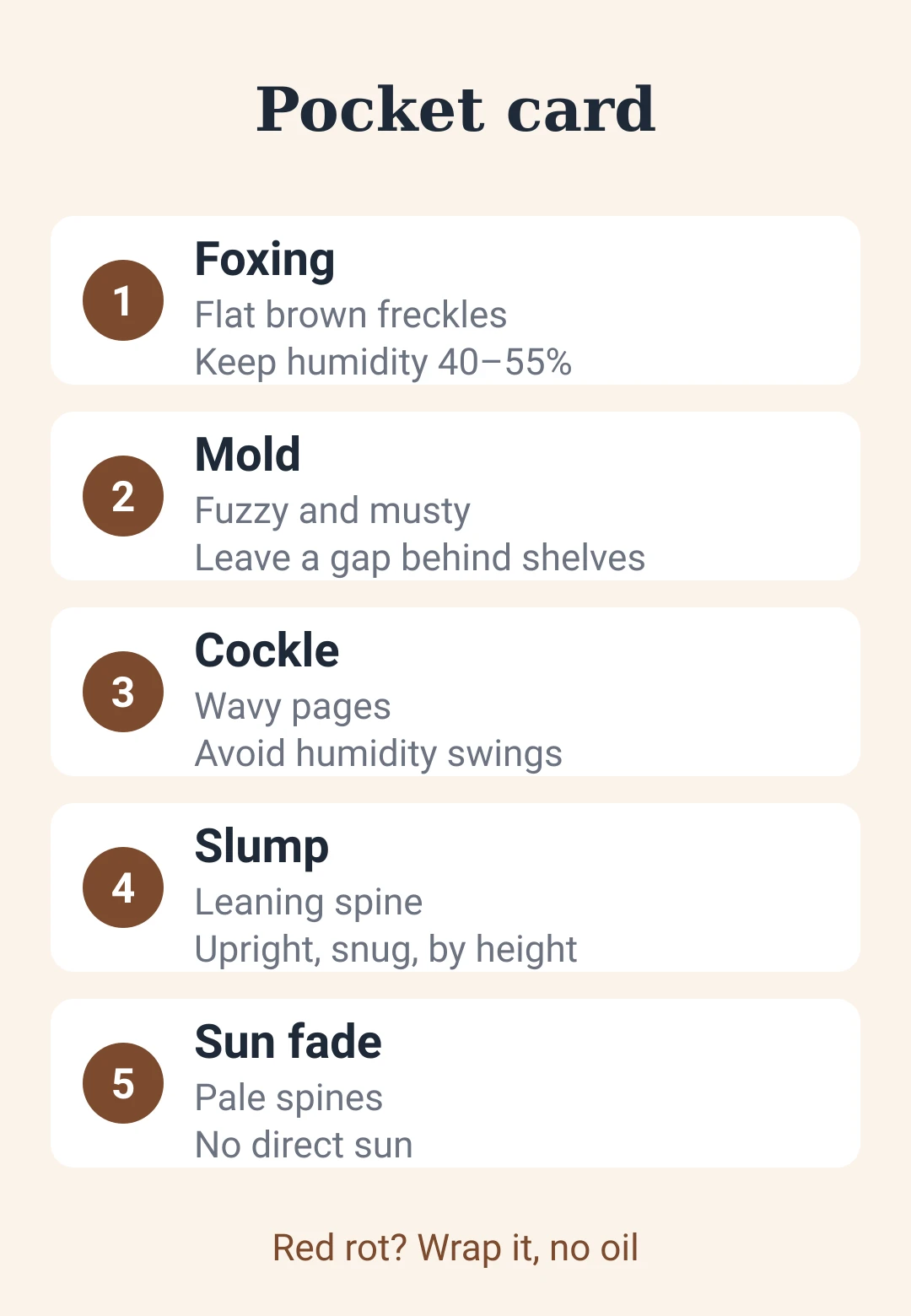
Pocket card
| Species | Field mark | Stop it |
|---|---|---|
| Foxing | Brown freckles | Humidity 40–55% |
| Mold | Fuzzy, musty | Gap behind shelves |
| Cockle | Wavy pages | No humidity swings |
| Slump | Leaning spine | Upright, snug, by height |
| Sun fade | Pale spines | No direct sun |
| Red rot | Red leather powder | Wrap, no oil |
- book care
- book storage
- bookshelves
- foxing
- mold on books
- humidity
- home library
- reading
¿Te gustó esta publicación?
para dejar un comentario.
Cargando…