
How to Get Rid of Fruit Flies in the Kitchen 🍌
Beth Lawson · 42 vistas · hace 1 mes · Artículo
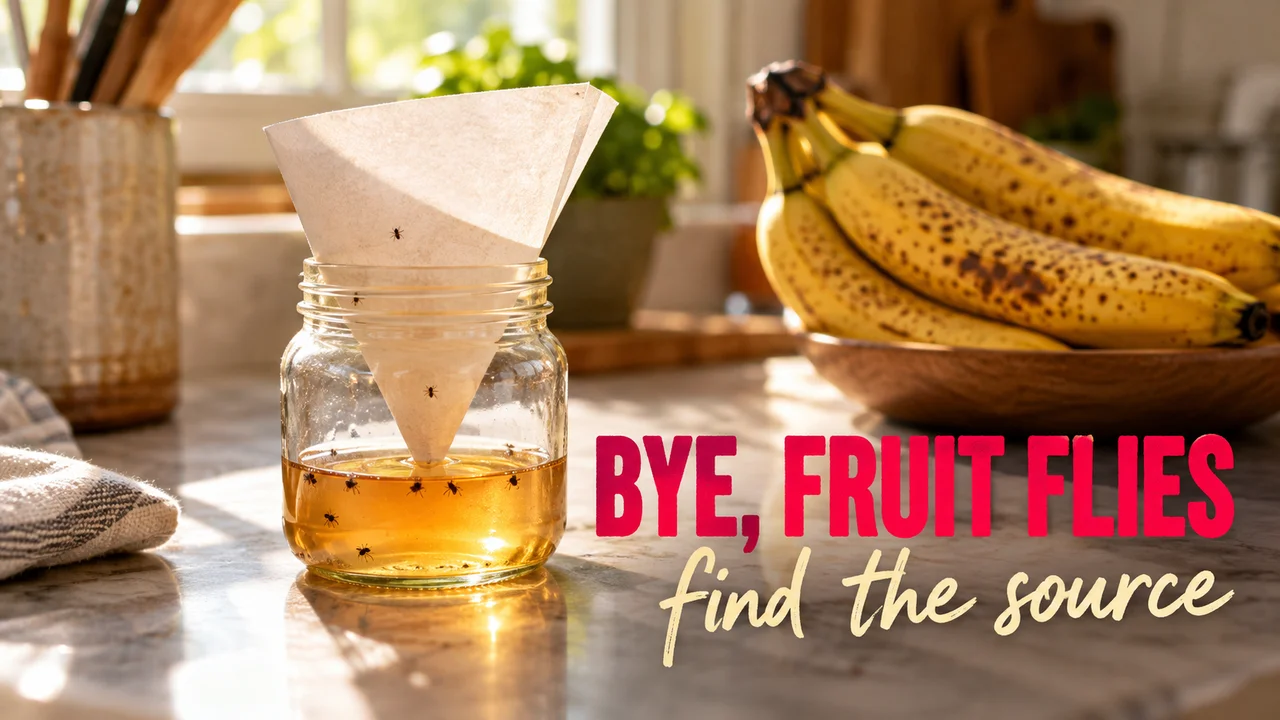
Where fruit flies really breed, a simple vinegar-and-soap jar trap, and the drain test that finds a hidden source, with a cheat sheet to save.
"They came home with the bananas," a woman in the checkout line told her friend, and half the line nodded. You know the scene: a little cloud lifts off the fruit bowl every time you walk past.
Here is where fruit flies actually breed, how to catch the ones you have, and how to keep them from coming back.
Before: a kitchen with a cloud
Flies circled the fruit bowl, drifted up out of the sink and parked on the recycling bin. Covering the fruit didn't help. The worst part was Don asking, "Are we keeping pets now?"
After: one quiet jar
Now the counter holds nothing soft, the sink drains clean, and the recycling gets rinsed before it goes in the bin. One small jar by the sink caught the stragglers. Not spotless. Just nowhere left to breed.
Rewind: find where they breed
Fruit flies lay their eggs on the surface of moist, fermenting food, and the larvae feed right there. Egg to adult can take about a week. So every fly you swat gets replaced until the source is gone.
- Overripe fruit, plus a soft potato or onion at the back of a bin
- Slow or rarely used drains, slimy above the water
- The garbage disposal and the bottom of the trash can
- Bottles and cans waiting for recycling, ketchup bottles included
- Damp mops, rags and dishcloths that smell sour
- Juice spilled under the refrigerator, and its drip pan
Hidden tip: not sure the drain is the culprit? Tape a clear plastic food bag over it overnight. Flies in the bag by morning means you've found it. Mine was the kitchen sink.
Rewind: three stages
Produce. Refrigerate ripe fruit or eat it, and cut bruised spots away. University of Kentucky entomologists say one forgotten potato or onion can breed thousands of flies.
Drain. Scrub the slime off the inside of the pipe with a stiff brush. Where a brush won't reach, pour boiling water slowly down the sides, or use a bacterial drain treatment as labeled. Iowa State's experts say bleach and ammonia bring no benefit.
Trap. Pour a little apple cider vinegar into a jar, add a few drops of dish soap, and cover it with plastic wrap poked with small holes, or a rolled paper funnel. The soap lowers surface tension, so landing flies sink. Set it wherever you see them.
Hidden tip: out of vinegar? A slice of ripe banana in the jar works as bait too. Honey, despite the old saying, is not what draws these flies.
The bill
- Effort and spend: one thorough clean-out, plus vinegar and soap from the cupboard.
- What went wrong: I set the trap before cleaning the drain, and it kept filling.
- What you can skip: fly sprays. They kill only the adults in the air that moment.
Before and after, compared
Fewer flies is the small win. The big one is that nothing in the kitchen feeds them now. Keep the trap out a week or two after cleaning, since eggs already laid still need time to hatch.
Save this: fruit flies, start to finish
| Step | Do this |
|---|---|
| Produce | Refrigerate ripe fruit, toss soft onions |
| Drain | Scrub the pipe with a stiff brush |
| Drain test | Clear bag taped on overnight |
| Trash and recycling | Rinse bottles, clean the can bottom |
| Rags and mops | Wash or swap sour ones |
| Fridge | Wipe spills under it, check drip pan |
| Trap | Cider vinegar, drops of soap, holes |
| Wait | Keep the trap out a week or two |
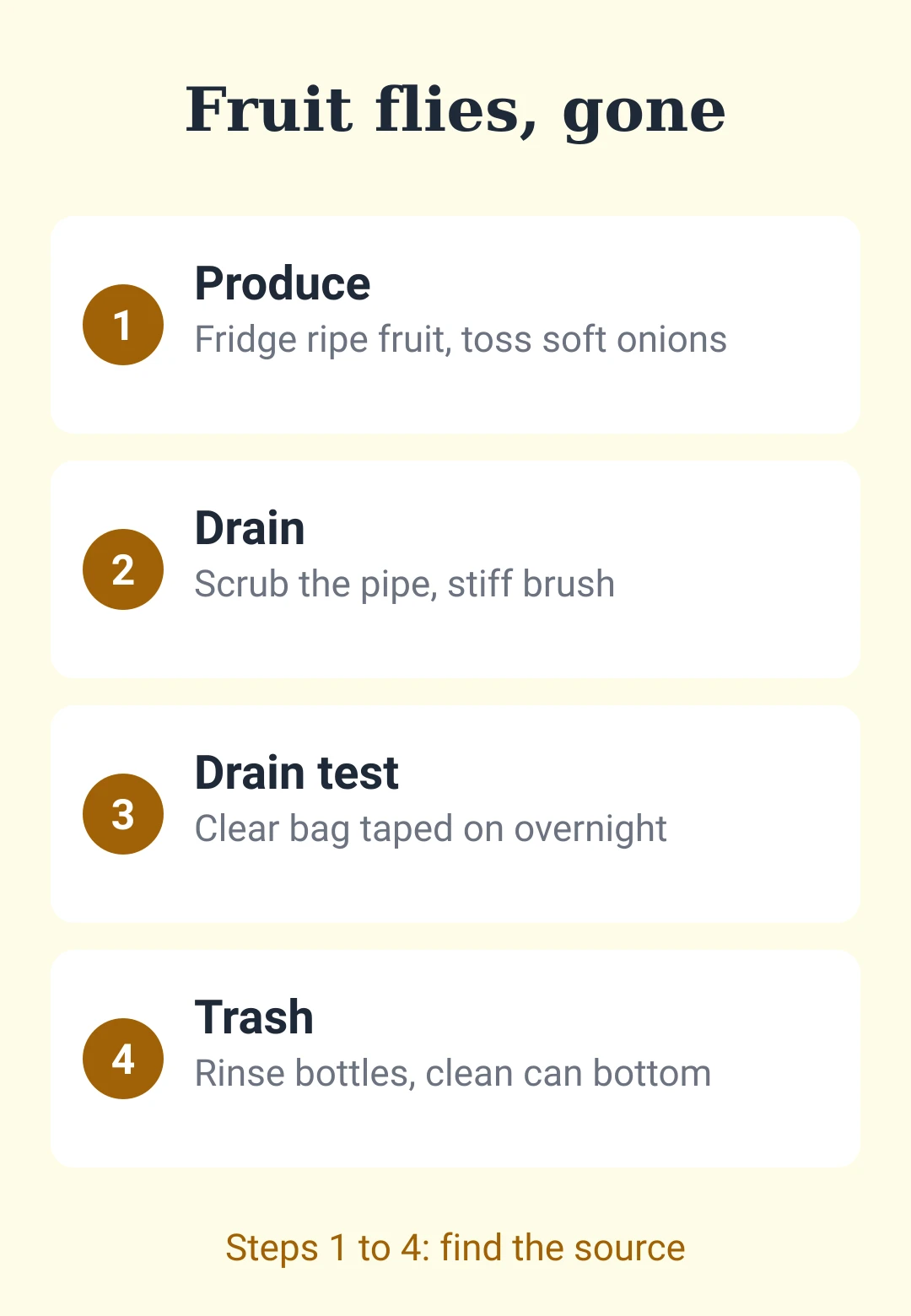
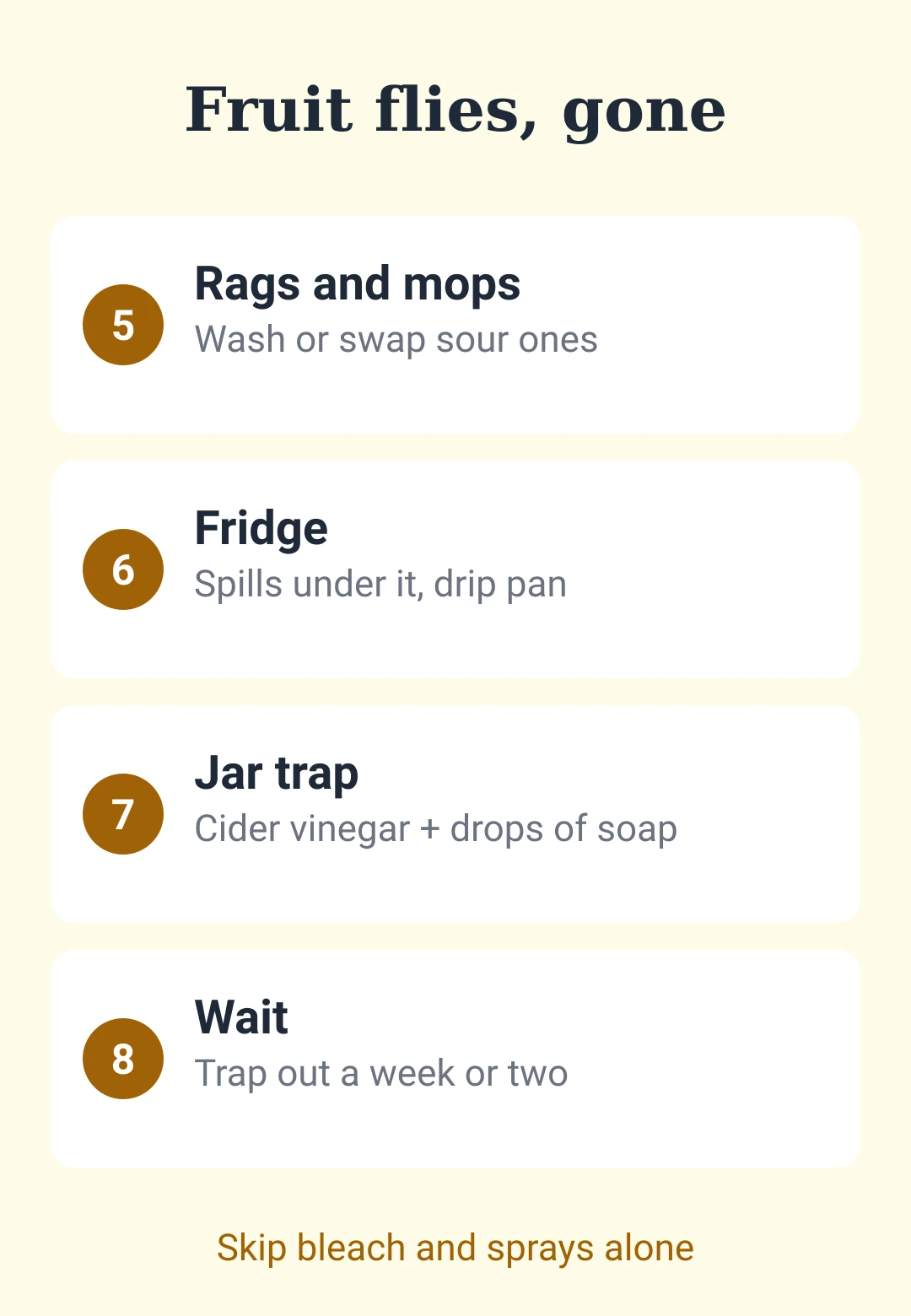
Before: a cloud over the bananas. After: one quiet jar. In between: produce, drain, trap.
- fruit flies
- kitchen pests
- kitchen cleaning
- drain cleaning
- fruit fly trap
- produce storage
- home care
- pest prevention
¿Te gustó esta publicación?
para dejar un comentario.
Cargando…