
How to Clean a Greasy Stovetop with Baking Soda and Soap 🌿
Three quick questions about your hob's surface and how old the grease is lead you to the right bicarb-and-soap method, with a map to save.

Zoe Adams
6 de agosto de 2026 · 3 min de lectura
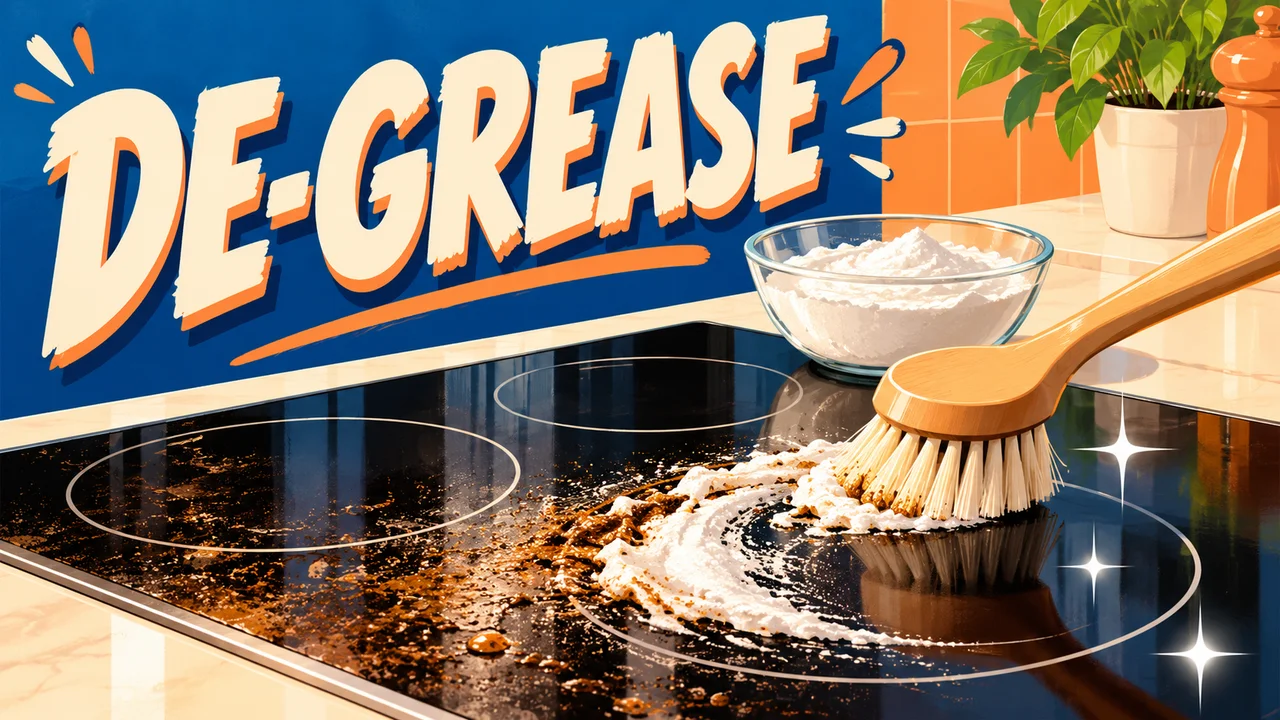
You run a finger along the hob and it sticks, a tacky film that a quick wipe only smears about. Dear younger me: scrubbing harder was never the answer, picking the right method for the mess was.
There is no single best way to clean a hob, only the best way for your surface and your grease. Three questions will find it, using bicarb, washing-up liquid, a soft brush and a cloth.
Question one: what is the top made of?
Start here: it decides how hard you may scrub.
- If it is glass (ceramic, induction or gas-on-glass): warm soapy water and a soft cloth. Makers rule out steel wool, abrasive pads and metal tools.
- If it is a gas hob with an enamel or steel top: lift off the pan supports and burner caps, then clean top and parts separately.
- If it is brushed stainless steel: same soapy cloth, but wipe and dry along the grain, the fine lines in the metal, or you get streaks.
Question two: how old is the grease?
Be honest. Most of us call grease fresh when it has sat there for days.
- If it is a fresh film: a cloth wrung out in hot water with a few drops of washing-up liquid, then dry off. Sorted in a minute.
- If it has gone sticky: make a thick paste of roughly three parts bicarb to one part water with a drop of washing-up liquid. Leave it 10 to 15 minutes, work it with a soft brush, wipe clean. Bicarb is mildly alkaline and a gentle abrasive, so it loosens grease without gouging.
- If it is a burnt-on crust: on gas, paste first, and soak caps and supports in hot soapy water while it works. On glass, check your manual before any paste: many makers allow only soapy water or a hob cream, plus a scraper made for ceramic hobs, held low.
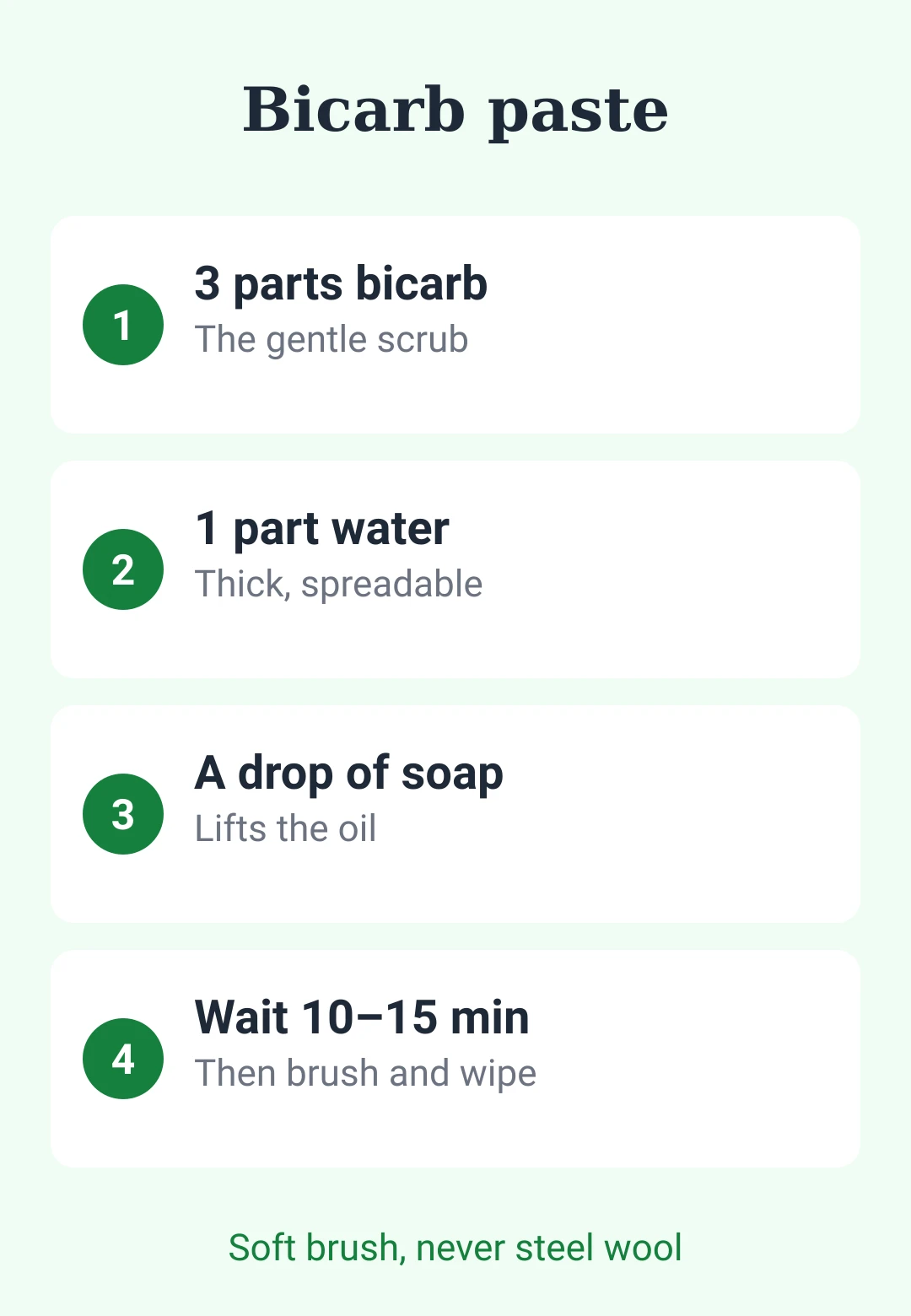
Hidden tip: skip the vinegar here. Bicarb is a base, vinegar an acid; once the fizz stops they have mostly cancelled out into salty water.
Question three: are you a wiper or a deep-cleaner?
The last question is about you, not the hob.
- If you wipe after cooking: soapy cloth on a cool hob each time, paste rarely. It's how I keep the café hob sane, little and often.
- If you save it up: one proper session: parts in to soak, paste on, brush, wipe, dry.
Either way, gas parts go back fully dry. Wet or badly seated caps are a common reason a burner clicks but won't light.
When to ignore all this
Hidden tip: sugar on a glass hob is the one exception. Several hob makers say spilt sugar or sugary food must be scraped off while the zone is still hot, because cooled sugar can permanently damage the glass. Protect your hand and use the hob scraper. If your manual says otherwise, the manual wins.
Save this: your hob map
| Your answer | What to do |
|---|---|
| Glass top | Soft cloth only; ceramic scraper |
| Gas top | Parts off, soak, dry fully |
| Steel top | Wipe and dry with the grain |
| Fresh film | Hot soapy cloth, dry off |
| Sticky layer | Bicarb paste 10–15 min, soft brush |
| Burnt crust | Paste, then scraper or soak |
| Sugar on glass | Scrape now, while hot |
| Vinegar + bicarb | Not together |
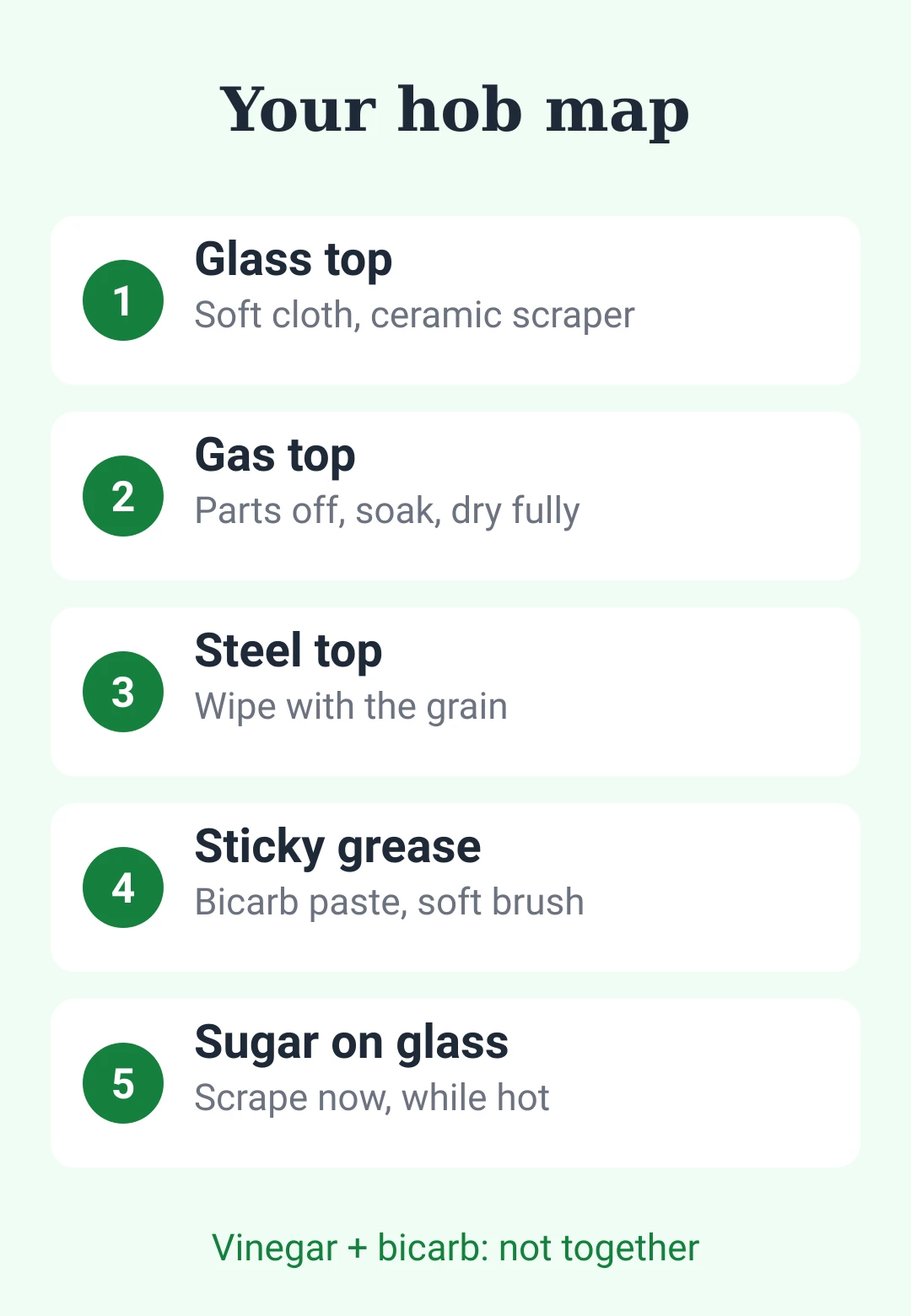
Find your row and you're sorted. Less grease, less elbow grease. Sorry.







para dejar un comentario.
Cargando…