
What Order to Apply Skincare: Morning and Night Guide 🧪
Layering order for morning and night, the wait times dermatologists give, which actives not to stack, and a summary table to keep.

Mei Lin
17 de julio de 2026 · 2 min de lectura

Most bathroom shelves hold a toner, a serum, a cream and a sunscreen, and most of us guess which goes on first. The order matters: a thick layer applied early can block a thin one, and a few actives work against each other.
Below: a morning and night order, the wait times dermatologists give, what not to stack, plus a one-table summary you can keep.
The one rule: thinnest to thickest
Why does a watery serum go before a cream? A cream is an emulsion with an oil phase; once it dries into a film, a water-based serum spread on top mostly sits on that film. So layer from lightest to heaviest. The exception is sunscreen, which always goes last in the morning, under makeup.
At the lab, when a brand wants a serum and cream sold as a pair, we design the serum to go first, with a lighter texture and a smaller oil phase, so the cream seals it in afterwards rather than blocking it.
Morning order
- Cleanser
- Toner, if you use one
- Serum, one at a time; vitamin C is a common morning choice
- Face oil, if you use one, right before moisturizer
- Moisturizer
- Sunscreen, about 15 minutes before you go outside
Vitamin C backs up sunscreen; it doesn't replace it.
Night order
- Cleanser
- Toner, if you use one
- Retinoid or retinol, in place of a serum
- Moisturizer
Retinoids belong at night because they can break down and irritate skin in sunlight.
Wait times worth keeping
| Moment | Wait |
|---|---|
| After washing, before a retinoid | 20–30 minutes |
| Between serum and cream | Until it no longer feels wet |
| Sunscreen, before going out | About 15 minutes |
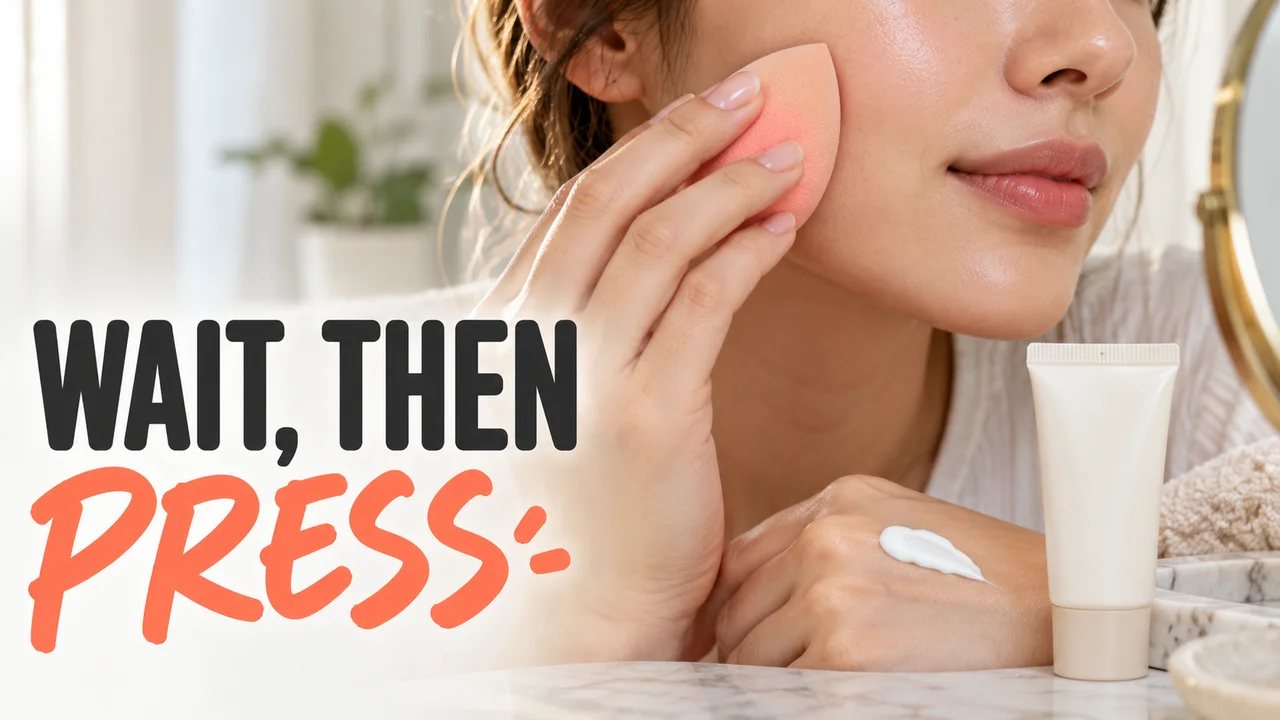
Hidden tip 1: if your retinoid stings, flip the rule. Put a moisturizer on right after washing, wait 20 to 30 minutes, then apply the retinoid. The American Academy of Dermatology describes the moisturizer here as a buffer; it's the one place thin-to-thick bends on purpose.
What not to stack
- Retinoid and AHA/BHA acids together: both exfoliate, so irritation adds up. Use them on alternate nights.
- Vitamin C with AHA: the acid can upset the pH vitamin C needs. Keep vitamin C in the morning and acids at night.
Hidden tip 2: in a lab test, a tretinoin gel mixed with benzoyl peroxide lotion under light lost more than 50% of its tretinoin in about 2 hours and 95% in a day. Adapalene, another retinoid, stayed stable. If both are on your shelf, keep them in separate routines or ask your prescriber how to split them.
Myth of the week: moisturizer with SPF covers you
It can, but only in a sunscreen-sized dose. The AAD's guide is at least 1 teaspoon for the face; a thin smear of day cream may fall short. I'd still finish with a proper sunscreen layer.
Bottom line: thin to thick, sunscreen last, and strong actives in separate routines.
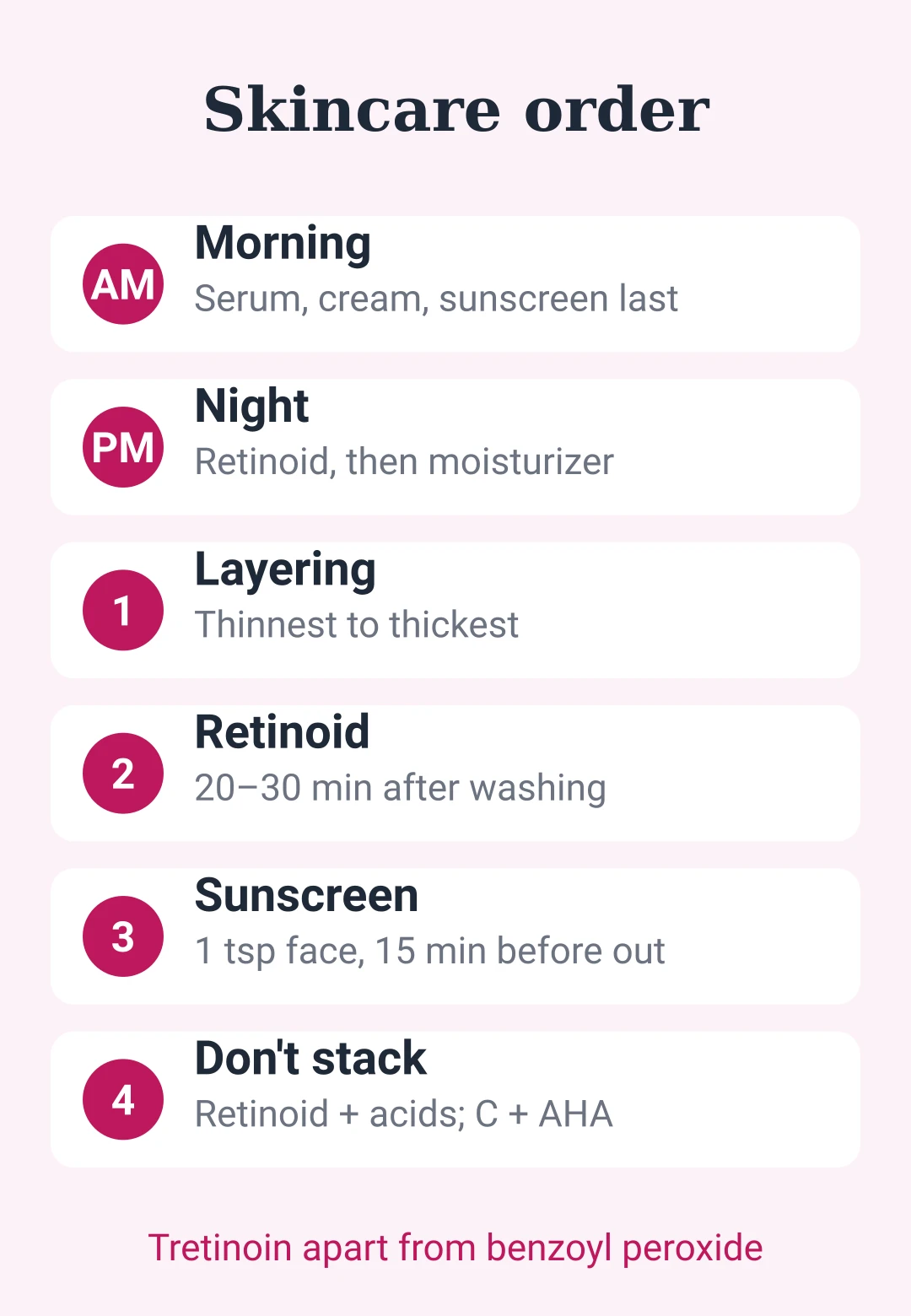
Cheat sheet: skincare order
| Step | Rule |
|---|---|
| Morning | Cleanse, toner, serum, oil, moisturizer, sunscreen |
| Night | Cleanse, toner, retinoid, moisturizer |
| Layering | Thinnest to thickest |
| Retinoid | Wait 20–30 min after washing |
| Stings? | Moisturizer first, then retinoid |
| Sunscreen | Last; 1 tsp for face; 15 min before out |
| Don't stack | Retinoid + acids; vitamin C + AHA |
| Tretinoin | Separate from benzoyl peroxide |










para dejar un comentario.
Cargando…