
How to Fix a Running Toilet
Dave Kowalczyk · 41 Aufrufe · vor 1 Monat · Artikel
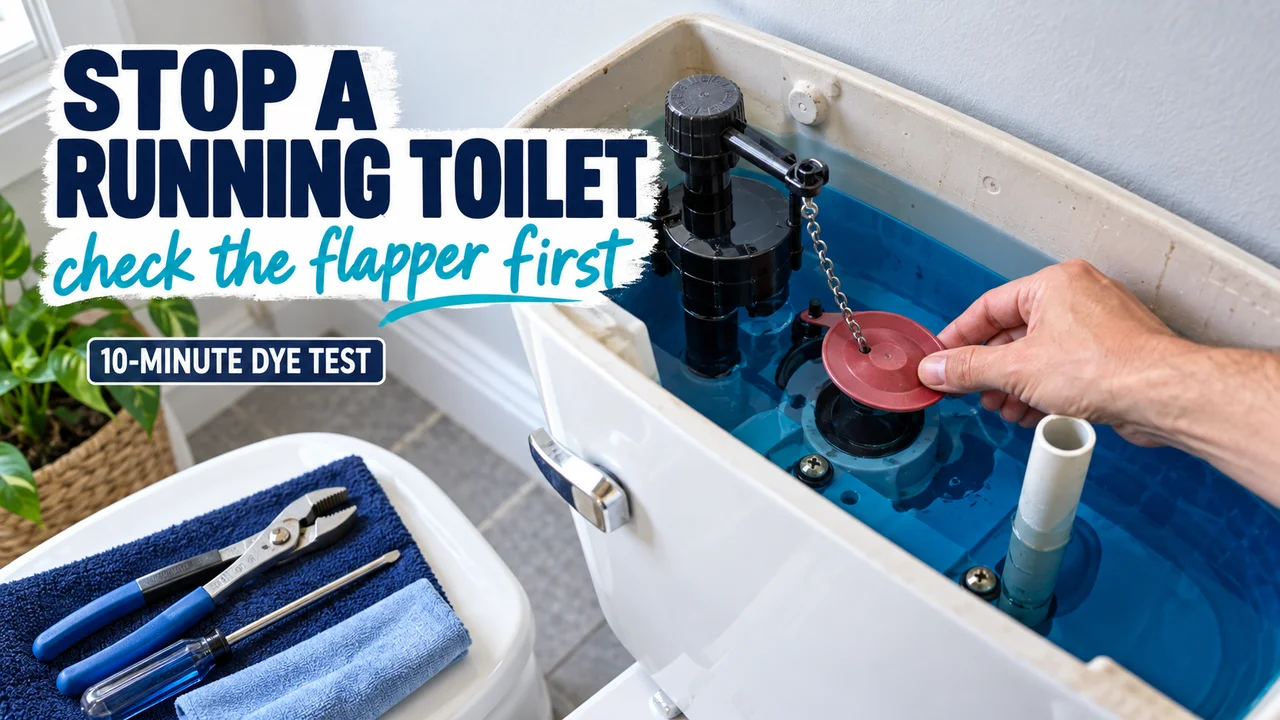
Why a toilet keeps running and how to fix the flapper, fill valve or float yourself, with a ten-minute dye test and a cheat sheet to save.
You walk past the bathroom and hear it — a faint hiss from the tank that never quite stops. Or the toilet refills for a few seconds with nobody near it.
Here is how to find which part is to blame — flapper, fill valve or float — and fix it yourself, through one very common mistake.
The case file
Meet Greg. His toilet ran after every flush and refilled itself now and then. He wanted it quiet, so he went straight for the fill valve.
What Greg did
- Lowered the float so the tank filled less.
- When that failed, replaced the whole fill valve.
- Pushed the new refill tube a few inches down the overflow pipe so it would stay put.
Each step looked reasonable. The toilet still ran.
Where it went wrong
The fill valve was only reacting. A valve that turns on and off by itself means the tank is losing water, and the valve is just topping it back up. Fluidmaster's troubleshooting sheet says so.
The real leak was the flapper. Worn rubber let water slip past into the bowl. Lowering the float did nothing for that. It only left less water for each flush.
The refill tube made it worse. Fluidmaster warns that a refill tube placed down the overflow pipe causes significant water waste.
Find your culprit first
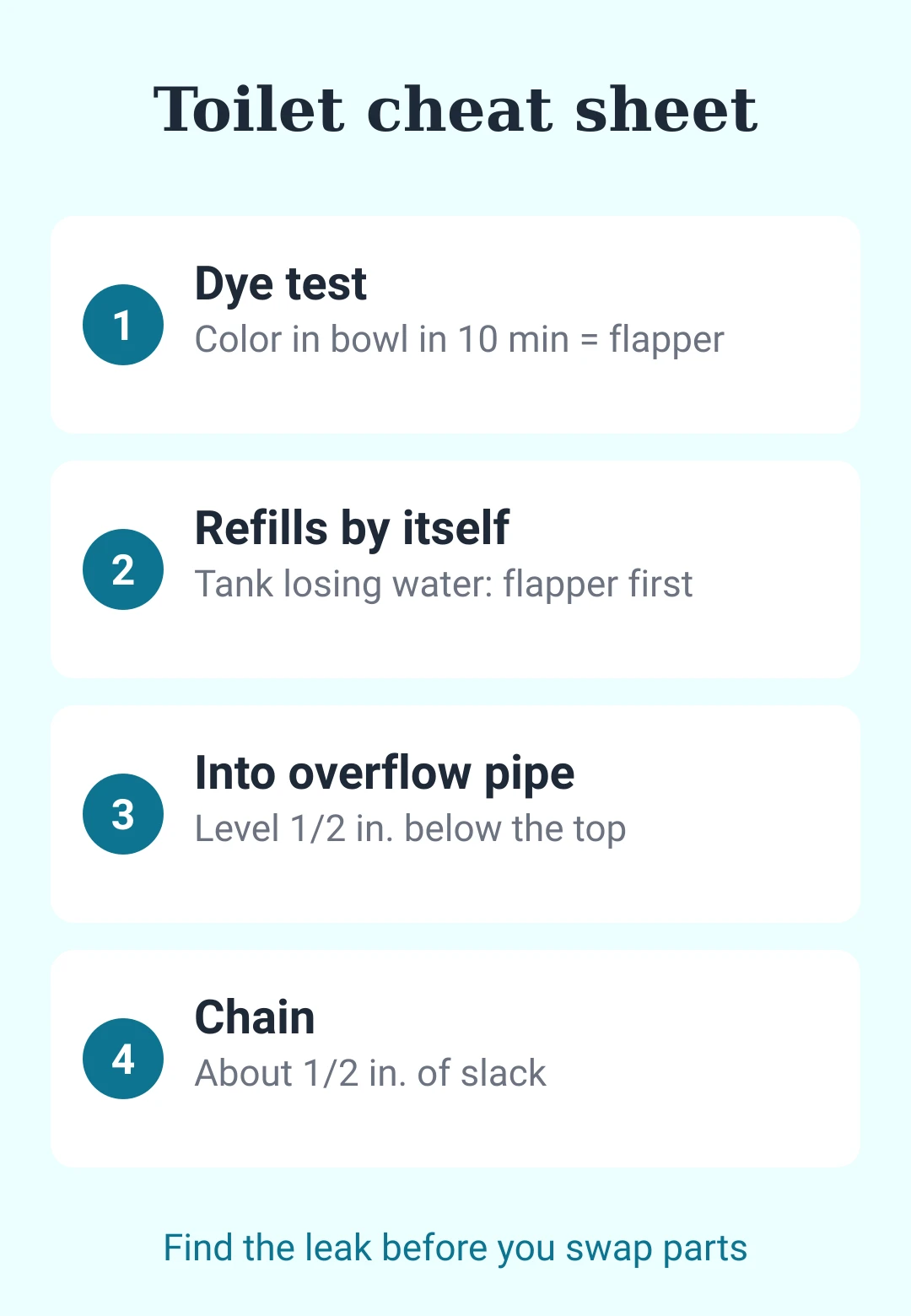
- Dye test: a few drops of food coloring in the tank. Don't flush. Color in the bowl after 10 minutes means the flapper leaks. Flush after.
- Overflow check: lift the lid while it runs. Water spilling into the overflow pipe means the level is set too high. That's the float.
- Chain check: too little slack keeps the flapper from sealing. Too much gives a weak flush.
The fix
Greg's fix was one inexpensive part. Water off at the valve behind the toilet. Flush to empty the tank. Swap the flapper on the overflow pipe. Then set three things:
- Chain: about 1/2 inch of slack with the flapper closed.
- Water level: about 1/2 inch below the top of the overflow pipe.
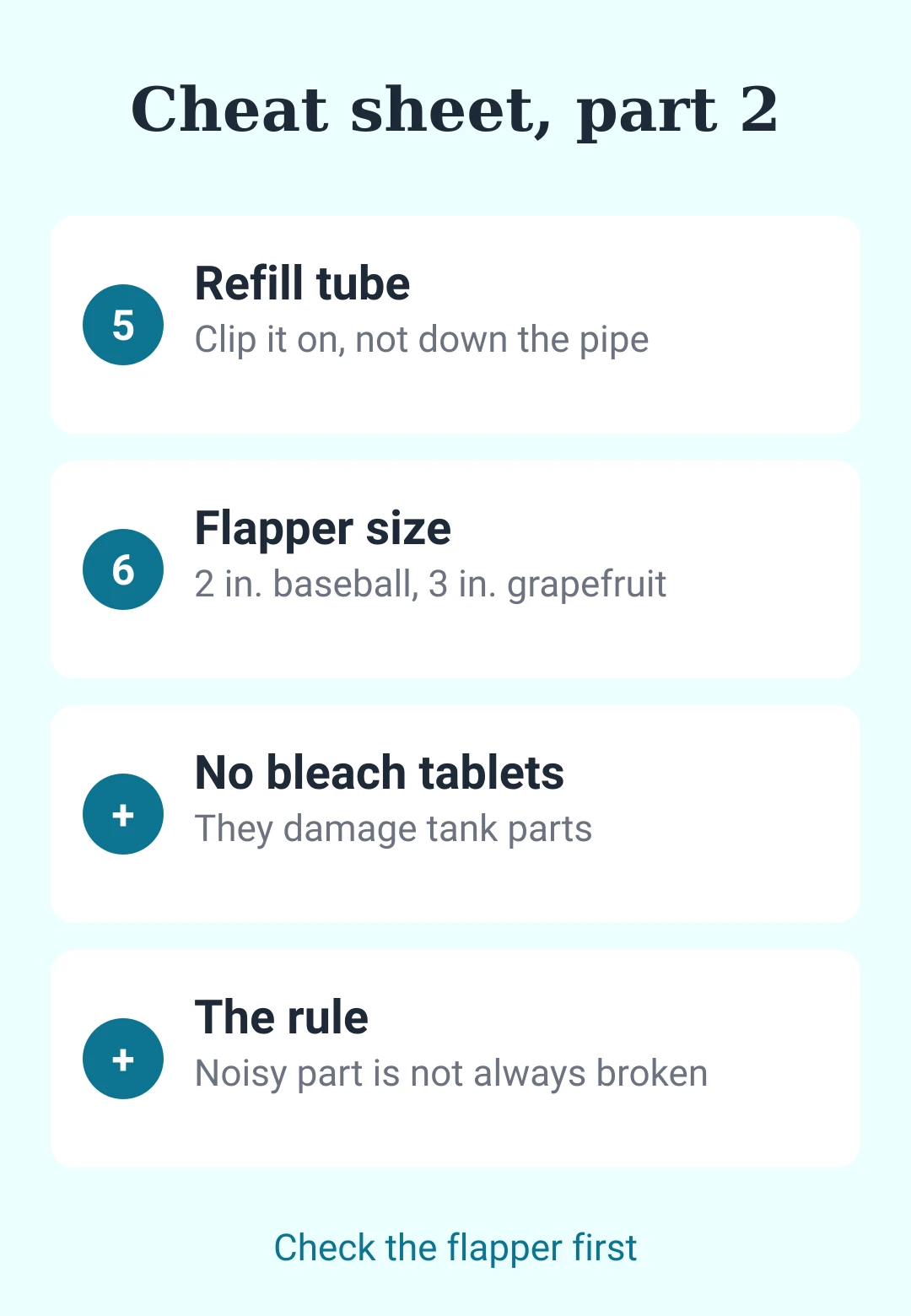
- Refill tube: clipped to the overflow pipe. Not pushed down inside it.
Float back where it belonged. Water on. Flush twice and watch it shut off.
Hidden tips
- Baseball or grapefruit: flappers come in 2-inch and 3-inch sizes. Korky says a 2-inch drain opening is about the size of a baseball, a 3-inch one closer to a grapefruit.
- Skip bleach tablets in the tank: Fluidmaster warns that drop-in cleaners with bleach or chlorine damage tank parts.
The rule from Greg's case
Find the leak before you swap parts. The noisy part is not always the broken part.
Early warning sign: a short refill with nobody near the toilet. Check the flapper first. Prep is ninety percent of any job, and on a toilet that prep is a ten-minute dye test. I've pulled plenty of good fill valves out on service calls.
Save this: running toilet cheat sheet
| You see | Likely cause | Do this |
|---|---|---|
| Dye in the bowl | Leaky flapper | Clean the seat or replace it |
| Refills by itself | Tank losing water | Check the flapper first |
| Water into overflow pipe | Level too high | Set 1/2 in. below the top |
| Flapper won't seal | Chain too tight | About 1/2 in. of slack |
| Endless trickle | Refill tube down the pipe | Clip it to the pipe instead |
| New flapper won't fit | Wrong size | 2 in. baseball, 3 in. grapefruit |
Case closed. Greg's toilet is quiet, fixed with the part he could have started with.
- running toilet
- toilet repair
- toilet flapper
- fill valve
- toilet float
- dye test
- plumbing basics
- home repair
Hat dir dieser Beitrag gefallen?
, um einen Kommentar zu hinterlassen.
Wird geladen…