
How to Fall Asleep Faster: Habits That Help
Evening habits, bedroom set-up and what to do when sleep won't come, from sleep-health advice, with two lesser-known tips and a cheat sheet to save.

Rachel Stein
20. Juli 2026 · 2 Min. Lesezeit
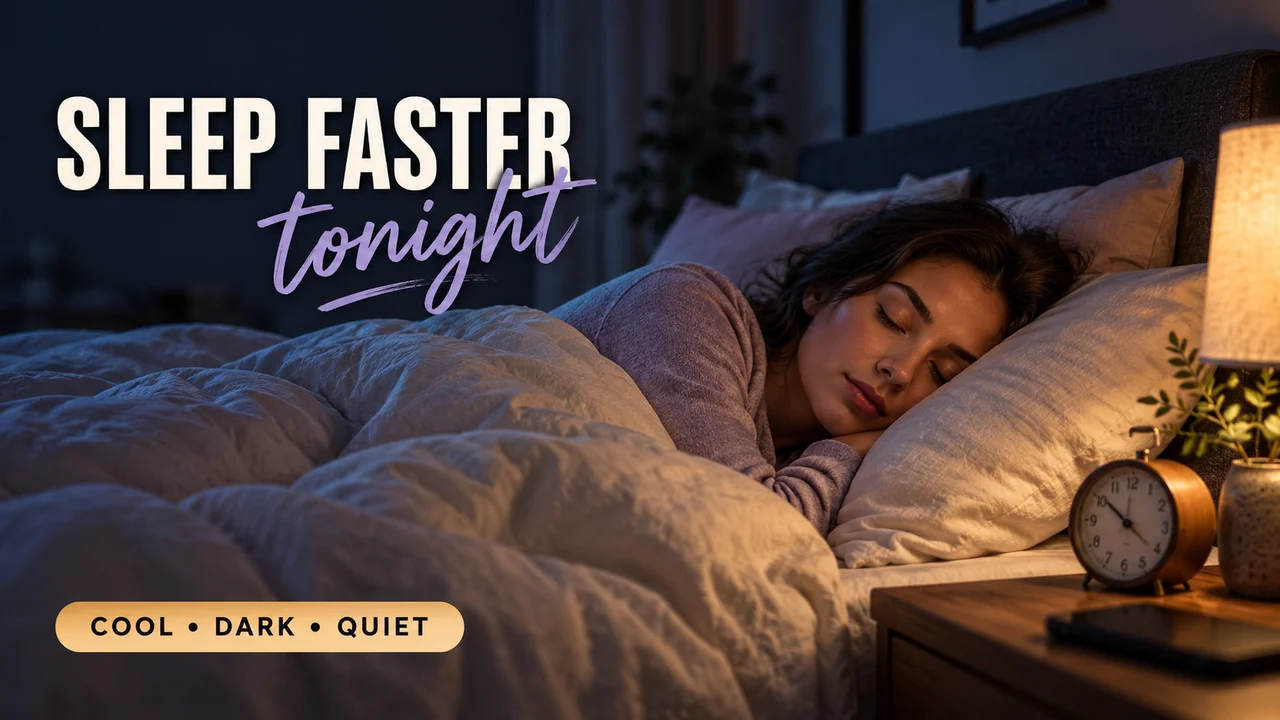
You switch off the lamp, your body is tired, and your mind starts reciting tomorrow's jobs while the minutes pile up. The good news from sleep-health research is that the habits which shorten that wait are small, boring and free.
Below: evening habits, bedroom set-up and what to do on nights sleep won't come, plus a table to save.
The core advice, in one list
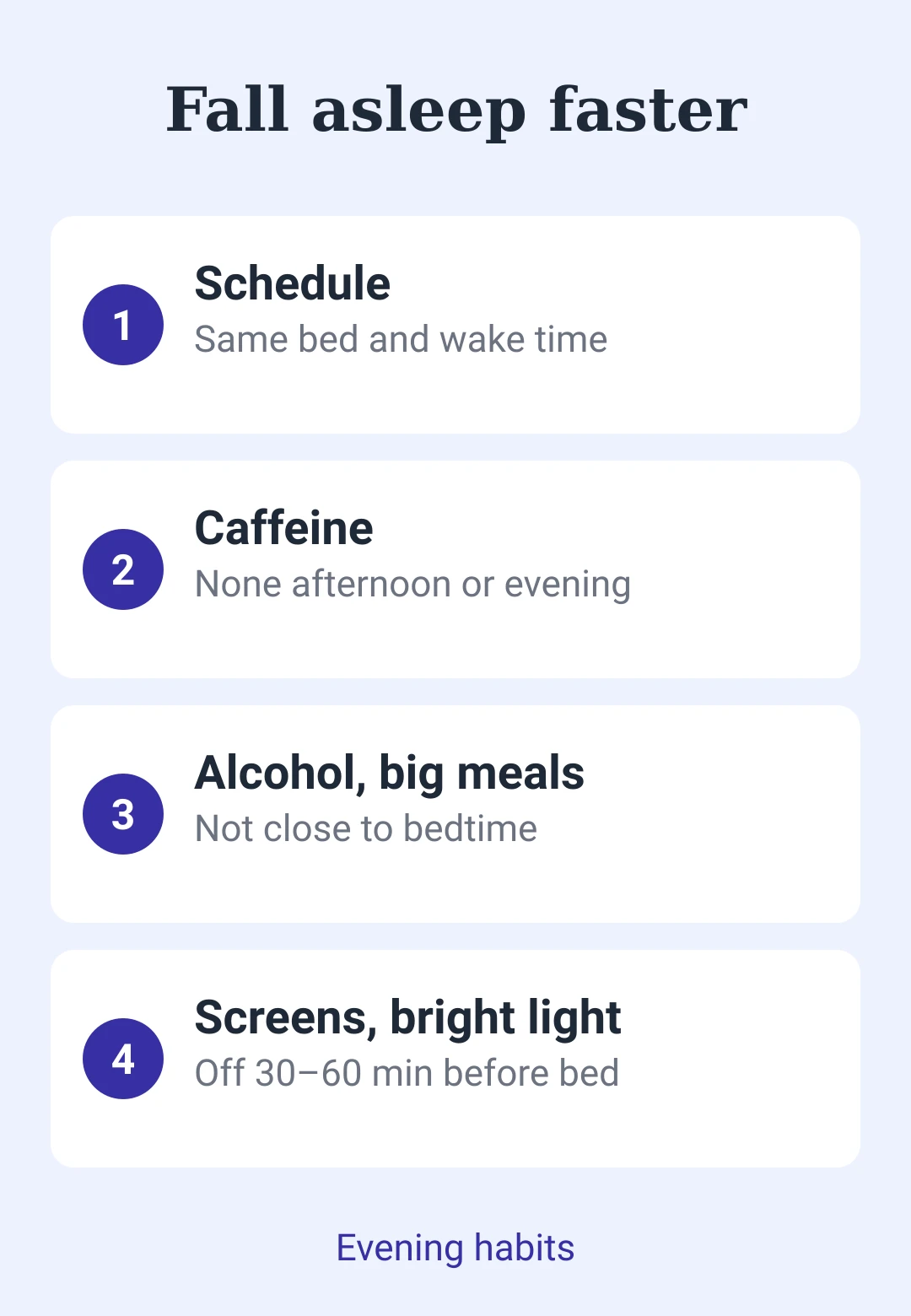
The CDC's core list: a fixed bedtime and wake time, a quiet, cool bedroom, devices off at least 30 minutes before bed, and no large meals, alcohol or afternoon caffeine.
Evening habits that matter most
- Caffeine lasts longer than it feels. In a small study, caffeine taken six hours before bed still cut measured sleep by more than an hour, unnoticed.
- Alcohol is a false friend. It makes us drowsy at first, then disrupts sleep later in the night.
- Bright light delays the "night" signal. Light can hold back melatonin, the hormone that signals darkness. Dim the lamps; go device-free for 30 to 60 minutes.
- Wake time is the anchor. Same time on weekends too. Keep naps short and early.
Bedroom set-up
Cool, dark and quiet. The Sleep Foundation puts the best room temperature at about 65°F (18°C), and notes the ideal varies by a few degrees between people.
Hidden tip: a warm shower, timed right
A University of Texas at Austin review found a bath or shower in water around 104–109°F, taken one to two hours before bed, helped people fall asleep about 10 minutes faster on average. Warm water draws blood to the hands and feet, so the core cools faster afterward. That cooling is a natural cue for sleep.
Hidden tip: write tomorrow's to-do list
In a Baylor University sleep-lab study, young adults who spent five minutes writing a to-do list fell asleep in about 15 minutes, against about 25 for those who wrote about tasks already done. Be specific. The volunteers were healthy sleepers, so treat it as a helper.
When sleep won't come
Specialists call this "stimulus control": teaching the brain that bed means sleep. Not asleep after about 20 minutes? Get up, go to another room and do something calm in low light. Return when sleepy; keep your usual wake time.
My view: most sleep supplements have more marketing than data. Our old whippet, Sprout, has never read a sleep guide and still keeps the most regular schedule in our house. Please see a doctor if poor sleep goes on for weeks or leaves you struggling through the day.
Save this: falling asleep faster
| Habit | Rule of thumb |
|---|---|
| Schedule | Same bed and wake time daily |
| Caffeine | None in the afternoon or evening |
| Alcohol, big meals | Not close to bedtime |
| Screens, bright light | Off 30–60 min before bed |
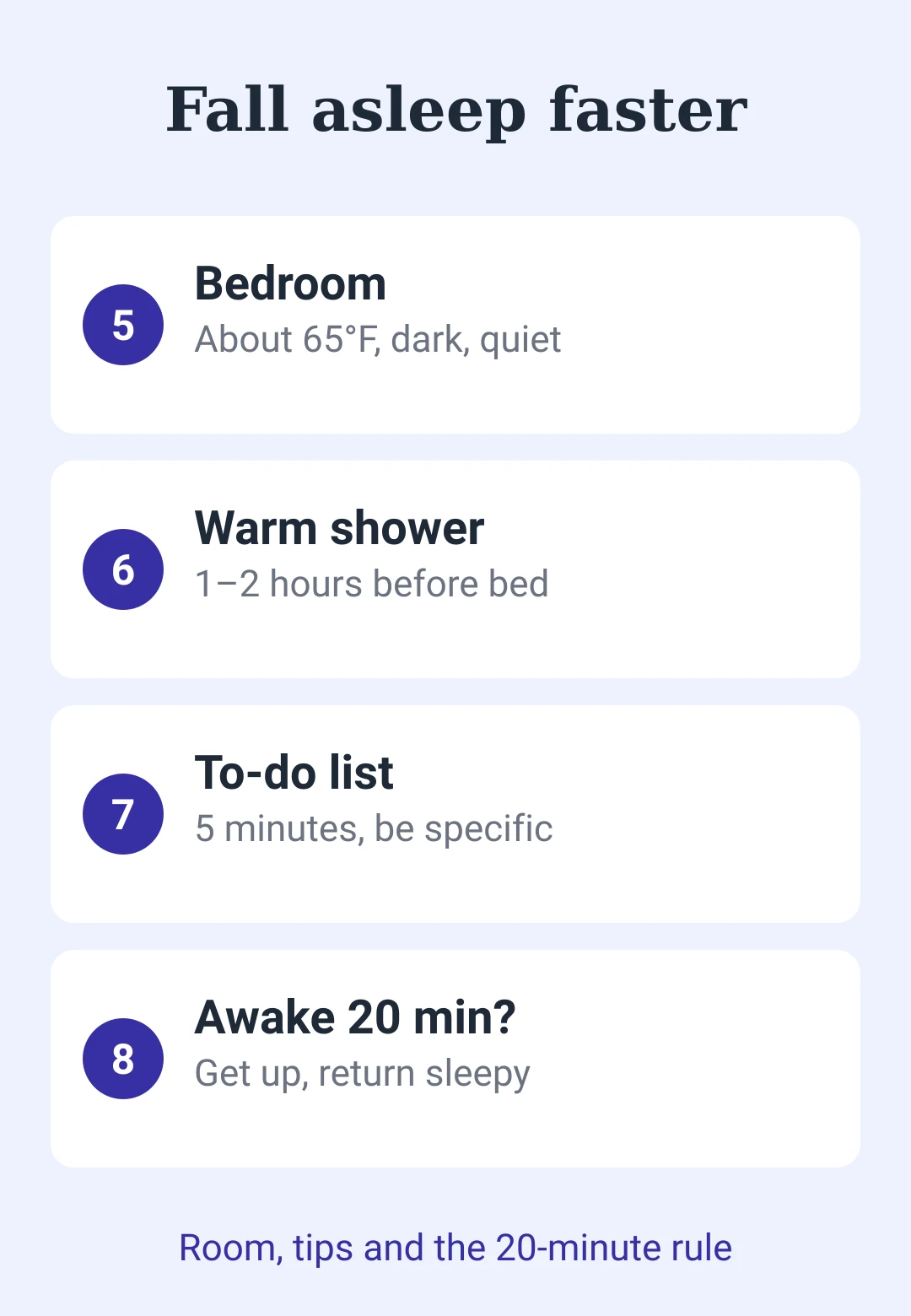
| Bedroom | Cool (about 65°F), dark, quiet |
| Warm shower | 1–2 hours before bed |
| To-do list | 5 minutes, specific tasks |
| Awake 20 min? | Get up, calm and dim, return sleepy |
Bottom line: protect the wake time, cool the room, and get out of bed when sleep stalls.











, um einen Kommentar zu hinterlassen.
Wird geladen…